Cat Beds for Anxious Cats: Does an Enclosed Bed Actually Help?
Short answer: a hooded bed helps an anxious cat feel safe, but it will not fix the underlying fear, so treat it as one small tool rather than the answer. Once the room is calm, the enclosed shape earns its place, and that is a Hobart nurse's view rather than a behaviourist's. The truth is the rescue cat who hid under the spare bed needed more than a covered space, and the purchase was rarely the thing that settled her.
A woman came into the clinic with a three-year-old rescue cat who spent most of the day under the spare bed. She'd read that enclosed spaces calm anxious cats, she'd bought a hooded bed, and she wanted to know whether she'd wasted her money. The answer I gave her was annoyingly nuanced: possibly not wasted, but almost certainly not the thing that would fix it.
I want to be careful and honest here, because this is a subject where the marketing runs well ahead of the evidence. I'm a veterinary nurse in Hobart, not a behaviourist, but I've seen enough frightened cats to have firm opinions about what a bed can and cannot do.
What an enclosed bed can reasonably do
A hooded or semi-enclosed pet bed gives a cat a space with a single approach and a solid back. For a cat who is watchful, that genuinely reduces the number of directions they feel they need to keep an eye on, and a fair number of cats will settle faster and rest more deeply in one. If you have a cat who already retreats under furniture, into wardrobes or behind the couch, a covered bed in that same area is a reasonable thing to offer, and it may help some cats feel more secure.
That's the honest size of the claim. It's a comfort and security effect for some individuals, and it's modest. An enclosed bed is not a treatment for feline anxiety, and it will not address whatever is causing it. A cat who is anxious because she can smell the neighbour's cat through the cat flap, or because the litter tray is next to the washing machine, or because a toddler chases her, will go on being anxious inside a very nice cave.
What actually helps an anxious cat
In my experience, and in what the feline behaviour people I work alongside recommend, the order of priority looks like this.
Predictable routine first. Cats are creatures of pattern, and feeding, play and quiet time happening at roughly the same times each day does more for a nervous cat than any product. Free-feeding and an unpredictable household are both harder on them than owners expect.
Vertical space and escape routes second. Shelves, a cat tree, clear paths along the tops of furniture, and the ability to leave a room without crossing the middle of it. Height is security for cats, and a cat who can get up and away rarely needs to hide as much.
Resources third, and this is the one most often wrong in multi-cat houses. One litter tray per cat plus one, in separate locations, not lined up in the laundry. Separate feeding stations, and multiple water bowls away from the food. One bed each, in different spots, so nobody has to walk past anybody to reach theirs.
A safe room during disruptions — building work, visitors, a new baby, a move, fireworks season. One room set up with everything they need, door shut, no one going in. And pheromone products, the plug-in diffusers and sprays sold at vets and Petbarn, which are low risk and genuinely worth a trial alongside everything above.
- Predictable routine: feeding, play and quiet time at the same times daily.
- Vertical space and escape routes let a cat get up and away.
- One litter tray per cat plus one, kept in separate locations.
- A safe room during disruptions, set up with everything they need.
- Pheromone diffusers and sprays sold at vets and Petbarn help.
Where a hooded bed fits
Once the environment is sorted, the bed has a small and useful role. Put it where the cat already hides rather than where you'd like them to sleep. Leave it out unwashed for a week or two so it smells of the house rather than of a warehouse, and drape something worn of yours in it if your cat is bonded to you. Don't pick the cat up and place them in it.
And one rule I'd like to see printed on the packaging: never use an enclosed bed to trap or confine a cat. Not to give medication, not to clip nails, not to get them into a carrier. The moment a safe space becomes a place where unpleasant things happen, you have removed the one thing it was good for. If you need to confine a cat for any reason, use a carrier or a proper safe room.
Choose a semi-enclosed shape with a wide opening over a fully enclosed pod. Cats generally want to be able to see out, and a bed with one small round hole takes away the sightline that makes the space relaxing in the first place.
Getting the size right, especially for big cats
This is where a lot of purchases go wrong. Check the internal sleeping dimensions, not the external footprint, and compare them to your cat stretched out rather than curled.
Maine Coons, Ragdolls, Norwegian Forest Cats and large domestics rarely fit standard cave beds, however appealing the photo looks. A cat bed for large cats needs a genuinely generous internal area and a hood that won't sag onto their back, and in practice a big cat is often better served by an open rectangular bed with a high bolstered edge. Kittens are the opposite problem, since they'll outgrow a small bed within months — if you're buying a kitten bed in Australia and don't want to replace it by spring, buy to the adult size and put a small blanket in to make the space feel snug.
When this is a vet conversation
Two situations where I'd beg you not to shop first. A sudden change in behaviour: a confident cat who starts hiding, one who stops eating, one who starts toileting outside the tray. Hiding and withdrawal are common signs of pain and illness, and urinary problems in particular present as behaviour long before anything obvious. That's a vet appointment.
The second is anxiety that is severe or getting worse — a cat who won't come out at all, who is over-grooming to the point of hair loss, who is aggressive when approached, or who has been like this since the day you brought them home. That's a vet check to rule out physical causes and then, ideally, a referral to a qualified feline behaviourist. Medication exists for feline anxiety and it helps many cats, but that's a prescription conversation, not a shopping one.
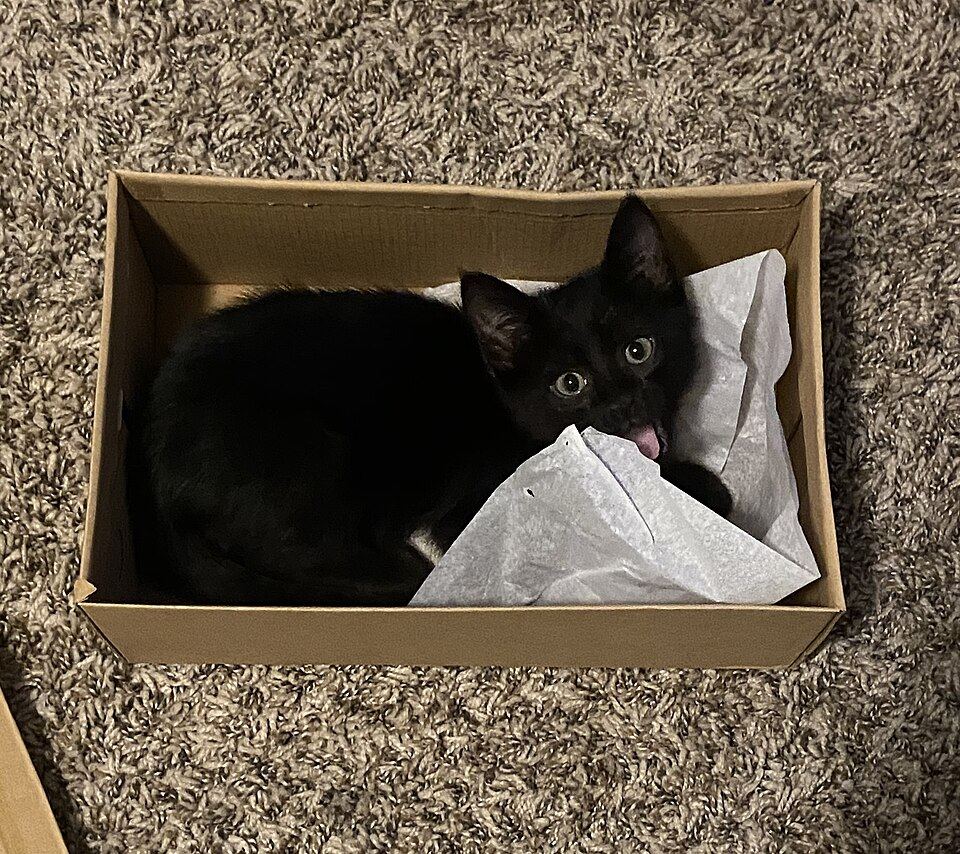
The woman with the rescue cat moved the litter tray out of the laundry, added a shelf under the window, and put the hooded bed in the spare room where the cat was already going. Six weeks later the cat was coming out in the evenings. The bed helped, I think, but the tray and the shelf did the heavy lifting. Buy the bed if it suits where your cat already feels safest — just don't ask it to do a job that belongs to a routine, a shelf and sometimes a vet. — Tessa, Hobart, where one cat is under the bed as I type this.
Frequently Asked Questions
Do enclosed beds really help anxious cats?
They can help some cats feel more secure by providing a space with a single approach and a solid back, and many cats settle faster in one. It is not a treatment for feline anxiety and won't address the underlying cause. It works best as one part of a broader plan that includes routine, vertical space and adequate resources.
How do I get my anxious cat to use a hooded bed?
Put it where your cat already hides rather than where you'd like them to sleep. Leave it unwashed for a week or two so it smells of the house, add a worn item of your clothing, and let the cat approach it in their own time. Never place the cat inside the bed or use it to confine them for medication, nail clips or carrier trips.
What actually reduces anxiety in cats?
Predictable daily routines for feeding, play and quiet time; vertical space and escape routes so a cat can get up and away; one litter tray per cat plus one in separate locations; separate feeding stations; a safe room during disruptions like building work or fireworks; and pheromone diffusers, which are worth a trial alongside these changes.
Do cave beds fit large cats like Maine Coons and Ragdolls?
Often not. Check the internal sleeping dimensions and compare them to your cat stretched out, not curled. Large breeds frequently need a roomy open bed with a high bolstered edge and a hood that won't sag onto their back, rather than a standard enclosed pod built around an average-sized cat.
When should I see a vet about my cat's anxiety?
If the change in behaviour is sudden, or comes with altered appetite, weight, grooming or litter tray habits, book a vet check promptly, since hiding is a common sign of pain and illness. See your vet and ask for referral to a qualified feline behaviourist if anxiety is severe, worsening, involves over-grooming or aggression, or isn't improving with environmental changes.
Size & Fit Reference
| Size | External (L×W×H) | Internal sleeping area | Suits pets up to | Typical pets |
|---|---|---|---|---|
| S | 43 × 32 × 10 cm | ~36 × 25 cm | 30 cm curled | Kittens, toy breeds, small cats |
| M | 54 × 42 × 11 cm | ~46 × 34 cm | 45 cm curled | Cavoodle, Pug, average cat |
| L | 66 × 50 × 12 cm | ~57 × 41 cm | 55 cm curled | Cocker Spaniel, large cat |
| XL | 80 × 60 × 13 cm | ~70 × 50 cm | 70 cm curled | Kelpie, Border Collie |
| XXL | 95 × 72 × 15 cm | ~84 × 61 cm | 85 cm stretched | Labrador, two small dogs |
| 3XL | 110 × 82 × 15 cm | ~98 × 70 cm | 100 cm stretched | Great Dane, two medium dogs |
Between two sizes, size up. Note that soft polyester fill compresses under weight — for dogs over about 30 kg, a denser foam base will hold its loft far longer than fibre fill.
Looking for beds & mats?
We stock the gear covered in this guide, with Australia-wide shipping and Afterpay at checkout.
Popular in this range: self-cooling pet mat
Shop Beds & Mats at Paws of Oz