Do Dogs Get Cold at Night? A Hobart Winter Answer
Short answer: yes, dogs get cold at night, but far fewer than owners assume, and the ones who do are a predictable group: thin coats, low body fat, and older animals like Pip. Two in the morning, Pip leaves her bed for the warm spot by the dryer vent, and that habit told me more than any chart. The bottom line is that a warm bed helps the cold-prone and does little for a husky, so work out which group your dog falls in before spending up.
Pip is a twelve-year-old retired racing greyhound, and every year around the end of May she starts doing the same thing. She gets up from her bed at about two in the morning, walks to the laundry door, and waits. Not to go outside — she wants the warm spot where the dryer vents. The first winter I had her I assumed she was being fussy. Then I spent a few years working in vet clinics and learned what she was actually telling me.
So, the short answer: yes, dogs get cold at night, but nowhere near as many as owners assume, and the ones who do are a predictable group. Working out whether your dog is in that group matters more than buying the thickest bed in the shop.
Who actually feels it
In my experience the list is short and consistent. Very young puppies, who can't regulate their temperature well yet. Senior dogs, who lose muscle mass and often have arthritis that genuinely aches in the cold. Thin-coated breeds — greyhounds, whippets, Italian greyhounds, boxers, staffies — who have almost no insulation and, in Pip's case, barely any body fat either. Small dogs, because they have a large surface area relative to their volume and lose heat fast. And any dog who is unwell or recovering.
The other half of the equation is the house. A Hobart or Melbourne weatherboard with single glazing and no heating overnight is a very different environment from a modern Brisbane apartment. The coldest part is almost always the floor, which is exactly where we put their bed.
- Puppies cannot yet regulate their own body heat well.
- Senior dogs ache in the cold with arthritis and lost muscle.
- Thin-coated breeds like greyhounds have almost no insulation.
- Small dogs lose heat fast from their large surface area.
- A cold floor is where we usually put the dog's bed.
Who really doesn't
Huskies, malamutes, and anything with a proper double coat are usually far more comfortable than their owners are. A thick-coated dog in a heavily padded enclosed bed in a heated house will often get up and move to the tiles, and that isn't ingratitude — it's thermoregulation. I've had clients buy an expensive thermal bed for a husky and then ring me, baffled, because the dog sleeps next to it.
If your dog consistently chooses the floor over the bed, the bed is too warm, not too cold. That's worth knowing before you spend more money.
What a warm bed can and can't do
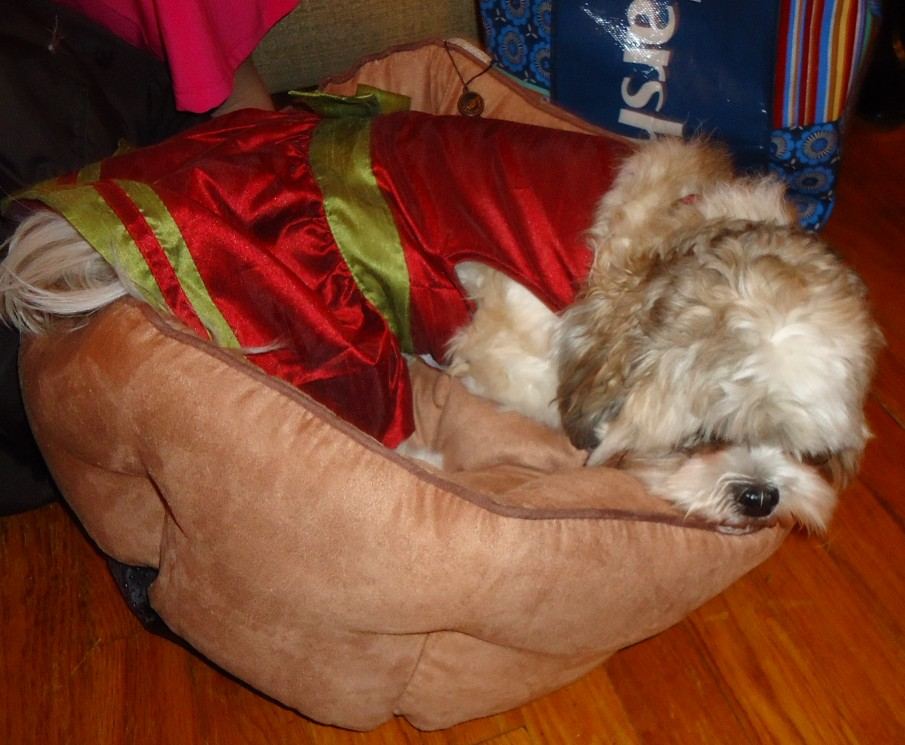
Let me be plain about this, because the marketing in this category overreaches. A bed does not treat arthritis, and it does not prevent joint disease. What a well-padded bed does is reduce the pressure on bony points — hips, elbows, shoulders — when a dog lies on a hard surface. For an older dog with sore joints, that genuinely changes how they sleep and how stiff they are in the morning. That's a real benefit, and it's a comfort benefit rather than a medical one.
The other thing a bed does is get a dog off a cold floor. Floor temperature in an unheated Tasmanian laundry in July is a long way below the dog's comfortable range, and lying on it draws heat out of them all night. Even fifteen centimetres of padding and a layer of fabric between the dog and the floor makes a measurable difference to how hard their body has to work.
Setting it up properly
Position matters more than most people think. Off the floor if you can manage it, or at least onto a rug. Out of draughts — that gap under the back door is the usual culprit, and I've fixed more cold-dog complaints with a draught stopper than with any product. Away from the exterior wall. And near where the family actually is, because most dogs want to be where you are more than they want ideal thermal conditions.
Then the bed itself. For a dog who curls up, a semi-enclosed shape with a raised edge gives them something to lean against and traps a pocket of warm air around them. For a dog who stretches out, a flat mattress they can sprawl on works better. Pip does both depending on the night, which is why she has two beds in different rooms.
When to think about more than a bed
If your dog is shivering indoors, seems stiff getting up, is reluctant to climb stairs, or is seeking heat constantly, that's a vet appointment rather than a shopping trip. Pain and thyroid conditions and a dozen other things present as "feeling the cold," and no bed fixes them.
For genuinely cold homes and older dogs, heated options exist and work well — heated pads, microwave heat packs, and self-warming beds that reflect the dog's own body heat back at them. If you go down that route, buy one made for pets, check for Australian electrical approval, and supervise any dog who chews cords.
Pip stopped camping at the laundry door the winter I moved her bed off the floor and away from the back door. Two changes, neither of which cost anything. Work out whether your dog is actually cold first — most of the ones I see aren't, and the ones that are usually need the draught fixed more than they need a new bed. — Tessa, Hobart, with a greyhound currently asleep on the good rug.
Frequently Asked Questions
Do dogs get cold at night in Australia?
Some do, particularly in southern Australia. Puppies, senior dogs, small breeds and thin-coated breeds such as greyhounds, whippets and staffies feel the cold most. Thick double-coated breeds usually don't, and often prefer a cool floor.
How can I tell if my dog is cold?
Shivering, curling tightly, lifting paws off the floor, seeking heat sources and restlessness at night are the common signs. If your dog shivers indoors or seems stiff getting up, book a vet check rather than assuming it's just the weather.
Does my dog need a special winter bed?
Most dogs do fine with their usual bed moved somewhere better. Getting the bed off a cold floor and out of draughts usually matters more than buying a thicker one. Save a heavily padded or enclosed bed for dogs who genuinely feel the cold.
My dog sleeps on the floor instead of the bed. Why?
Usually because the bed is too warm, too enclosed, or in the wrong spot. Many thick-coated breeds actively prefer a cool hard surface. Watch where your dog chooses to sleep and match the bed to that rather than fighting it.
Are heated beds safe for dogs?
Pet-specific heated beds and microwave heat pads are generally safe when used as directed. Buy products made for pets, check for Australian electrical approval on any powered item, and supervise dogs who chew cords. Never use a human electric blanket.
Size & Fit Reference
| Size | External (L×W×H) | Internal sleeping area | Suits pets up to | Typical pets |
|---|---|---|---|---|
| S | 43 × 32 × 10 cm | ~36 × 25 cm | 30 cm curled | Kittens, toy breeds, small cats |
| M | 54 × 42 × 11 cm | ~46 × 34 cm | 45 cm curled | Cavoodle, Pug, average cat |
| L | 66 × 50 × 12 cm | ~57 × 41 cm | 55 cm curled | Cocker Spaniel, large cat |
| XL | 80 × 60 × 13 cm | ~70 × 50 cm | 70 cm curled | Kelpie, Border Collie |
| XXL | 95 × 72 × 15 cm | ~84 × 61 cm | 85 cm stretched | Labrador, two small dogs |
| 3XL | 110 × 82 × 15 cm | ~98 × 70 cm | 100 cm stretched | Great Dane, two medium dogs |
Between two sizes, size up. Note that soft polyester fill compresses under weight — for dogs over about 30 kg, a denser foam base will hold its loft far longer than fibre fill.
Looking for beds & mats?
We stock the gear covered in this guide, with Australia-wide shipping and Afterpay at checkout.
Popular in this range: self-cooling pet mat
Shop Beds & Mats at Paws of Oz