How to Size a Pet Bed: Why the Outside Measurement Lies
Short answer: trust the internal sleeping area of a pet bed, not the outside number, because bolsters and hoods eat the space a dog actually gets. Measuring your pet first fixes the most common complaint, and the fix is then adding ten to fifteen centimetres for the curled shape. Here's the trap a client hit: her cavoodle measured forty-two centimetres stretched, the listing said fifty, but once you subtracted the walls the flat middle was closer to thirty-eight.
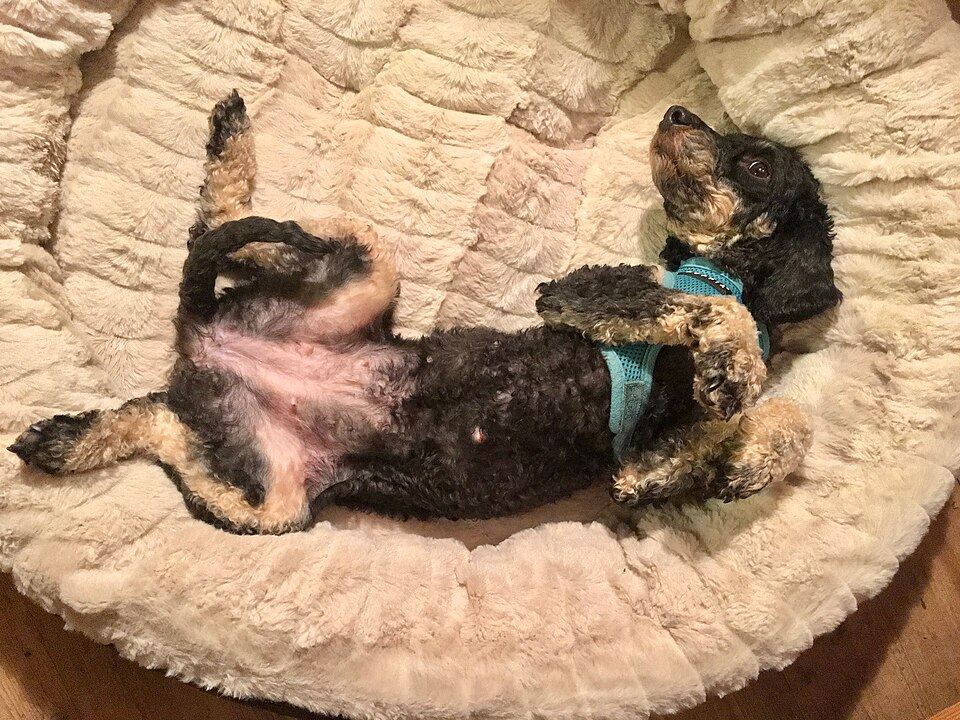
A client rang me a few years ago, annoyed, holding a bed she'd bought online for her cavoodle. The listing said 50 cm. Her cavoodle measured 42 cm stretched out. On paper it should have been comfortable with room to spare, and on paper she was right. What she'd missed was that the bed had a thick bolster running around three sides and a hood over the back quarter, and once you subtracted the walls the flat sleeping space left in the middle was closer to 38 cm. Her dog was curled up with his back legs hanging over the front edge every single night.
This is the most common sizing complaint in the category, and it isn't really about dogs being hard to measure. It's about listings publishing the wrong number.
External versus internal: the gap that causes the arguments
An external dimension is the footprint of the bed as it sits on your floor, measured corner to corner including every wall, bolster, hood and seam. The internal sleeping area is the flat bit the animal actually lies on. The gap between those two numbers is where the trouble lives.
For a flat mattress with a low lip, the gap might be five centimetres. For a high-sided, donut-style bed, it can be fifteen or more, and the taller and softer the wall, the more usable space you lose — a dog doesn't sleep balanced on a soft ridge, they sleep in the hollow in the middle. A bed advertised as 50 cm across may offer only 40 cm of sleeping space. If your dog measures 45 cm, that bed will never fit them.
The fix is simple and slightly tedious: look for the internal sleeping area on the listing, and if it isn't published, subtract the wall thickness from each side yourself. A retailer who won't tell you the internal dimension is a reason to shop elsewhere rather than guess.
Measuring your pet without a fight
You need two numbers, taken while the dog is asleep or very relaxed, because a standing dog gives you measurements that are too short.
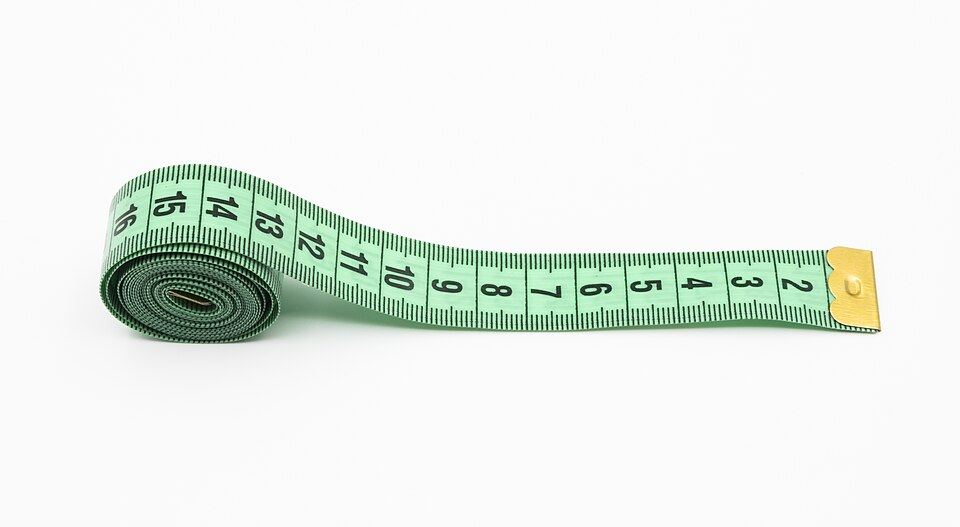
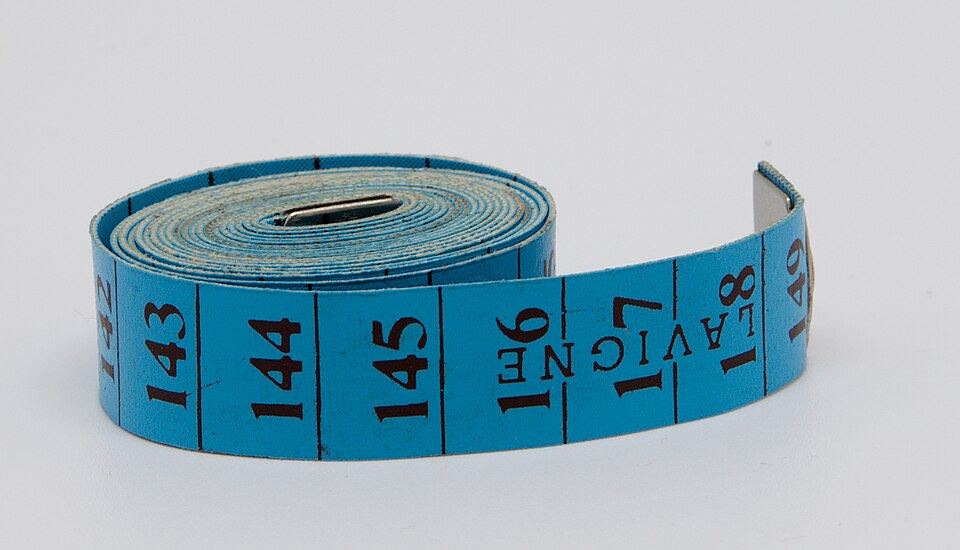
The first is stretched length. Get them lying flat on their side, fully extended the way they sprawl on a hot afternoon, and run the tape from the tip of the nose to the base of the tail. Not to the tail tip — ignore the tail entirely. Add 10 to 15 cm of allowance for shifting in sleep, and you have your target internal length.
The second is curled length, which is the measurement people forget. Run the tape along the back from the nose, over the curve of a naturally curled spine, to the base of the tail. For a dog who sleeps in a tight circle, this is the number that matters, and it will be noticeably shorter than the stretched figure.
Measure twice, on different days. My two rescue cats have produced four different measurements between them, none of which have influenced where they choose to sleep.
- Take the numbers while the dog is asleep or very relaxed.
- Stretched length runs nose to tail base, plus 10 to 15 cm.
- Curled length follows the back over a naturally curled spine.
- Measure twice on different days to catch the changes.
Curlers and stretchers want different beds
Watch how your pet actually sleeps for a week before you buy anything. A curler wants a bed roughly as wide as it is long, with a raised edge to lean against. Give a curler a long rectangular mattress and they'll use a third of it and sleep on the bare floor beside the rest. A stretcher wants length above all else, and a deep round bed leaves them with their spine bent the wrong way or their back legs in the air.
Plenty of dogs do both, and season matters more than people expect. Pip stretches flat across the hallway tiles in February and curls into a greyhound knot in July, which is why she has two beds in different shapes. If that's your dog and you can only buy one, buy for the curled position and go up a size — a curler in a slightly-too-big bed simply curls up in one corner.
Signs the bed is too small
They're easier to spot than people think. Paws or the tail hanging over the edge while asleep. Sleeping half on and half off, with the front half on the bed and the back half on the floor. Circling repeatedly before lying down and never quite settling. Abandoning the bed entirely for the couch, the doormat or your side of the mattress. Waking and moving during the night. And beds that look permanently squashed flat, with the fill pushed out to the edges and nothing left in the middle.
Too large is a subtler problem, and honestly a minority one. For most dogs, bigger is better, and I'd rather see a dog in a bed one size too big than one size too small. Some anxious dogs and small-breed rescues do feel less secure in a wide open space, and they'll show it by sleeping pressed into a corner or dragging in a blanket to make a nest. For those dogs, an enclosed bed with a defined edge does more than extra centimetres.
The compression problem nobody mentions
Here's the part that catches owners of big dogs out. A fibre-filled bed looks magnificent on day one and is measurably flatter after three months under a 40 kg labrador. The fill migrates outward, the middle compacts, and 12 cm of loft in the shop is down to 4 cm by winter. For dogs over about 30 kg, a denser foam base holds its loft far longer, and a removable inner pad lets you re-fluff or replace the filling rather than buying the whole thing again.
One more thing worth sitting with: extra comfort matters more for some dogs than others. A well-padded bed helps reduce pressure on the bony points — hips, elbows, shoulders — that take the weight when a dog lies on a hard floor, and older dogs with stiff joints do noticeably better for it. That's a comfort benefit, not a medical one, and if your dog seems stiff or sore getting up, that's a vet check rather than a thicker bed.
The cavoodle's owner swapped to a bed with a published internal measurement of 50 cm and a low front entry, and he's slept through the night in it ever since. Take your tape measure to your dog while they're asleep, find the internal number on the listing, and when you land between two sizes, go up. Nobody has ever complained that their dog had too much room. — Tessa, Hobart, measuring a greyhound who has just rolled onto the tape.
Frequently Asked Questions
How do I measure my dog for a bed?
Measure your dog while they're lying down and relaxed, not standing. Take the stretched length from the tip of the nose to the base of the tail, ignoring the tail itself, then add 10 to 15 cm. For dogs who curl up, also measure the curled length along the back from nose to base of tail.
What's the difference between external and internal bed dimensions?
The external measurement is the bed's footprint on your floor, including bolsters, walls and hoods. The internal sleeping area is the flat surface your pet actually lies on. Beds with high or thick sides can lose ten to fifteen centimetres between the two, so always check the internal figure before buying.
What are the signs a dog bed is too small?
Paws or the tail hanging over the edge, sleeping half on and half off, circling without settling, abandoning the bed for the couch or floor, and fill that has compacted flat in the middle. Any of these usually mean the internal sleeping area is too short or too narrow.
Can a dog bed be too big?
Rarely. For most dogs a larger bed is better, and being one size up is far safer than one size down. A minority of anxious dogs and small-breed rescues feel less secure in a wide open space, and those dogs usually do better in an enclosed bed with a raised edge to lean against.
Should I size a bed for a curled or stretched dog?
Match it to how your pet actually sleeps. Curlers need a bed roughly as wide as it is long with a raised edge. Stretchers need length above all else. If your dog does both, buy for the curled position and go up a size, since a curler will simply use one corner of a larger bed.
Size & Fit Reference
| Size | External (L×W×H) | Internal sleeping area | Suits pets up to | Typical pets |
|---|---|---|---|---|
| S | 43 × 32 × 10 cm | ~36 × 25 cm | 30 cm curled | Kittens, toy breeds, small cats |
| M | 54 × 42 × 11 cm | ~46 × 34 cm | 45 cm curled | Cavoodle, Pug, average cat |
| L | 66 × 50 × 12 cm | ~57 × 41 cm | 55 cm curled | Cocker Spaniel, large cat |
| XL | 80 × 60 × 13 cm | ~70 × 50 cm | 70 cm curled | Kelpie, Border Collie |
| XXL | 95 × 72 × 15 cm | ~84 × 61 cm | 85 cm stretched | Labrador, two small dogs |
| 3XL | 110 × 82 × 15 cm | ~98 × 70 cm | 100 cm stretched | Great Dane, two medium dogs |
Between two sizes, size up. Note that soft polyester fill compresses under weight — for dogs over about 30 kg, a denser foam base will hold its loft far longer than fibre fill.
Looking for beds & mats?
We stock the gear covered in this guide, with Australia-wide shipping and Afterpay at checkout.
Popular in this range: self-cooling pet mat
Shop Beds & Mats at Paws of Oz