The Pre-Trip Walk-Around: Cover, Tether and Crate Checks
Short answer: walk the car before the dog gets in. Check the cover is anchored and pulled tight, the tether is clipped to a structural point, the crate is strapped so it cannot shift, then sweep every loose item out of the travel space. Five minutes, in that order, before you load the dog.
A student rang me after a Springbrook trip because her back seat had rearranged itself on the M1. The cover had slid off the seatback, her cavoodle had ended up half under it, and she had stopped on the shoulder to fix it with the dog loose in the car. Nobody was hurt, but the fix took longer than the check that would have prevented it: about five minutes, done in the driveway with a coffee in hand. That is the point of a walk-around. It is not about buying more gear. It is about running the same short order of checks every single time, so nothing works loose on the first bump.
Start with the cover, not the dog
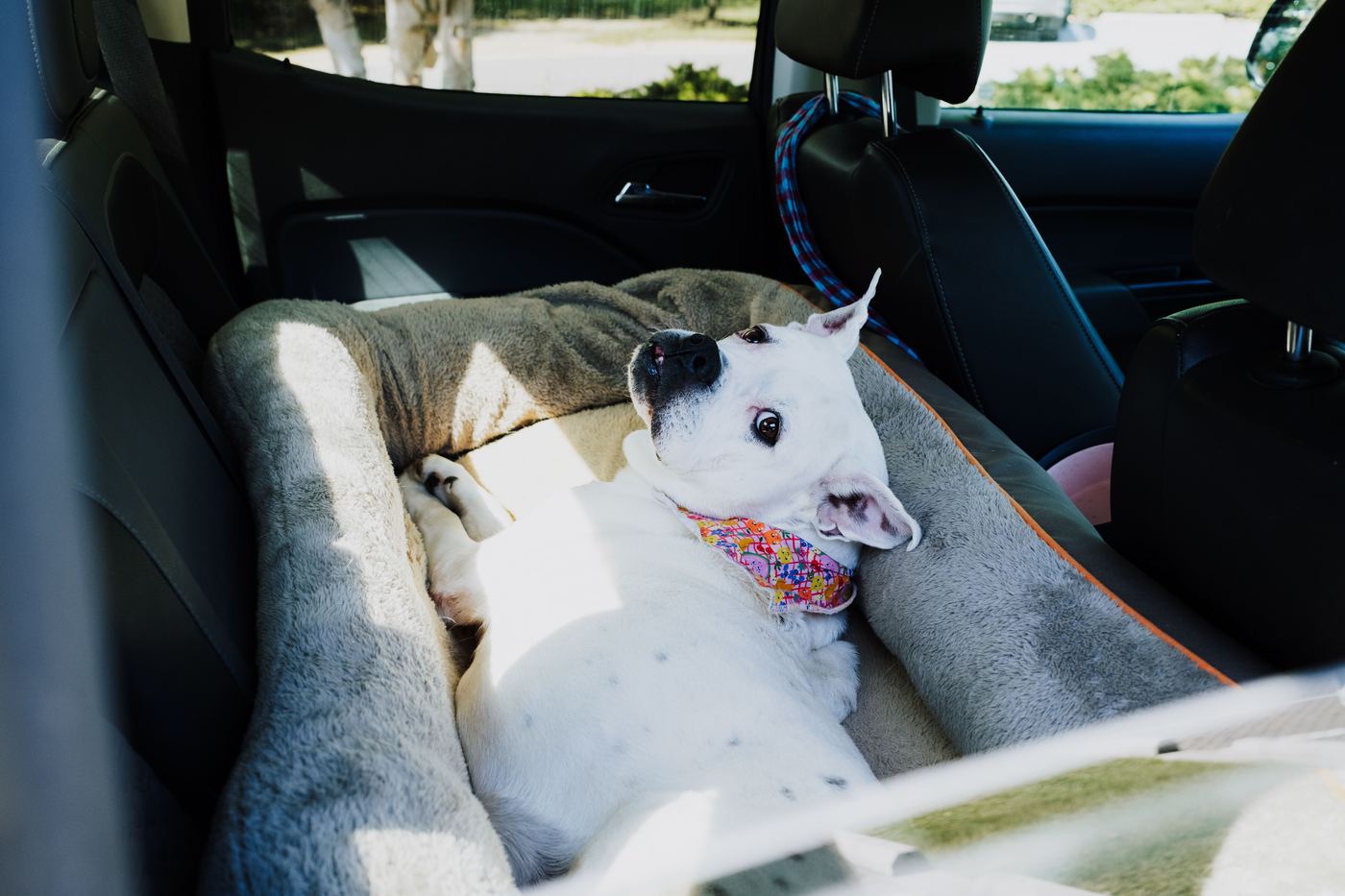
The cover is first because everything else attaches to it or sits on it. Anchor it front and back, pull it tight enough that a flat hand cannot slide it more than a few centimetres, and check the seatback flap is actually over the seatback rather than folded behind it. If your cover uses headrest straps, tug each one; if it uses seat anchors, push them fully into the seat join until they stop.
Then run the load test: press down hard on the seat where the dog will ride. A cover that pops loose under a firm push will not survive a corner. If it moves, retension it or replace the anchoring, and match the cover style to your car before the next trip. Our car seat covers category is a sensible place to compare hammock, bucket and boot styles before you buy a replacement.
Clip the tether to the right point
The tether check has three parts: the attachment point, the clip and the length. Attachment comes first. Clip to a structural point the manufacturer names, such as a child restraint anchor point or a purpose-built ring, and never to a headrest post or a seat rail you have not verified. Give the attachment a firm tug with your hand before the dog arrives.
Then the clip: check the gate closes fully, the spring snaps back, and there is no rust or bent metal. Last, the length. I want the dog able to sit and stand comfortably but not able to reach the front seats or the window edge. If you are unsure what your tether is rated for or where it should attach in your car, ask the manufacturer or a fitment specialist rather than guessing.
Strap the crate so it cannot shift
An unstrapped crate is a box that moves. Position it so it cannot slide forward, then run straps around the crate body and fix them to anchor points, tightening until the crate will not rock when you push a corner. Check the door latches on both settings and look over the hinges for cracks, because a latch that opens on a bump ends the security the crate was bought for.
Inside the crate, pull anything the dog does not need. A loose blanket is fine; a heavy water bowl that can fly is not. If the crate sits in the boot, check what is behind it too, because a hard esky or a toolbox sliding forward into the crate is the same problem wearing a different shape.
Sweep the cabin for loose items
Walk the travel space and remove everything that is not strapped down: the torch on the boot floor, the shopping bags, the metal water bottles, the dog food tin. Anything heavy enough to matter becomes a projectile in a hard stop, and the places people forget are the boot corners, the footwells and under the front seats where a dog can reach.
The sweep also covers the dog's own gear. Leads, spare collars and treat pouches live in a zipped bag, not loose on the seat. I teach students to keep one small zipped kit in the car permanently, so the sweep stays short: open the kit bag, confirm the contents, close it, done.
- Anchor and pull-test the cover before anything else goes in the car.
- Clip the tether to a verified structural point, never a headrest post.
- Strap the crate to anchor points and test that it will not rock.
- Remove or zip every loose item in the cabin and the boot.
- Run all the checks before loading the dog, not after.
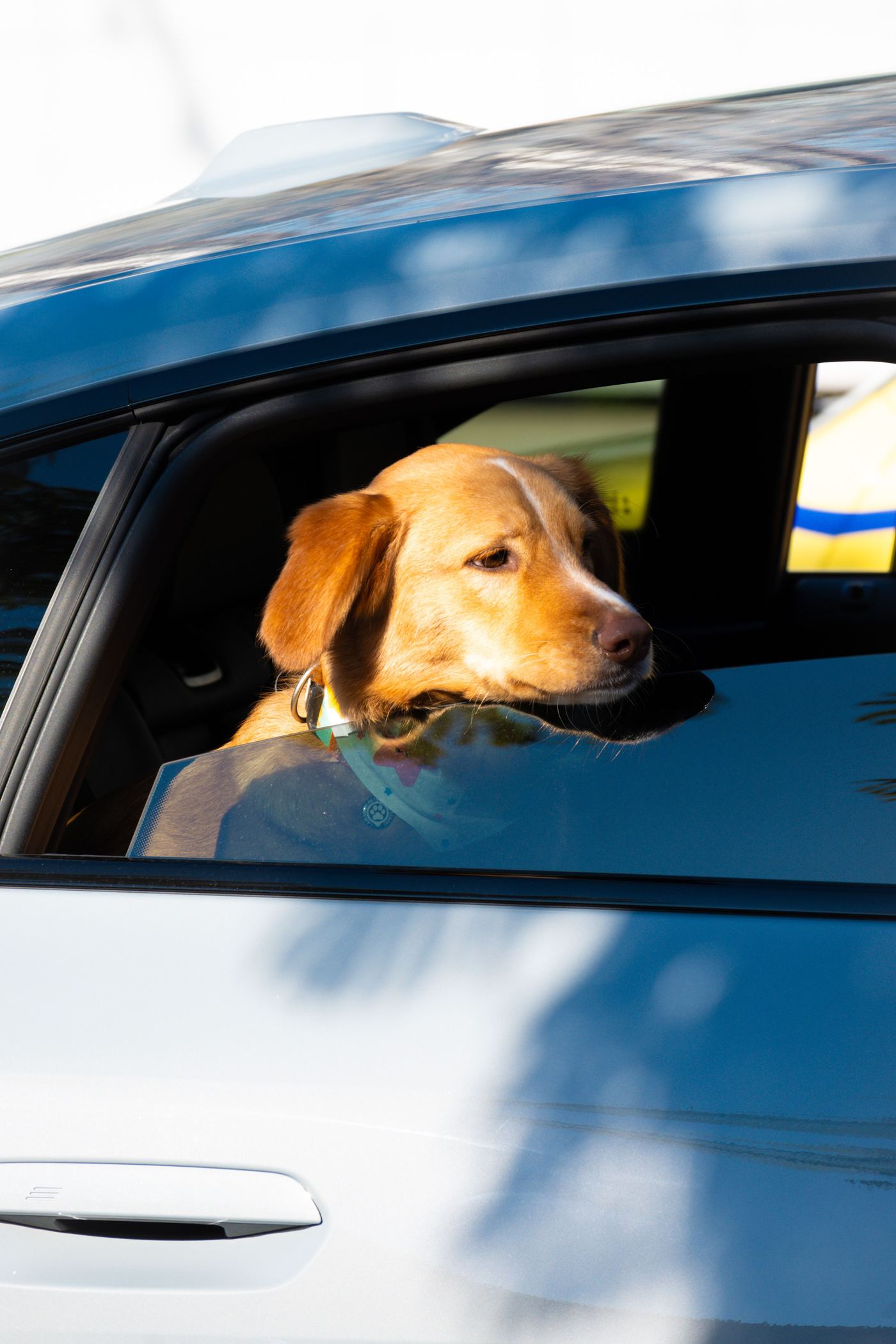
Do the checks before you load the dog
Order matters more than people expect. Every check above is easier with an empty car: you can yank a cover flat, crawl across a seat and slam a boot without a dog underfoot or a door standing open. Doing the walk-around after loading is how dogs end up waiting in a warm car while someone rethreads a strap.
So the sequence I teach is fixed: cover, tether, crate, sweep, then the dog last. If a check fails and needs more than five minutes to fix, take the dog out of the equation first, into the shade, with water, and fix it properly. A failed check does not become safe because you are running late.
| Setup | Suits best | Pre-trip check |
|---|---|---|
| Hammock cover with tether on the back seat | Most sedans and hatchbacks with a single dog | Straps taut, tether clipped to an anchor point |
| Bucket-style cover on one back seat | Dogs that ride behind the passenger seat | Seatback flap secure, anchors pushed fully home |
| Crate strapped in the boot | Dogs that travel better contained | Straps tight, door latch tested on both settings |
| Crate behind a cargo barrier | Wagons and 4WDs on long runs | Barrier bolts tight, crate strapped to tie points |
| Two covers, two-dog back seat | Households with dogs that need separation | Divider secure, both tethers checked for tangle |
After the trip, reset and recheck
Unload in reverse order: dog out first, then gear. Run a hand over the cover for new wear at the anchor points, check the tether clip for grit from the road, and look at the crate straps for chafe where they ran over a sharp edge. Two minutes now, and you start the next trip already checked.
Then fix what you noticed rather than noting it for later. A cover that rode up once will ride up every trip. A strap that frayed on corrugations will not survive the next lot. Gear fails at the same point every time it fails, which is exactly why a walk-around finds it before the highway does.
Frequently Asked Questions
Can I clip a tether to my dog's flat collar?
No. A collar takes leash pressure from a person walking, not the forces of a moving car, and the failure modes are not the same. Use purpose-made travel gear attached as the manufacturer directs, and if you are unsure what that is for your dog and your car, ask a fitment specialist. In every class I teach, borrowed hardware is the first thing I check.
How long should the tether be?
Short enough that the dog cannot reach the front seats or put its head out of a cracked window, long enough to sit and stand without strain. Most manufacturers print the intended adjustment range, so start there. If the correct length in your car means the dog cannot sit comfortably, the setup is wrong for that dog, and it is worth asking a specialist rather than loosening the tether to make it work.
Do I need a crate and a tether, or just one?
One properly secured restraint per dog is the rule I teach: a tethered harness on the seat, or a strapped crate, not both on the same dog at once. What you do need either way is the walk-around, because a crate without straps and a tether on the wrong point both fail quietly until the day they fail loudly. Fit and habit matter more than price.
How tight should the cover actually be?
Tight enough that a firm push with a flat hand does not shift it more than a few centimetres, and no tighter than the straps allow without strain. A sagging cover folds under a dog and wears through at the seat edge far faster. If you cannot get the cover taut with the straps fully tensioned, the fit is wrong, and no roadside re-anchoring will fix that.
How often should I replace travel gear?
I replace on condition, not on a schedule. Retire a cover once the anchoring no longer holds a pull test, retire a tether with a rusty or bent gate the day you notice it, and retire any crate with a cracked latch or hinge immediately. Sun and heat age straps faster than use does, which is why the walk-around matters more here than in most checks I teach.
Looking for dog car seat covers?
We stock the gear covered in this guide, with Australia-wide shipping and Afterpay at checkout.
Popular in this range: waterproof seat cover
Shop Car Seat Covers at Paws of Oz