Beach Days With Dogs: Sand, Salt, Sun and Blue-Green Algae
Short answer: check the sign first, then check the water, because blue-green algae is the hazard that can actually kill and it gives you no warning. Watch the sand too, fine at eight in the morning and genuinely painful by midday. The truth is most beach gear is optional next to shade, fresh water and a towel, though a cooling vest and a flotation vest do different jobs and Olive taught me not to confuse the two.
There is a stretch of coast north of Perth where Olive took off after a seagull at full sprint, realised halfway that the ground had become water, and launched herself into a wave with the expression of a dog who had made a terrible arithmetic error. She came out soaked, offended, and sanded from eyebrows to tail. It was forty degrees. I had one bottle of water and no towel.
A decade of grooming and fitting later, I've been to a lot of Australian dog beaches, and the same handful of mistakes turn up every time. A beach asks more of a dog than a park does, and the hazards aren't obvious until you've met one.
Read the sign before you unclip the lead
Every council in Western Australia draws its own map, and they change. Some beaches are off-lead all day, some only before nine in the morning, some allow dogs on-lead along a defined strip, and some prohibit them entirely. A beach that was fine for dogs last summer may have been rezoned after a nesting season or a complaint.
I've watched people get a fine at a suburban Perth beach because a friend told them it was fine. Check the council website that morning, then check the sign at the entrance. Two minutes, and it's the difference between a good day and a two-hundred-dollar one.
Etiquette that keeps beaches open
Dog beaches exist because enough owners behaved well for long enough, and they get closed because a few didn't. Once a stretch of coast is closed to dogs it very rarely comes back.
The specifics: bag it every time, and carry the bag out if there's no bin. Don't let your dog run into a family's picnic or through a group of small children, however friendly you believe them to be. Not every dog at the beach wants to meet yours, and an owner shortening their lead is telling you so.
Recall is the one I harp on about, because I've seen it fail more often than anything else. A dog who comes back beautifully in the park may ignore you on a beach full of smells, other dogs and dead fish. If your recall isn't reliable in a distracting environment, use a long line. It's not a failure, it's honesty about what your dog can do.
- Bag it every time and carry it out if there is no bin.
- Keep your dog away from family picnics and small children.
- Not every dog wants to meet yours; read a shortened lead.
- Reliable recall fails on beaches, so use a long line there.
- Beaches closed to dogs rarely reopen once owners misbehave.
Heat, sand and salt
Sand holds heat far longer than you'd expect. The five-second test people use on pavement applies to sand and rock platforms too: press the back of your hand down and count. If you can't hold it there comfortably, your dog shouldn't be standing on it. Midday walks on hot sand can burn the pads badly.
Salt water is the quieter problem. Dogs drink it, and it doesn't agree with them: a few mouthfuls means vomiting, diarrhoea or both, and a dog who keeps drinking while swimming can become genuinely unwell. Bring more fresh water than you think you need, offer it often, and take the ball out of the water game if your dog is gulping between retrieves.
Then rinse them off. Salt and sand left in a coat dries the skin out, and in a breed like Olive with almost no coat to begin with, leaves them itchy by evening.
Blue-green algae: the one I take seriously
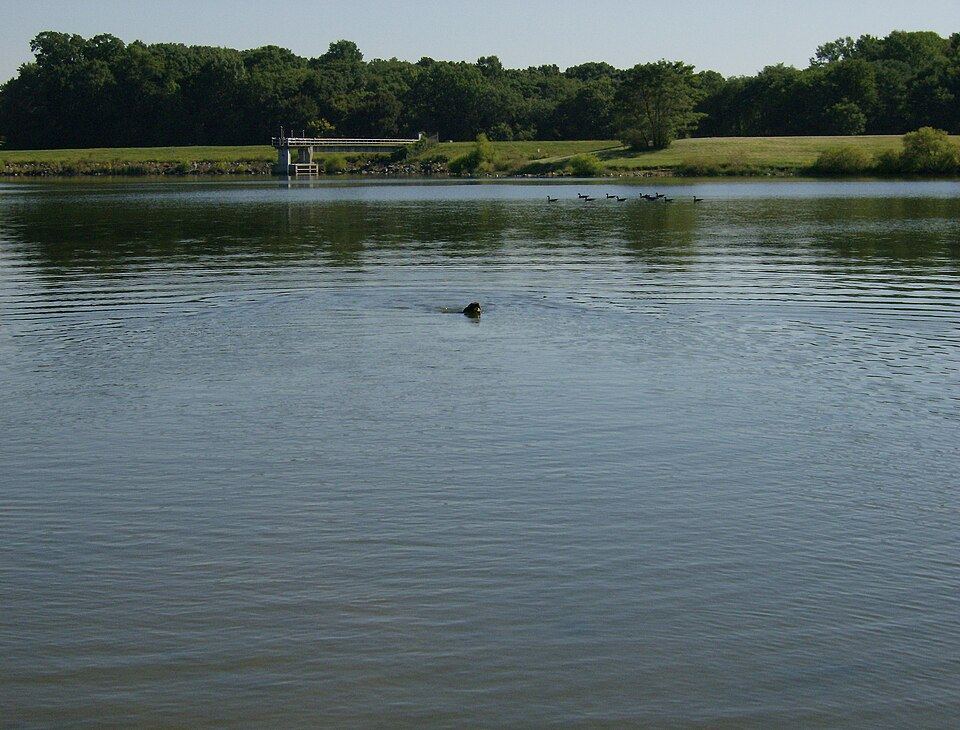
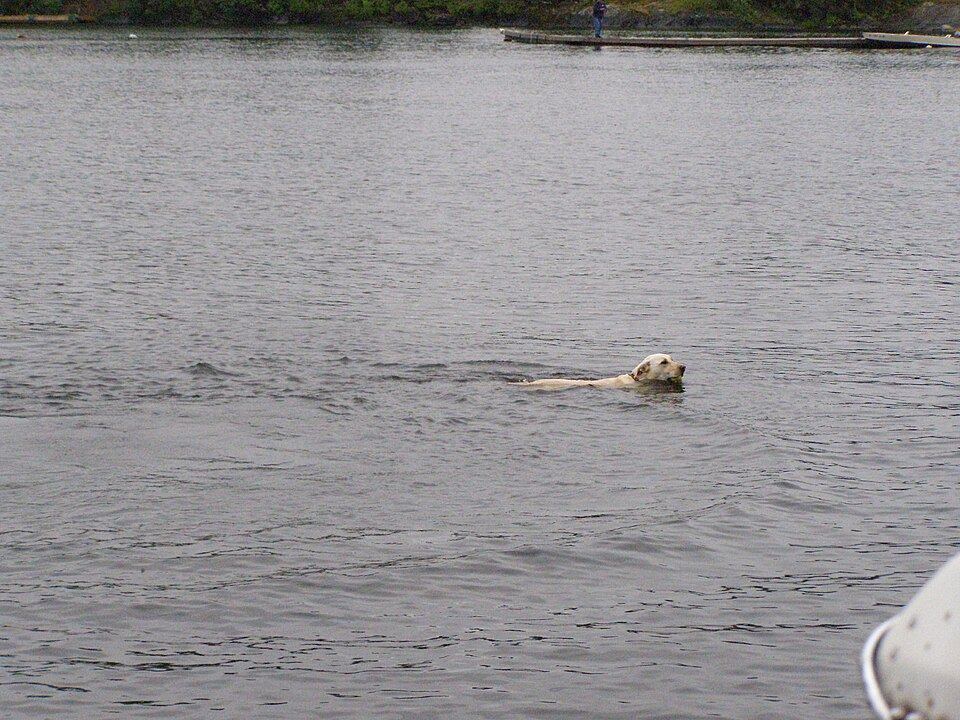
Blue-green algae shows up in Australian waterways, including the Swan and Canning river systems and a long list of dams, lakes and slow-moving estuaries. Blooms can look like green paint, a scummy film, or brownish streaks in otherwise clear water. Some are visible and some are not, and you cannot tell by looking whether one is toxic.
Dogs are at particular risk because they swim in it and then lick it off their coat, and it can be very seriously harmful — cases have ended badly. If there's a warning sign at the water's edge, believe it. If the water looks off — coloured, murky, smelling stagnant, or with scum near the shore — keep your dog out and don't let them drink or eat anything on the bank. Check your state's water quality alerts before you go, especially after warm still weather. If your dog has been in suspect water and becomes unwell, call a vet straight away.
The rest of the hazard list
Fish hooks are everywhere near popular fishing spots, and a dog investigating a dead fish can end up hooked in the lip, the paw or the tongue. Don't pull it out yourself if it's barbed. Jellyfish wash up after an onshore wind and curious noses get stung. Broken shells and glass in the sand, and estuary banks that look solid and aren't.
The gear that earns its place
Fresh water and a bowl, obviously. A shade setup, because a black dog on white sand in February with no shade is in trouble quickly. A drying coat or an old towel in the car, and paw wax or boots if your dog will tolerate them.
For pale dogs, a rash vest is worth considering. A whippet with pink skin and a white belly burns, and the ear tips and the bridge of the nose are where it shows first. A light, close-fitting vest covers the back and flanks and dries fast. It's sun protection, not flotation.
Cooling vest and flotation vest are not the same thing
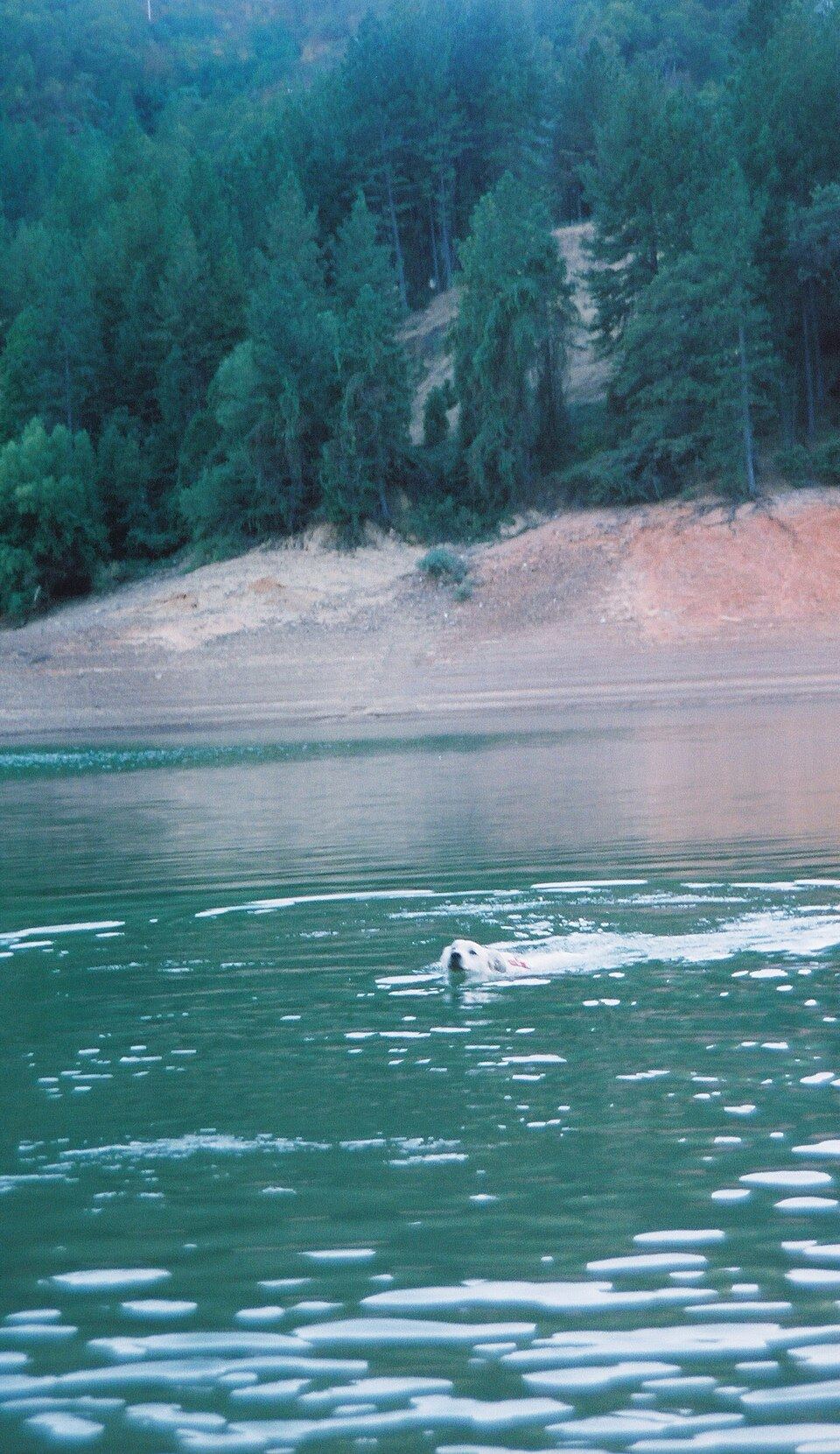
I'm asked this at least once a week in summer, because the two sit next to each other in a catalogue and look similar. A cooling vest works by evaporation: you wet it, wring it out, and as the water evaporates it draws heat off the body. It's for staying comfortable on land. A flotation vest has foam panels and is for buoyancy in the water.
They are not interchangeable, and the swap is dangerous in both directions. A soaked cooling vest is heavy and gives a dog no support at all. A flotation vest is insulating and will make a hot dog hotter on land. For a beach morning with swimming, pack both if you have them, or keep the swimming short and the shade generous.
And the caveat I give everyone about water: a flotation aid helps a tired dog and gives you something to hold, but it does not prevent drowning and never replaces watching them.
Olive now has her own beach bag: water, a bowl, a towel, and a light vest for the pale bits. She still chases the seagulls and still looks shocked every time the ground turns to water. — Maddie, Perth, hosing sand out of the ute for the third time this week.
Frequently Asked Questions
Are dogs allowed on Australian beaches?
It depends entirely on the local council. Some beaches are off-lead, some are off-lead only at certain hours, some allow dogs on-lead on a defined strip, and some prohibit them completely. Rules change between suburbs and between seasons, so check the council website and the sign at the beach entrance every time.
What is blue-green algae and why is it dangerous for dogs?
Blue-green algae is a type of bacteria that blooms in still, warm, nutrient-rich water, including parts of the Swan and Canning river systems and many Australian dams and lakes. Some blooms produce toxins that can be very seriously harmful to dogs, who are exposed by swimming in it and then licking their coat. Obey warning signs, keep dogs out of water that looks coloured, scummy or stagnant, and call a vet immediately if your dog becomes unwell after swimming.
Should my dog wear a rash vest at the beach?
For pale, thin-coated or pink-skinned dogs, yes, it is worth considering. It covers the back and flanks where sun damage shows up first, and it dries quickly. It is sun protection only. It provides no buoyancy, and it does not replace shade, fresh water and avoiding the middle of the day.
Is it safe for dogs to drink seawater?
No. A few mouthfuls commonly cause vomiting or diarrhoea, and a dog who keeps drinking while swimming can become quite unwell. Take plenty of fresh water, offer it often, and limit retrieving games in the water if your dog is swallowing a lot between fetches.
Can I use a cooling vest instead of a flotation vest?
No, and the swap is dangerous either way. A cooling vest works by evaporation and is for staying comfortable on land; wet, it is heavy and provides no support in the water. A flotation vest has foam panels for buoyancy and is insulating, so it will make a hot dog hotter on land. If your day involves both, pack both.
Size & Fit Reference
| Size | Back length | Chest girth | Neck | Weight guide | Typical breeds |
|---|---|---|---|---|---|
| XS | 25–30 cm | 32–38 cm | 22–26 cm | 1.5–3 kg | Chihuahua, kitten, small cat |
| S | 30–36 cm | 38–46 cm | 26–30 cm | 3–5 kg | Cavoodle, Pug, average cat |
| M | 36–42 cm | 46–54 cm | 30–35 cm | 5–9 kg | Cocker Spaniel, small Terrier |
| L | 42–50 cm | 54–64 cm | 35–41 cm | 9–16 kg | Kelpie, Border Collie |
| XL | 50–58 cm | 64–74 cm | 41–47 cm | 16–24 kg | Labrador, Greyhound |
| XXL | 58–66 cm | 74–86 cm | 47–53 cm | 24–34 kg | Great Dane, Mastiff |
Between two sizes? Size up. A garment that is slightly roomy can be adjusted; one that is too tight will not sit flat and will not work.
Looking for pet apparel?
We stock the gear covered in this guide, with Australia-wide shipping and Afterpay at checkout.
Popular in this range: fleece dog jumper · printed dog hoodie
Shop Apparel at Paws of Oz