Coat, Jumper or Pyjamas? What to Actually Buy for Winter
Short answer: buy the coat if the dog is outside in wind or wet, the jumper if the cold is dry and indoors, and skip the pyjamas unless you have a thin-coated dog on cold tiles. What decides it is the job the garment is doing, not how warm it feels in your hand. You should also know Olive owns eleven garments and wears four, which tells you most of what I think about buying all three.
Every April my messages fill up with the same question, usually sent at night with a screenshot attached: three tabs open, a weatherproof coat, a knit jumper and a pair of pyjamas with sheep on them, and please pick one. I usually can't, because the right answer depends on what your dog is doing while they're wearing it, and a screenshot doesn't tell me that.
I'm Maddie, a groomer and mobile pet clothing fitter in Perth. Olive, my whippet, owns eleven garments and wears four of them regularly, which makes her both my best model and a walking argument against buying everything. Here's how I sort the categories when someone opens the doors of the ute.
The outdoor coat: for wet, wind and moving air
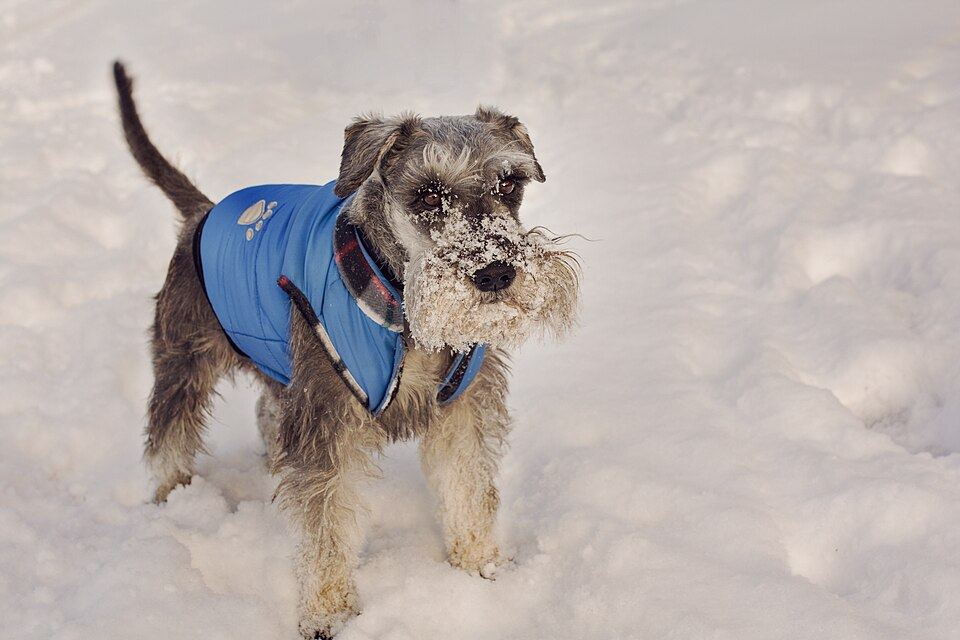
A proper winter coat is the layer for weather. It has a close-woven outer face that sheds rain and blocks wind, often a light fill or fleece lining, and it covers the top of the dog from the base of the neck to the base of the tail plus a panel across the chest. That chest panel is the part people overlook, and it's the part that matters most on a windy Melbourne afternoon, because an open front lets cold air strip warmth straight off the underside where the coat is thinnest.
This is the garment I recommend for a short-coated dog who is outside and active in genuinely cold conditions — Hobart, the Blue Mountains, Canberra in July, a frosty Melbourne morning walking loop. It's also the one that will annoy you if you buy it for a mild coastal winter, because a weatherproof shell on a sunny fifteen-degree Perth afternoon is overkill and dogs get warm in it faster than owners expect.
The knit jumper or hoodie: for dry cold and indoors
A knit jumper does a different job. It's a still-air layer — the loops in the fabric trap warm air close to the body, and the dog's own heat does the rest. No shell, no weather resistance, and it will soak through in twenty seconds of real rain and then hold that water against the skin like a wet dishcloth. Which is fine, because that's not what it's for.
The jumper is for the house. It's for the dog asleep on tiles with the heating off, the elderly dog who sleeps more and moves less, the short-coated dog in an old Perth or Melbourne home where the floor stays cold no matter what the thermostat says. A hoodie is the same idea with a bit more coverage and, honestly, mostly a different look. If the hood flops over the eyes it's decoration, not function, and I've yet to meet a dog who asked for it.
This is where most of my clients land and where most of the value is. Olive's rotation is almost entirely knitwear.
Pyjamas: narrower use than you'd think
Dog pyjamas are the category I get the most questions about and sell the fewest of, because they suit a specific dog. They're for dogs who sleep on hard surfaces and lose heat overnight, for dogs clipped very short for summer who are now facing their first cold snap, and for hairless or near-hairless breeds. They're also handy for a dog who is shedding heavily, since they keep a surprising amount of fur off the bed.
They are not for everyone. A thick-coated dog in pyjamas in a heated house will overheat, and any dog who chews at clothing should not be left unsupervised in a fitted garment overnight. If your dog sleeps on your bed under a doona, pyjamas are redundant — you have already solved that problem.
Which is warmer?
Wrong question, and I understand why people ask it. Warmth doesn't live in the garment, it lives in the combination. A heavy knit is warmer than a light shell in still, dry air, and dramatically colder in wind and rain, because the moment that knit is wet it stops insulating and starts conducting. A weatherproof coat is warmer than a jumper in wind and wet and stuffier than a jumper indoors.
Ask instead: are they outside or inside, is it wet or dry, are they moving or resting, and how cold is the surface they're lying on? Answer those four and the category picks itself.
Layering, and the fit check
Layering works, but only if you size for it. A jumper under a coat needs the coat a size up from the jumper, not the same size, or you compress the knit and lose the trapped air that was doing the work. When someone brings me a dog who is "still cold in their coat", the cause is very often a coat fitted tight over a thick layer.
The fit check I run takes thirty seconds. Two fingers flat under the chest strap and under the neck, no gaping at the shoulder, the tail end sitting level with the base of the tail rather than hanging over it, and no fabric bunched in the armpit. Then I watch the dog take six steps. If they gait oddly or do that little hesitation lift at the front, the leg holes are wrong and no amount of adjustment fixes it.
Measure the back from the base of the neck to the base of the tail and the chest at its widest point, check the brand's chart, and size up when you land between two sizes. I refit a lot of Petbarn and Kmart purchases that were bought by weight alone; they're decent garments, they were just guessed at.
- A coat over a jumper needs to be a size up.
- Two fingers flat should fit under the chest strap.
- The tail end should sit level with the base of the tail.
- Watch the dog take six steps to check the gait.
- Measure the back and chest, then size up between sizes.
The honest part about beanies and scarves
A dog beanie and a dog scarf are costume. I say that as someone who has sold them and taken the photo. A dog loses very little heat from the top of their head compared with their torso, and the ears are a major part of how they regulate temperature and read the world, so covering them has a real cost. A scarf sits over the throat and chest, which is a bit more useful, but it's also the item most likely to snag on something or be chewed.
They're lovely for a photo or a short supervised outing. They are not doing thermal work that a well-fitted coat or jumper isn't already doing better. Buy one because it makes you happy, not because you're worried about your dog's ears.
If you buy one thing, make it the layer that matches where your dog spends the most hours — indoors on a cold floor, or outside in wind and rain. Olive's answer is a knit jumper, worn nightly from June to August, and a coat for the handful of mornings a year when the wind comes off the river properly. Noodle remains gloriously naked and entirely unbothered. — Maddie, Perth, typing this with a whippet on my feet and a cat on the heater.
Frequently Asked Questions
Which is warmer for a dog, a coat or a jumper?
It depends on the conditions rather than the thickness. A weatherproof coat is warmer outdoors in wind and rain because it blocks moving air and sheds water. A knit jumper is warmer in still, dry air and indoors, because the loops trap air. A wet jumper stops insulating altogether.
Do dogs really need pyjamas?
Only some do. Pyjamas suit dogs who sleep on hard cold floors, dogs clipped very short, hairless breeds and heavy shedders you would rather keep off the bedding. A thick-coated dog sleeping under a doona in a heated house does not need them, and no dog should be left unsupervised in clothing if they chew at it.
Can I put a jumper under a coat?
Yes, but buy the coat a size up from the jumper. Layering only works if the knit underneath keeps its loft; a coat fitted tightly over a thick jumper compresses the trapped air and cancels out the benefit. Check that the dog can still move freely at the shoulder.
Are dog beanies and scarves worth buying?
They are mostly costume. Dogs lose relatively little heat from the head, and their ears help them regulate temperature and read their surroundings, so covering them has a cost. A scarf sits nearer the chest and does slightly more, but it is also the item most likely to snag or be chewed.
How should a winter dog jumper fit?
You should be able to slide two fingers flat under the chest strap and the neck, with no gaping at the shoulder and no bunching in the armpit. The back should finish level with the base of the tail. Then watch the dog walk six steps — any hesitation or odd gait means the leg holes are wrong.
Size & Fit Reference
| Size | Back length | Chest girth | Neck | Weight guide | Typical breeds |
|---|---|---|---|---|---|
| XS | 25–30 cm | 32–38 cm | 22–26 cm | 1.5–3 kg | Chihuahua, kitten, small cat |
| S | 30–36 cm | 38–46 cm | 26–30 cm | 3–5 kg | Cavoodle, Pug, average cat |
| M | 36–42 cm | 46–54 cm | 30–35 cm | 5–9 kg | Cocker Spaniel, small Terrier |
| L | 42–50 cm | 54–64 cm | 35–41 cm | 9–16 kg | Kelpie, Border Collie |
| XL | 50–58 cm | 64–74 cm | 41–47 cm | 16–24 kg | Labrador, Greyhound |
| XXL | 58–66 cm | 74–86 cm | 47–53 cm | 24–34 kg | Great Dane, Mastiff |
Between two sizes? Size up. A garment that is slightly roomy can be adjusted; one that is too tight will not sit flat and will not work.
Looking for pet apparel?
We stock the gear covered in this guide, with Australia-wide shipping and Afterpay at checkout.
Popular in this range: printed dog hoodie · evaporative cooling vest
Shop Apparel at Paws of Oz