How to Get a Dog Used to Wearing Clothes (Without a Fight)
Short answer: treat it as training with a timeline, not a wrestle at the door. Biscuit in Subiaco had learned to cross the room when the coat came out of the drawer, because the method used on her was to hold the dog still and wait for the objecting to stop. The protocol runs coat on the floor, drape without fastening, fasten for seconds with food, then minutes indoors. If you only take one thing, take this: the dog keeps the option to walk away.
A woman in Subiaco called me out last winter because her cavoodle, Biscuit, "refused" to wear the coat she'd bought. Her method was to put it on, hold Biscuit still while she did up the straps, and wait for the dog to stop objecting. By the time I got there, Biscuit was crossing the room when the coat came out of the drawer.
That's the standard mistake, and it isn't her fault — nobody tells people that getting a dog used to wearing clothes is a training job with a timeline. It takes days to weeks, not minutes, and it's built on the dog having the option to walk away. Here's the protocol I use in the ute.
Step one: the coat on the floor
Put the garment flat on the ground somewhere ordinary — the lounge room floor, not the vet's waiting room — and drop treats on and around it. Don't call the dog over, don't point, don't talk much. Just let the treats exist. Most curious dogs will wander over inside a minute. Every glance toward the coat gets a treat. Every sniff gets a better one.
Do two or three short sessions of this. It sounds absurdly slow, and people skip it constantly, and it's the step that makes the rest work. What you're building is a simple association: this object predicts good things. Once the dog is walking over to the coat on their own looking for a reward, you're ready for the next bit.
Step two: drape, don't fasten
Pick up the coat, let the dog see it, treat. Drape it over their back without doing up a single strap, treat, then lift it straight off. That's the whole exercise. Five seconds, maybe ten. Repeat it a handful of times and finish on a good one.
Nothing is fastened at this point, and that matters. A garment resting loosely on a back is a totally different sensation from a garment held in place by a chest strap, and splitting those two experiences is what stops the whole thing collapsing later. I've had dogs happily carry a draped coat around on day two who'd have panicked if I'd clipped it.
Step three: fasten for seconds, with food
Now do up the straps — loosely, correctly fitted but not snug — give a couple of treats in quick succession, and undo them immediately. We are talking about five seconds of wear. Then ten. Then thirty. Have something genuinely good on hand: chicken, cheese, the good stuff, not the dry biscuit from the pantry.
Sessions should be short. Two or three minutes a few times a day beats one long weekend session, because dogs consolidate this kind of learning between sessions rather than during them. If you're doing it right, it's boring, and boring is the goal.
- Do up the straps loosely and undo them after a few seconds.
- Build from five seconds to thirty as the dog stays calm.
- Use chicken or cheese, not the dry biscuit from the pantry.
- Two or three minutes a few times a day beats one long session.
Step four: minutes indoors, then the outside
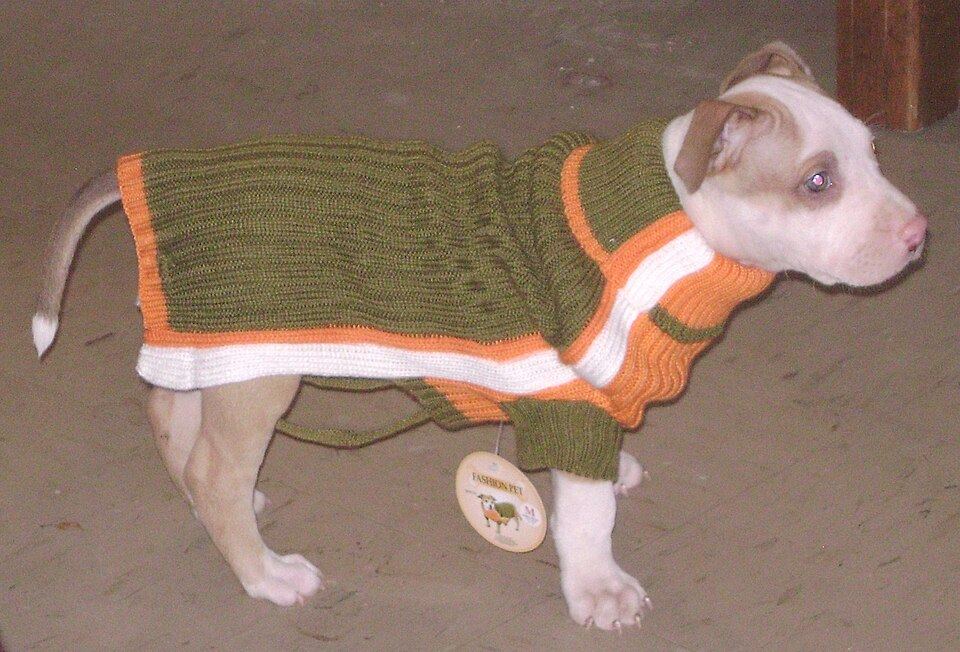
Build to a few minutes of wear while your dog is doing something normal — eating, chewing, following you around the kitchen. Don't make them sit and endure it. Movement helps; a dog who is walking and sniffing is processing the sensation rather than fixating on it.
Only when your dog is relaxed indoors for ten minutes at a time do you take it outside, and even then keep the first outdoor sessions short and thoroughly supervised. Outdoors adds wind, noise, other dogs, and the coat flapping against their sides. A dog who's fine in the kitchen can be undone at the park.
The signals that mean back up a step
Freezing in place, head low, tail tucked. Lip licking when there's no food around. Ears pinned flat. A whale eye, where you can see the whites. Yawning repeatedly. Scratching at the coat. A sudden low posture or an attempt to roll on it. Any of those means you've moved too fast and you go back to the previous step for a day or two — not forward, not onward regardless.
Never hold a dog still to get a garment on, and never restrain them while they're wearing it. It works once and then it never works again, because you've taught them that struggling is the only thing available. If a dog is truly panicking, take it off, throw a treat on the floor, and end the session on something easy.
And some dogs never take to it. Do dogs like wearing clothes? Some clearly do, plenty tolerate it, and a few never accept it, and with those dogs the answer is to stop. A shorter walk at a warmer hour is a perfectly good outcome.
Puppies: earlier, briefer, and measure again
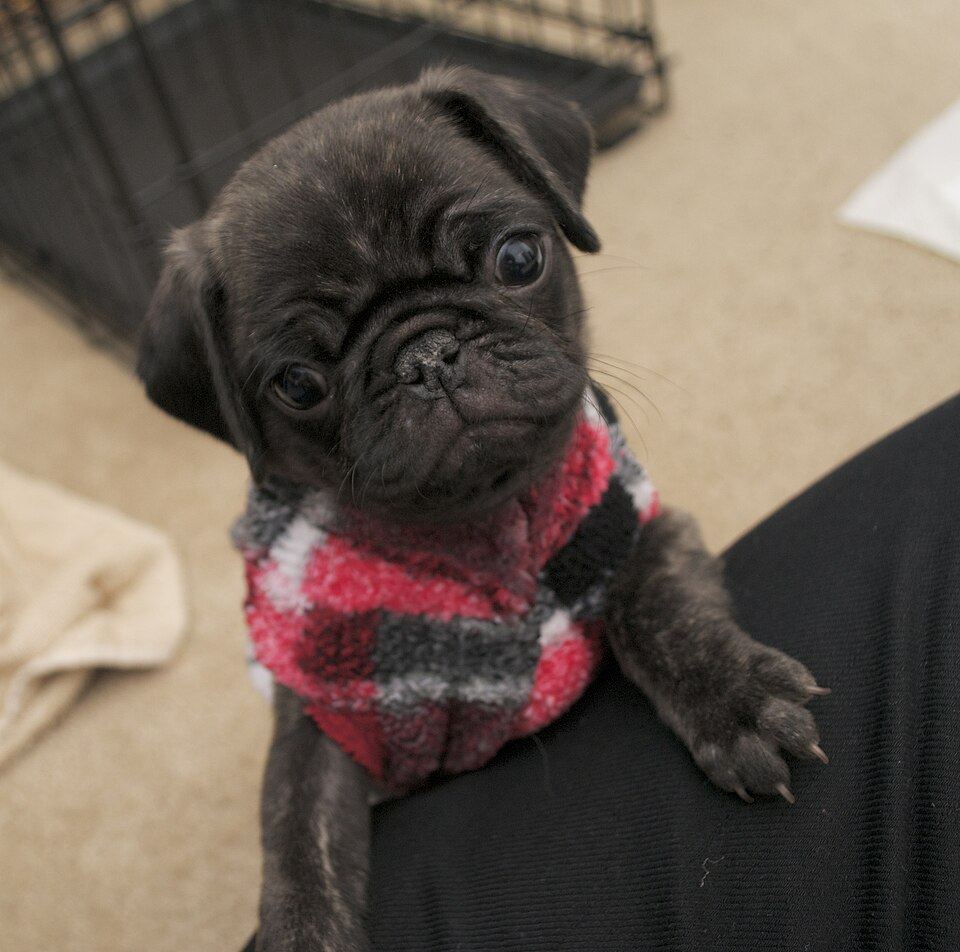
Puppy clothes Australia shopping goes wrong predictably: someone buys a size small for an eight-week-old, the puppy grows, and the garment is now cutting into the chest. Puppies can put on noticeable width in a fortnight. Re-measure every two weeks, and keep early sessions very short — thirty seconds, once or twice a day, always with food.
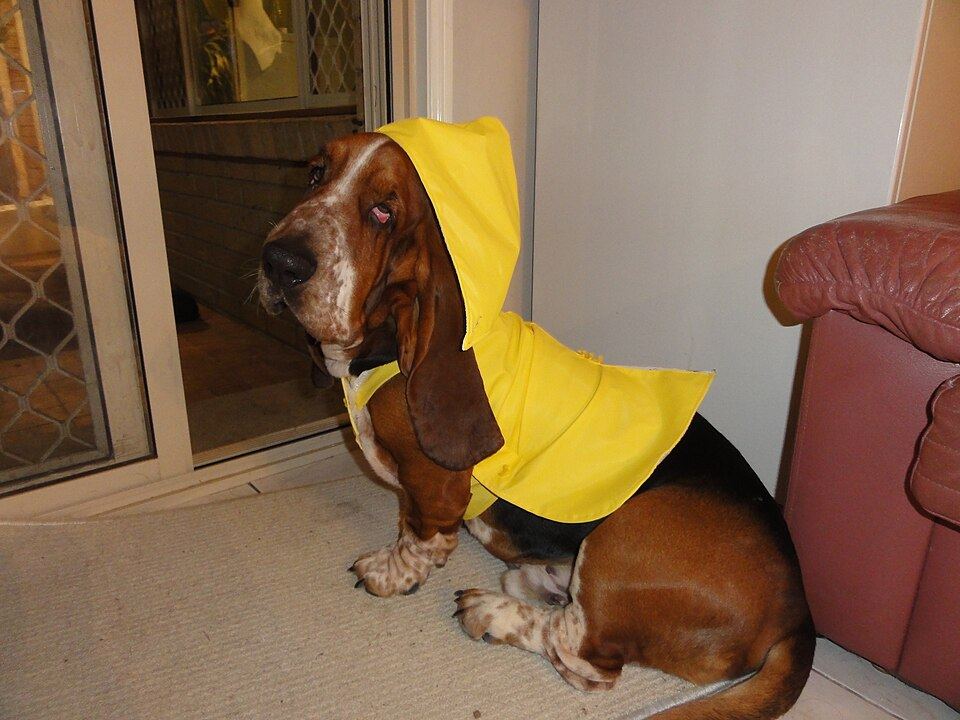
Starting young helps, because puppies in their socialisation window take new sensations far more readily than adults. Olive met a raincoat at twelve weeks and hasn't blinked at one since. But don't confuse that with unlimited wear time: a growing puppy in a garment that's slightly tight will rub under the front legs before you notice.
Care and washing, so you're not buying again next year
Fasten every strap and clip before it goes in the machine. Loose hook-and-loop tabs are the number one reason coats come out of a wash with the lining shredded, and they'll happily destroy everything else in the load too. A delicates bag is worth the four dollars.
Cool wash, mild detergent, and no fabric softener on anything technical — softener coats the fibres and wrecks the wicking and water-resistant finishes that make the garment worth owning. Skip it on cooling vests and rain shells entirely.
Air dry out of direct sun. Australian UV will fade a coat in a single season and it's hard on elastic, and tumble dryers do a quick job on waterproof membranes. Hang it in the shade, and once it's dry, run your hand over the seams and give the straps a tug. Stitching at the chest panel and the D-ring attachment is where things let go first, and a strap that fails mid-walk is a lost coat or a loose dog.
Biscuit took eleven days, which is about average, and his owner's main job was doing nothing on the days he wasn't ready. Slow is fast with this. Set the coat on the floor tonight with a treat on it, and go from there. — Maddie, Perth, writing this next to a pile of four coats waiting to be re-stitched.
Frequently Asked Questions
How long does it take a dog to get used to wearing clothes?
Most dogs take several days to a few weeks of short daily sessions. Puppies and confident dogs are often quicker; anxious or rescue dogs can take much longer. Short sessions of two or three minutes work better than occasional long ones.
What should I do if my dog freezes when wearing a coat?
Take the garment off immediately, give your dog space and something pleasant, and go back to the previous training step for a day or two. Freezing is a stress response, and waiting it out or holding the dog still makes the problem worse.
At what age can I start putting clothes on a puppy?
You can begin gentle, positive introductions during the socialisation period, around eight to twelve weeks, with sessions of just a few seconds and plenty of food. Keep it brief and re-measure every couple of weeks as the puppy grows.
How should I wash dog clothes?
Fasten all straps and clips first, use a delicates bag, wash cool with a mild detergent, and never use fabric softener on technical or water-resistant fabrics. Air dry in the shade rather than tumble drying or leaving it in the sun.
What if my dog never accepts wearing clothes?
Some dogs never take to it, and that is a reasonable outcome. Adjust the walk instead by going at a warmer time of day, shortening the route, or sticking to sheltered areas, rather than forcing a garment onto a dog who is distressed.
Size & Fit Reference
| Size | Back length | Chest girth | Neck | Weight guide | Typical breeds |
|---|---|---|---|---|---|
| XS | 25–30 cm | 32–38 cm | 22–26 cm | 1.5–3 kg | Chihuahua, kitten, small cat |
| S | 30–36 cm | 38–46 cm | 26–30 cm | 3–5 kg | Cavoodle, Pug, average cat |
| M | 36–42 cm | 46–54 cm | 30–35 cm | 5–9 kg | Cocker Spaniel, small Terrier |
| L | 42–50 cm | 54–64 cm | 35–41 cm | 9–16 kg | Kelpie, Border Collie |
| XL | 50–58 cm | 64–74 cm | 41–47 cm | 16–24 kg | Labrador, Greyhound |
| XXL | 58–66 cm | 74–86 cm | 47–53 cm | 24–34 kg | Great Dane, Mastiff |
Between two sizes? Size up. A garment that is slightly roomy can be adjusted; one that is too tight will not sit flat and will not work.
Looking for pet apparel?
We stock the gear covered in this guide, with Australia-wide shipping and Afterpay at checkout.
Popular in this range: evaporative cooling vest · fleece dog jumper
Shop Apparel at Paws of Oz