Raincoats, Gumboots and the Art of Walking a Dog in Winter Rain
Short answer: waterproof beats water-resistant, and the drying routine after the walk matters more than the coat itself. Buy cheap and you get what Olive got, a jacket that twisted around her ribs before the end of the street because there was no belly strap and nothing to adjust. You'll want coverage over the rump and chest, a smooth lining, and a hood you can ignore, since most dogs hate them.
Perth winter rain arrives sideways. It's not the gentle stuff of a poem, it's a band of it coming across the river with wind behind it, and it finds every gap in every garment you own. The first winter I had Olive I bought her a cheap raincoat online, walked to the end of the street, and watched it twist around her ribs until the back panel sat under her belly. She stood still in the rain and looked at me.
I'm Maddie, a groomer and mobile pet clothing fitter working out of a converted ute around Perth. Wet-weather gear is where I see the most money wasted and the most skin problems caused, usually by the same underlying mistake. Here's what actually matters.
Waterproof and water-resistant are not the same thing
This is the distinction most product listings blur. Water-resistant means the fabric has been treated so water beads and runs off, and it handles light drizzle and a short walk. Under sustained rain, or where the fabric presses against the back under a harness, it will eventually wet through.
Waterproof means a coating or membrane bonded to the fabric, and usually taped or sealed seams as well. Seams are the weak point in any garment that isn't sealed, because the needle holes are where water comes in. If a listing says waterproof and nothing about seams, I'm sceptical.
Here's my honest read for Australian conditions. For a Melbourne or Hobart winter, where rain is persistent, cold and windy, waterproof with sealed seams is worth the money. For Perth, where a winter walk is more likely a ten-minute squall between sunny patches, a decent water-resistant shell with good coverage does the job and costs half as much. Buy for your weather, not the word on the tag.
What I look for on the rack
Coverage first: the panel should run from the base of the neck to the base of the tail, with enough width to sit flat over the ribs, and a chest piece that closes under the barrel rather than leaving the underside open. Water runs downhill and a dog's belly is where it collects.
Second is anchoring. A coat with only a chest strap will rotate, and a coat that rotates is worse than no coat, because it ends up as a wet band across the dog's middle. Look for back leg straps or a rear loop. They're fiddly for the first week and then you stop noticing them.
Third is reflective trim, and this is not a nice-to-have in an Australian winter. It's dark by five-thirty in June and July, and a black dog in a dark coat on a wet road is genuinely hard for a driver to see. A narrow band of reflective piping does more for safety than any amount of bright colour. Then the neck: high enough to keep rain off the shoulders without rubbing, and adjustable, because a collar sits underneath and changes the measurement.
- Coverage first: the panel runs from neck to tail base.
- Choose a chest piece that closes under the barrel.
- Look for back leg straps or a rear loop so the coat will not rotate.
- Add reflective piping for the dark five-thirty winter walks.
- Keep the neck high enough to shed rain without rubbing.
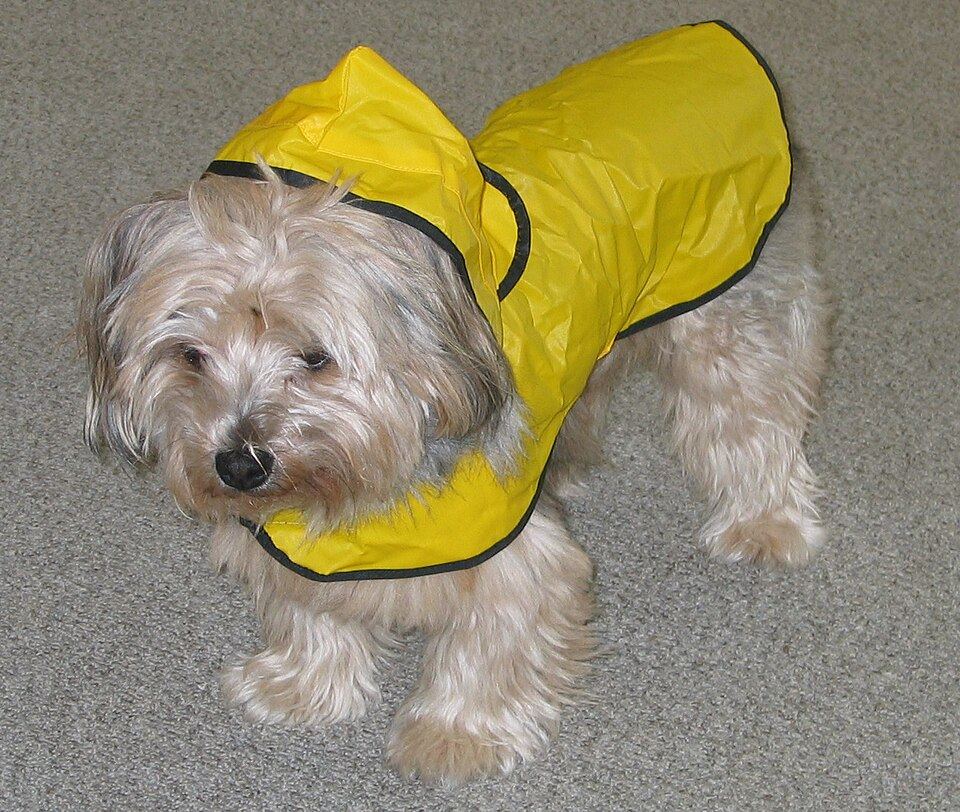
Hoods: most dogs hate them and that's fine
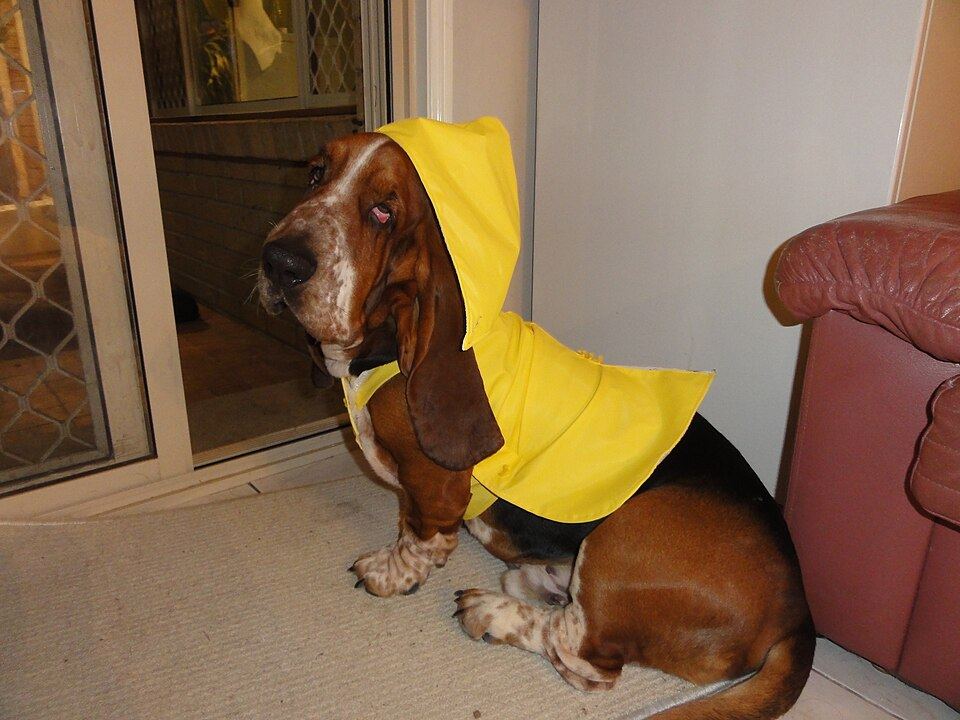
I'll be direct. A dog raincoat with a hood works for perhaps one dog in five. The rest shake their heads, stop walking, or do that slow-motion backwards walk you see in videos, because a hood touches the ears and flaps at the edge of their vision. Olive tolerates about ninety seconds of one before she starts pivoting.
If your dog accepts a hood, make sure it doesn't block their sightline when they're looking forward and that it can be secured or removed when it isn't needed. If your dog doesn't, don't fight it. A well-fitted coat with a raised collar at the back of the neck keeps most of the rain off, and a dog who walks properly is worth more than a dry head. I've never once had a client regret giving up on a hood.
Gumboots, or rather, boots
Dog boots have their place, and it isn't fashion. They suit hot bitumen, sharp gravel and snow. For ordinary winter rain on Australian suburban streets they're usually unnecessary, and a surprising number of dogs walk as though they've forgotten how legs work for the first two minutes in them, which is fair enough. If you do use them, start indoors, reward heavily, keep sessions short, and check the pastern for rub marks afterwards.
The drying routine, which matters more than the coat
This is the part nobody enjoys and it's the part that prevents problems. A damp coat left on a dog is the single most common cause of the skin trouble I'm called out about in winter: warm skin, wet fabric and friction from the straps produce sore, red patches, particularly behind the front legs and along the chest.
So: the coat comes off the moment you're inside. Towel the dog properly, and I mean really towel them, working along the back, the chest, under the belly and between the toes, which is where dogs lick and where damp lingers. A groomer's forced-air dryer is the quickest route on a thick-coated dog, but a decent towel and patience works at home. If your dog is long-coated, a second pass twenty minutes later catches what the first one missed.
Then dry the coat before you put it away. Hang it open somewhere with airflow rather than in a heap on the laundry floor, and don't put it back on a dog the next morning while it's still clammy. Let me be plain about limits: drying your dog well is not a treatment for anything, and if a sore patch isn't settling within a day or two, that's a vet conversation rather than a laundry one.

Getting the fit right before you need it
Measure the back from the base of the neck to the base of the tail and the chest at its widest point, then match those numbers to the brand's chart rather than the weight guide on the packet. Weight guides are a rough starting point and nothing more; I've fitted two whippets of identical weight in two different sizes. When a coat lands between sizes, go up. A slightly roomy shell can be taken in with the straps and leaves space for a light layer underneath, whereas a tight one pulls at the shoulder and twists as soon as the dog trots. Fit it at home in daylight first, before the rain is falling and you're both losing patience. The first time Olive wore a properly fitted raincoat she walked the whole loop in a downpour and then stood in the laundry while I dried her, entirely unbothered, which is the highest praise she gives anything.
Buy for your own weather, get the straps right, and take the thing off the moment you get home. That's ninety per cent of winter rain. The other ten per cent is owning a towel you don't mind ruining. — Maddie, Perth, currently waiting for a band of rain to cross the river.
Frequently Asked Questions
What is the difference between a waterproof and a water-resistant dog coat?
Water-resistant fabric is treated so water beads off the surface and it handles drizzle and short walks. Waterproof fabric has a coating or membrane bonded to it, usually with taped or sealed seams, and it holds up under sustained rain. Seams are the weak point in any garment that is not sealed.
Does my dog need a raincoat with a hood?
Probably not. Most dogs dislike hoods because they touch the ears and flick at the edge of their vision, and they stop walking or shake their heads. A raised collar at the back of the neck keeps most rain off, and a dog who walks normally is better off than one with a dry head and a ruined walk.
Should I walk my dog in the rain in winter?
Yes, a shorter walk in light to moderate rain is fine for most healthy dogs, and a coat helps keep them comfortable. Skip it in heavy rain, wind or storms, and dry them thoroughly the moment you are home. Older dogs and dogs who are unwell may prefer a quick trip outside instead.
Why does my dog get itchy skin after wet walks?
Warm skin under damp fabric with friction from straps is a common cause of irritation, usually behind the front legs and along the chest. Take the coat off as soon as you are inside, towel the dog thoroughly including between the toes, and dry the coat before reusing it. If a sore patch does not settle in a day or two, see your vet.
How do I stop a dog raincoat from twisting around?
A single chest strap will let the coat rotate, so choose one with rear leg straps or a back loop to anchor it. Make sure the fit is right: measure the back from the base of the neck to the base of the tail and the chest at its widest point, and size up if your dog falls between two sizes.
Size & Fit Reference
| Size | Back length | Chest girth | Neck | Weight guide | Typical breeds |
|---|---|---|---|---|---|
| XS | 25–30 cm | 32–38 cm | 22–26 cm | 1.5–3 kg | Chihuahua, kitten, small cat |
| S | 30–36 cm | 38–46 cm | 26–30 cm | 3–5 kg | Cavoodle, Pug, average cat |
| M | 36–42 cm | 46–54 cm | 30–35 cm | 5–9 kg | Cocker Spaniel, small Terrier |
| L | 42–50 cm | 54–64 cm | 35–41 cm | 9–16 kg | Kelpie, Border Collie |
| XL | 50–58 cm | 64–74 cm | 41–47 cm | 16–24 kg | Labrador, Greyhound |
| XXL | 58–66 cm | 74–86 cm | 47–53 cm | 24–34 kg | Great Dane, Mastiff |
Between two sizes? Size up. A garment that is slightly roomy can be adjusted; one that is too tight will not sit flat and will not work.
Looking for pet apparel?
We stock the gear covered in this guide, with Australia-wide shipping and Afterpay at checkout.
Popular in this range: evaporative cooling vest · fleece dog jumper
Shop Apparel at Paws of Oz