Sunburn, UV and Why Australian Dogs Need More Than Shade
Short answer: shade alone does not cover it, because sand and concrete bounce ultraviolet straight back up under a dog lying in it. There are more animals at risk than owners expect: white dogs, pink noses, thin bellies and anything recently clipped, with Noodle going pink after a quarter of an hour at the extreme end. Here's the order I work in: keep them inside through the middle of the day, then add a sun shirt.
Noodle is a hairless cat, which means she came to me with a veterinary warning label attached. Fifteen minutes of direct Australian sun and her skin goes pink. Ten more and she starts to look like a sunburnt tourist on a Boxing Day beach. She's the extreme version of a problem that affects far more animals than most owners realise.
Australia has the highest ultraviolet radiation levels in the world and the highest rate of skin cancer in humans, and we're reasonably good at protecting ourselves from it. We are much worse at noticing that the same sun lands on our pets, every single day, on the parts with the thinnest fur.
Which animals actually burn
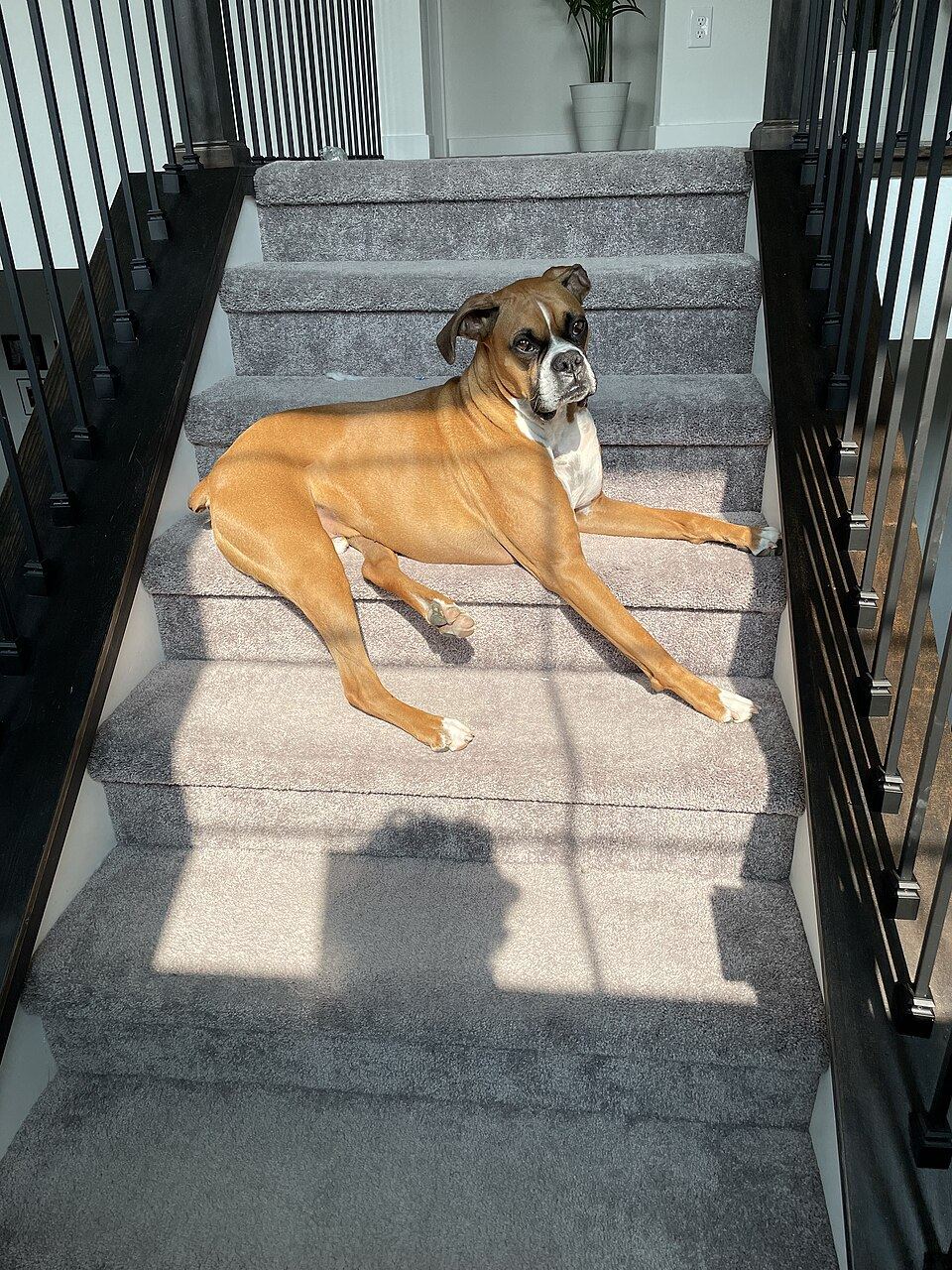
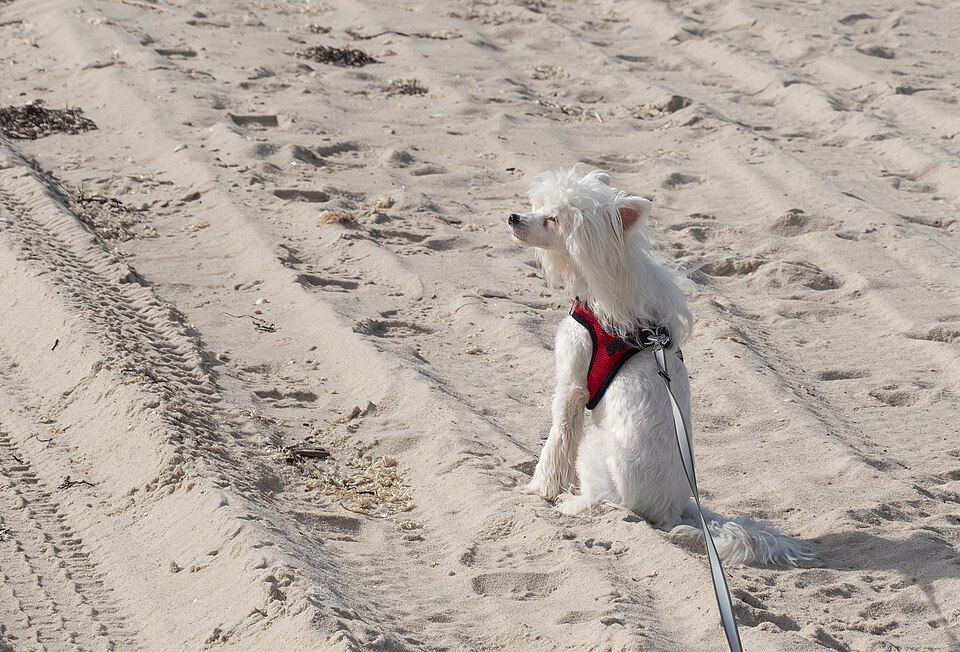
It's a short list and it's very predictable. White or light-coloured dogs, particularly with pink skin showing on the nose, belly or inner thighs. Short-coated breeds — whippets, boxers, staffies, dalmatians, greyhounds — where the coat provides almost no barrier. Hairless breeds like the Chinese crested and the sphynx, for whom this is a year-round management issue rather than a summer one.
Then there are the specific spots, which are worth naming because they're the ones vets see sun damage on most often: the bridge of the nose, the ear tips, the belly and groin, and the area around the eyes. Thinly haired, pale, and facing upwards, which is a bad combination.
Cats get it too, especially white-eared cats, and it's the reason veterinary dermatologists in Australia see so much squamous cell carcinoma on the ear tips and noses of outdoor cats. That's a serious, disfiguring cancer and it's linked directly to sun exposure.
What sunburn looks like on a dog
Reddened skin, obviously, but the early version is subtler than people expect: the skin looks pink rather than red, it feels warm, and the dog may be restless or reluctant to be touched on that area. As it progresses you get flaking, hair loss at the edges, and the dog starts licking or scratching the spot, which makes everything worse.
If you see any of that, get them into shade and keep them there, and book a vet appointment rather than waiting to see if it settles. Repeated sunburn on the same spot over years is how the serious problems start, and one bad burn on a nose is a warning worth taking seriously.
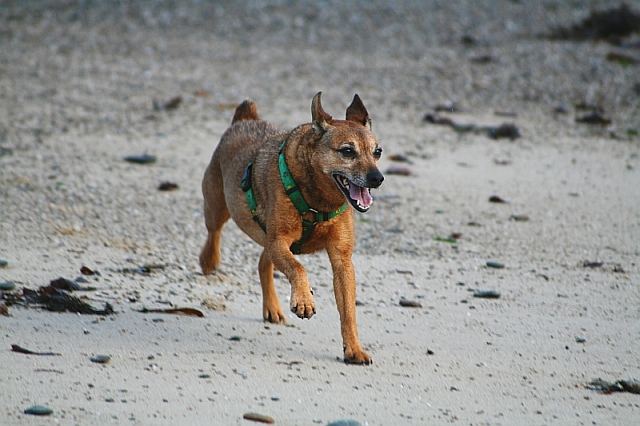
Where a sun shirt fits
A lightweight, light-coloured shirt covering the back and flanks is the practical answer for most at-risk dogs, because that's the largest upward-facing surface they have. It's the same logic as a rash vest for a child, and for the same reason it works best when it's light coloured and tightly woven.
A couple of honest caveats. Coverage is partial — a shirt doesn't protect the nose, the ear tips or the belly, and those are exactly the spots that burn first on a pale dog. And sun-protective clothing is a physical barrier, not a magic one: if you can see through the fabric when you hold it to the light, UV is getting through too.
For the nose and ears, pet-safe sunscreen exists and some dogs tolerate it. Never use human sunscreen — zinc oxide and several other common ingredients are toxic to dogs if licked, and they will lick it. Ask your vet for a product rather than improvising.
The rest of the summer checklist
Shade is the big one and it's free. Water, carried for them rather than hoped for. Timing, which does more than anything in a shop. A cooling vest for the walk itself. Paw checks after hot surfaces. And for pale or hairless animals, a light shirt for any exposure longer than about twenty minutes in the middle of the day.
I'd add one more that people forget: car travel. Dogs with their heads out of windows get an enormous amount of UV on the nose and face, and the moving air means nobody notices they're getting burnt. It's a cumulative thing, not a one-off.
- Shade is free and outperforms every paid product.
- Carry water for them rather than hoping for it.
- Time walks to avoid the middle of the day.
- Use a cooling vest on the walk itself.
- A light shirt for exposure longer than twenty minutes.

Fit, because a shirt that rides up protects nothing
This is where most sun shirts fail. A loose shirt twists around the body and ends up covering one flank and nothing else, which is worse than no shirt in a way, because it gives you false confidence. Measure the chest at its widest point and the back from the base of the neck to the base of the tail, match both to the chart, and check that it stays put when your dog walks.
If it twists, it's too big. If it restricts the shoulder, it's too small. And if your dog is between sizes, go up and adjust the straps, because a shirt you can snug up is more useful than one you can't close.
Noodle now owns four little shirts and wears them with the expression of a cat who has been personally insulted. She hasn't had a pink day since. If you've got a pale, short-coated dog, look at their nose next time you're out at midday — that's the part to worry about. — Maddie, Perth, holder of a deeply unimpressed cat.
Frequently Asked Questions
Can dogs get sunburnt in Australia?
Yes. Australia has the highest UV levels in the world. Dogs most at risk are white or light-coloured with pink skin, short-coated breeds such as whippets, boxers and greyhounds, and hairless breeds. The nose, ear tips, belly and groin burn first.
What does sunburn look like on a dog?
Early signs are pink rather than red skin that feels warm and may be tender to touch. Later you'll see flaking, hair loss at the edges and your dog licking or scratching the area. See your vet rather than waiting, especially for burns on the nose or ear tips.
Does a sun shirt protect my dog?
It protects the back and flanks, which is the largest upward-facing area. It does not cover the nose, ear tips or belly, which are the spots that burn first on pale dogs. Choose a light-coloured, tightly woven fabric and check it stays in place when your dog moves.
Can I use human sunscreen on my dog?
No. Zinc oxide and several other common sunscreen ingredients are toxic to dogs when licked, and dogs will lick it off. Ask your vet for a pet-safe product for exposed areas such as the nose and ear tips.
Do cats need sun protection too?
White-eared and light-coloured cats are at genuine risk, and sun exposure is linked to serious skin cancer on the ears and noses of outdoor cats in Australia. Indoor-outdoor management and keeping them inside during the middle of the day is the most effective protection.
Size & Fit Reference
| Size | Back length | Chest girth | Neck | Weight guide | Typical breeds |
|---|---|---|---|---|---|
| XS | 25–30 cm | 32–38 cm | 22–26 cm | 1.5–3 kg | Chihuahua, kitten, small cat |
| S | 30–36 cm | 38–46 cm | 26–30 cm | 3–5 kg | Cavoodle, Pug, average cat |
| M | 36–42 cm | 46–54 cm | 30–35 cm | 5–9 kg | Cocker Spaniel, small Terrier |
| L | 42–50 cm | 54–64 cm | 35–41 cm | 9–16 kg | Kelpie, Border Collie |
| XL | 50–58 cm | 64–74 cm | 41–47 cm | 16–24 kg | Labrador, Greyhound |
| XXL | 58–66 cm | 74–86 cm | 47–53 cm | 24–34 kg | Great Dane, Mastiff |
Between two sizes? Size up. A garment that is slightly roomy can be adjusted; one that is too tight will not sit flat and will not work.
Looking for pet apparel?
We stock the gear covered in this guide, with Australia-wide shipping and Afterpay at checkout.
Popular in this range: fleece dog jumper · printed dog hoodie
Shop Apparel at Paws of Oz