The Wet Dog Problem: Drying Coats, Towels and Gumboots
Short answer: damp is the problem, not wet, and the fix is the order you do things in rather than the kit you buy. I used to towel Olive down, load her into the ute and drive forty minutes home with a coat still wet underneath, which is how you end up with hot spots and that smell in the back. In short: towel first, microfibre drying coat second, and nothing goes back on until she is dry underneath.
There's a particular smell that lives in the back of my ute from November through Easter. It's wet whippet, river silt and damp towel, and it is entirely my own doing. I groom and fit pet clothing around Perth for a living, which means I spend the warm half of the year standing on riverbanks in the Swan Valley and on the sand at South Beach with a dog who is completely soaked and has no intention of standing still for me.
For years I did it badly, and I did it badly in one specific way. I'd rub Olive down with a towel, throw her in the back of the ute, and drive forty minutes home while she sat in a coat that was still damp underneath. Then I'd wonder why she spent the evening chewing at the base of her tail. Once you've watched an angry red patch appear under a coat that never really dried, you stop being casual about drying a dog after swimming.
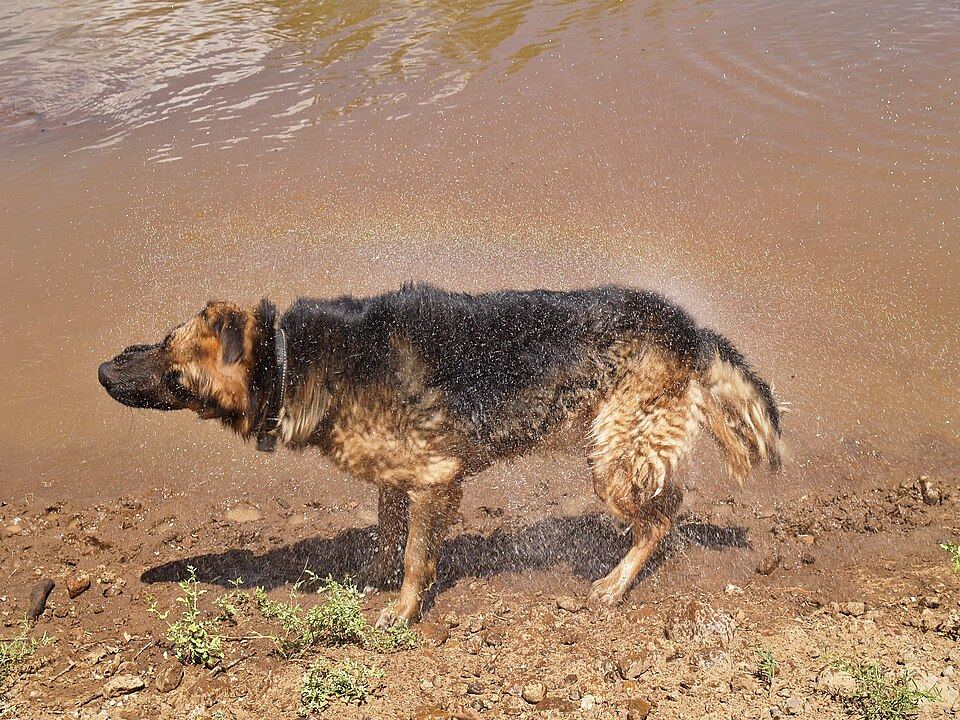
Why damp is the actual problem
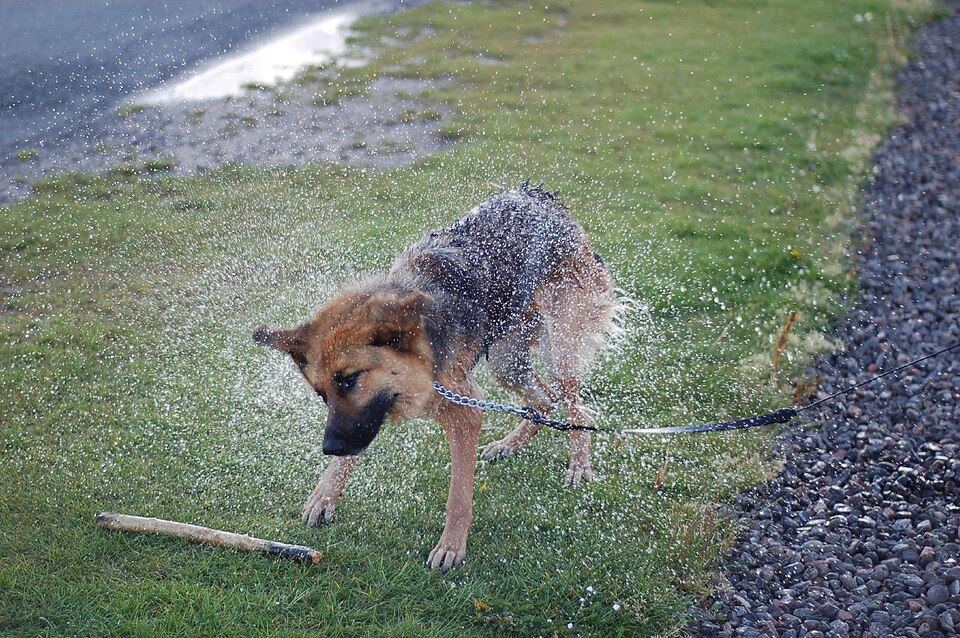
A dog's coat is built to shed a fair bit of water. Shake, roll, repeat, and most short-haired dogs are most of the way there on their own. What the coat can't do is dry underneath when something is holding water against the skin. A harness, a car seat or a dense underlayer will sit wet for hours.
Warm, dark and damp is a nice place for bacteria and yeast, and I've seen the result often enough to take it seriously. The thing owners notice first is a hot spot: a weepy, painful patch that appears almost overnight and that a dog will chew raw in an afternoon. I'm a groomer and a fitter, not a vet, and this isn't medical advice. If you find a patch that is red, weeping or smelly, or one your dog won't leave alone, book in with your vet rather than treating it yourself.
The routine, in the order that works
Shake first. People grab for the towel too early and get soaked for their trouble. Then towel, then a drying coat for the trip, then a proper dry once you're home. Skipping straight from the water to the car is the mistake I made for years.
Towelling is a pressing motion, not a scrubbing one. Press, squeeze, lift, move on. Rubbing in circles mats the hair and moves very little water out. Two thin towels beat one thick one.
- Shake first, before you ever reach for the towel.
- Press and squeeze with the towel, do not scrub.
- Two thin towels beat one thick towel for drying.
- Use a drying coat for the trip, off once home.
- Grabbing the towel too early just soaks you.
Microfibre drying coats versus a normal towel
A bath towel is cotton. It absorbs well until it's saturated, at which point it's a heavy cold rope that slides off a moving dog and lands on the floor. In a car it's useless within ten minutes.
A dog drying coat towel is the same idea engineered properly. It's woven microfibre that holds several times its own weight in water. It goes on as a wrap with a collar and a belt around the chest, so it stays put while a dog jumps in the car and lies down. That staying-put part is the whole invention. It also wicks rather than just soaking, so it keeps drawing moisture off the coat as you drive.
What it is not: it doesn't generate heat and it won't dry a dog on its own. It's a management tool for the gap between the river and home that happens to keep your car seats dry. The microfibre cloths from Kmart do an honest job as hand towels if you want to test the idea cheaply — they just won't stay on. Quick dry dog clothing is worth buying once, and worth buying in the right size.
The drive home
This is where drying coats justify their price. Air conditioning on, windows up, coat on for the trip, off the moment you're home. Leaving it on while the dog settles inside defeats the purpose, because you've built a warm damp environment and held it against the skin. If I'm doing a run of swims in one day I carry two, so the second dog gets a dry one.
Rain, and what a raincoat should do
Perth rain is short and horizontal, but Melbourne rain lasts for days, and a dog walked in it comes home wet to the skin every time. A raincoat should be genuinely waterproof rather than shower-resistant, cut long enough over the back to keep the loin dry, and light enough that a dog doesn't overheat in it. Look for taped seams and a lining that isn't fleece, since fleece holds water like a sponge, plus a strap behind the hind legs so the back half can't flap up and reflective trim for afternoons that go dark at five. Shopping for the best dog raincoat Australia 2026 has on offer, those are the details that separate a coat that works from one that just looks the part.
Gumboots: the good, the bad and the sizing
Dog gumboots in Australia get bought for two reasons, and both are legitimate. The first is heat — sand at Peasholm on a February afternoon and bitumen anywhere north of the river are hot enough to lift a dog off the ground. The second is ground: gravel, burrs, bindi and grass seeds that work into the webbing between the toes.
Where people go wrong is the introduction. Most dogs do the comedy walk — legs flicking, refusing to move — and most owners laugh, take the boots off and never try again. Give it a week: one boot for thirty seconds indoors, feed, remove. Then two boots, then all four around the yard, then a walk. A dog booted up on a beach for the first time with no build-up will usually end up hopping.
Sizing is the other trap. Boots run small more often than large, and a tight boot will rub the dewclaw raw in one outing. Measure the paw at its widest with the dog standing on it, and check the brand's chart rather than guessing. In dog gumboots Australia sizing often differs by a full size between brands — Olive is a large in one label I stock and an extra-large in another, and that's normal. One strap, snug but not constricting, holds better than two, and I still carry spares.
My ute still smells faintly of river, and I've made peace with that. What I won't do again is drive home with a damp dog and hope for the best. Towel properly, coat for the trip, off at home, and if you see a sore that isn't settling, that's your vet's call and not mine. — Maddie, Perth, writing this while two drying coats tumble in the dryer.
Frequently Asked Questions
What is the fastest way to dry a dog after swimming?
Let them shake first, then press and squeeze with two thin towels rather than rubbing. Fit a microfibre drying coat for the trip home, then finish the dry properly once you are indoors. Never leave a damp coat or harness sitting against the skin for hours.
Is a drying coat better than a normal towel?
For the car, yes. A microfibre drying coat holds several times its weight in water, wicks moisture off the coat while you drive, and stays put because it fastens at the neck and chest. A bath towel saturates quickly and ends up on the floor. Neither one dries a dog completely on its own.
How long does it take a dog to get used to gumboots?
Plan on about a week of very short sessions. One boot for thirty seconds indoors with a food reward, building up to two boots, then all four, then short walks. Debuting boots on a long beach walk usually ends with the dog refusing to move or losing a boot.
Can I leave a drying coat on my dog at home?
Only for a short trip. A drying coat is designed for the journey between the water and home, and should come off as soon as you arrive. Fabric held damp and warm against the skin for hours is what causes rubs and sore patches.
What should I look for in a dog raincoat?
Taped seams and genuine waterproofing rather than shower resistance, a non-fleece lining that does not hold water, a cut long enough to cover the loin, a strap behind the hind legs to stop flapping, and reflective trim for dark winter afternoons.
Size & Fit Reference
| Size | Back length | Chest girth | Neck | Weight guide | Typical breeds |
|---|---|---|---|---|---|
| XS | 25–30 cm | 32–38 cm | 22–26 cm | 1.5–3 kg | Chihuahua, kitten, small cat |
| S | 30–36 cm | 38–46 cm | 26–30 cm | 3–5 kg | Cavoodle, Pug, average cat |
| M | 36–42 cm | 46–54 cm | 30–35 cm | 5–9 kg | Cocker Spaniel, small Terrier |
| L | 42–50 cm | 54–64 cm | 35–41 cm | 9–16 kg | Kelpie, Border Collie |
| XL | 50–58 cm | 64–74 cm | 41–47 cm | 16–24 kg | Labrador, Greyhound |
| XXL | 58–66 cm | 74–86 cm | 47–53 cm | 24–34 kg | Great Dane, Mastiff |
Between two sizes? Size up. A garment that is slightly roomy can be adjusted; one that is too tight will not sit flat and will not work.
Looking for pet apparel?
We stock the gear covered in this guide, with Australia-wide shipping and Afterpay at checkout.
Popular in this range: fleece dog jumper · evaporative cooling vest
Shop Apparel at Paws of Oz