Fifteen Thousand Kilometres of Corrugated Road: What My Back Seat Survived
Scout and I put about twenty thousand kilometres a year on the ute and the wagon, and a good slice of that is corrugated: the Gibb, the tracks out of Katherine, the buffer roads to fishing spots that don't have names. Corrugations are the honest reviewer of car gear. They shake out every weak seam, every unstitched hem and every clip that was decorative all along. My back seat has buried four covers in two years, and this is the autopsy, because the differences between the dead and the survivor came down to about five specs that almost no product page bothers to tell you.
The road that kills cheap covers
Corrugations are a high-frequency vibration, thousands of small hits per minute, and that attacks gear differently from a single big load. Stitching works loose where a static load would hold. Clips back out of holes they would survive in city traffic. Dust finds any gap and pumps it full, then the first wet season brews that dust into a paste. A city dog owner will never see these failures. Out here the cover's whole life is a fatigue test, and the failures arrive in a reliable order: clips first, hems second, the seat-back seam third.
What I tested, roughly by accident
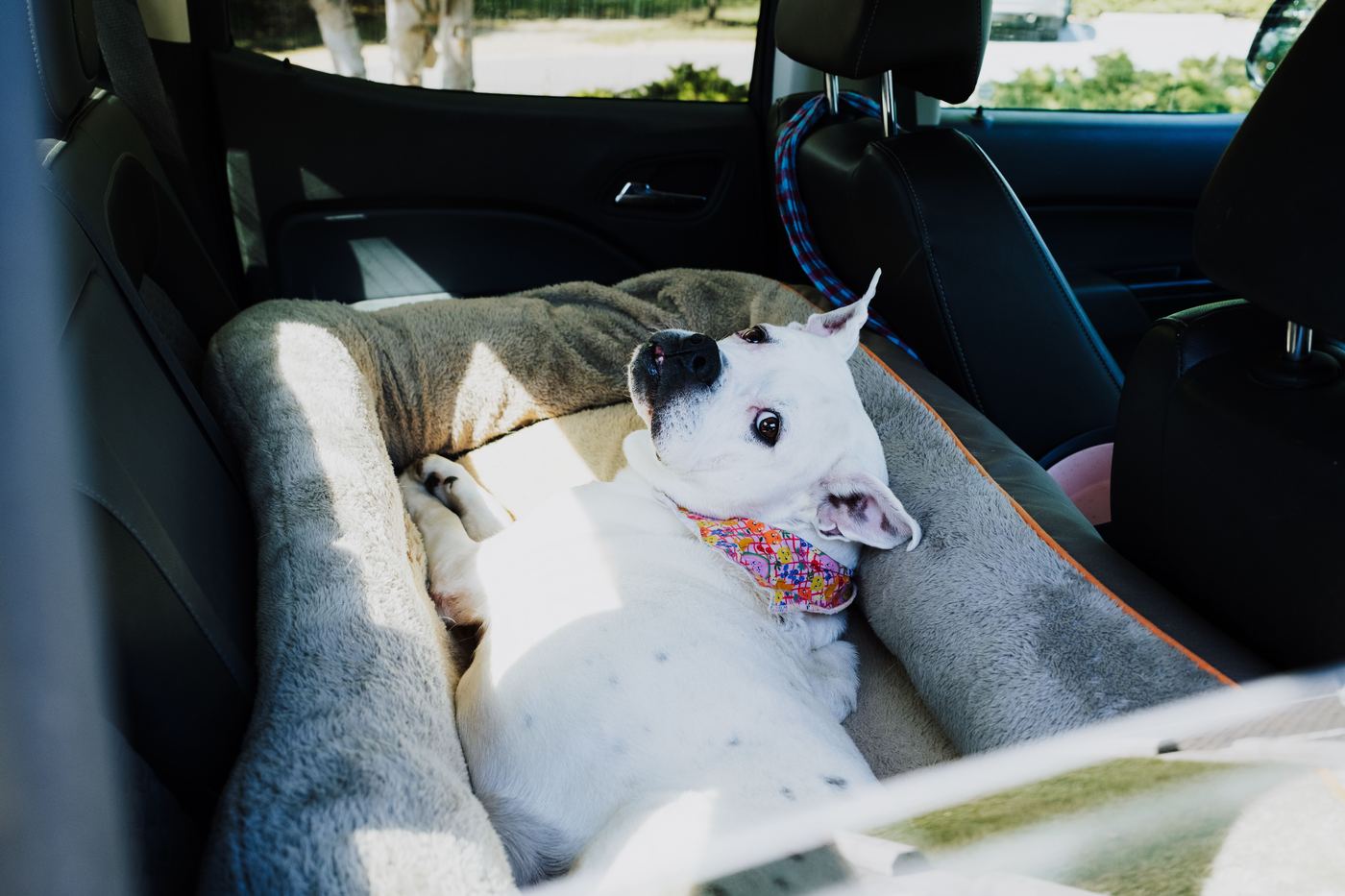
The first cover was a quilted blanket-style thing from a service station, and it died as expected: hem undone within a month, dust impregnated to the foam. The second was a mid-price quilted full-bench cover with seatbelt slots, which survived two dry seasons and would have made old age if a buckle edge hadn't sawn at one seam the whole time. The third was a heavy canvas hammock-style with side flaps, and that is the one still working, faded as a hat and structurally sound. The fourth was a cheap waterproof shell I borrowed for a wet-season run, and it taught me that waterproof and breathable are different products entirely, because Scout cooked on it in October.
The specs that separate survivors from souvenirs
Stitch density and seam type: look for double or triple rows of straight stitching on the load seams, and be suspicious of any seam that is single-stitched or finished with a chain stitch that unravels from one broken thread. Attachment style: headrest loops of actual webbing beat clips, because clips back out of punched holes under vibration, and adjustability in those loops matters because headrests vary wildly. Coverage: full bench with side protection, because the doors are where paws and claws land when the car leans through whoop-de-doos. Surface: heavy canvas or 600-denier-plus fabric sheds dust and survives nails, whereas quilted foam sandwiches hold dust and smell like the wet season forever. And buckles: nothing plastic anywhere near a load path, because Top End sun embrittles plastic in one season and then it is a rattling liability.
| Cover | Kilometres faced | First failure | Fatal flaw or still going |
|---|---|---|---|
| Quilted blanket style | ~4,000 | Hems, week three | Dead: single stitching, foam held dust |
| Mid-price quilted bench | ~9,000 | Clips backing out | Retired: buckle saw through a seam |
| Waterproof shell | ~2,500 | None structural | Retired: zero breathability, dog overheated |
| Heavy canvas hammock | 15,000+ | Not yet | Still going: webbing loops, triple stitching |
The cleaning routine that decides cover lifespan
Red dust is abrasive and it is hygroscopic once the build-up arrives, so the routine matters as much as the fabric. Shake the cover out at every fuel stop, because an hour of corrugations loads the weave and the next rain turns it to sandpaper. Hose it down monthly in the dry, properly, with a broom and not a wish. Never machine wash canvas with the coating intact unless the tag says so; hot wash cycles eat waterproof coatings and shrink canvas unevenly, which is how a cover develops a permanent flap over the wheel arch. Air dry in shade. And once a season, check every stitch line under tension by pulling gently at the seams: a seam starting to ladder is a month away from opening, and you want to meet that with a needle before the road meets it with a dog.
What I would buy again tomorrow
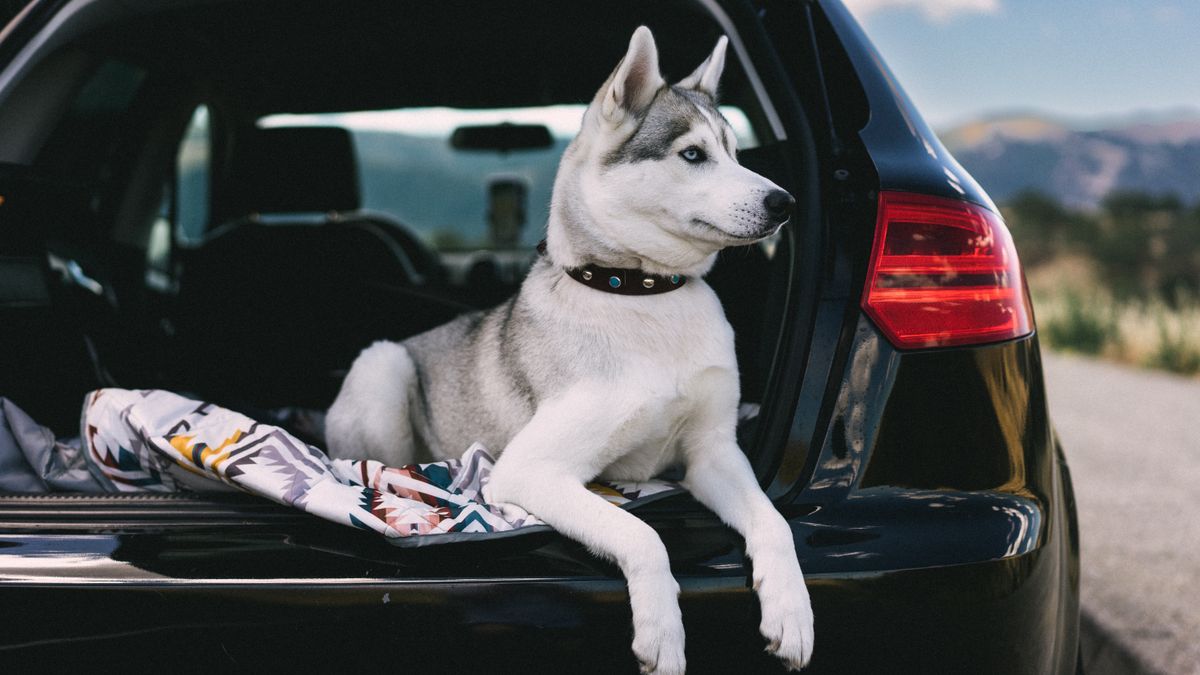
If I were starting over I would skip the middle of the market entirely. Either a heavy canvas or 600D hammock with webbing headrest loops and triple-stitched seams, or nothing but a blanket and honesty about the upholstery. The mid-price quilted gear is designed for the school run and priced like it can do more, and corrugations collect that difference with interest. Measure the bench, measure the headrests, and buy the boring heavy one. Scout's verdict is the same as mine: he does not care what the seat looks like, he cares that the half of it under him does not slide on the whoop-de-doos, and grip is the last spec anyone advertises and the first one that matters out here.
Frequently Asked Questions
Do hammock-style covers actually help a dog on rough roads?
They help the dog and the cover, which is why mine is one. The hammock shape cradles the dog against side-to-side sway, which is what corrugations generate most of, and it keeps the load off the seat cushion seam where covers usually tear first. The trade is seat access: you lose a rear seat unless the hammock has a zip, so if you carry humans regularly, look for the split designs.
Is a waterproof cover better for the wet season?
Waterproof matters for mud and drool, but a fully sealed shell cooks a dog in build-up heat because nothing breathes. What I look for is a coated canvas or a fabric marketed as water-resistant with some airflow, and I accept that genuine monsoon mud means hosing the cover anyway. A dog lying on a non-breathing shell in October is a heat risk long before it is a clean-car success story.
How do I stop the cover sliding on leather seats?
Anchors and texture. Use every headrest loop and seatback attachment the cover has, and add a rubber shelf liner between a slick leather bench and the cover's underside. Sliding is not just annoying; a moving cover wears through at every contact point and turns the anchor points into the whole load path, which is exactly the fatigue the stitching did not sign up for.
What is the fastest way to get red dust out of a car cabin?
Dry first, wet never. Vacuum with a stiff brush head before any water touches it, because red dust plus water is dye, and it will season your carpets permanently. For the cover itself, a thorough dry brush and shake handles most of a dry-season load, and the monthly hose-down happens outside the car. The dust you grind in wet is the dust you keep for the life of the vehicle.
Are the expensive canvas covers worth double the price?
On corrugations, yes, and the maths is easy: four budget covers across two years cost more than one good canvas and involve three roadside failures you did not plan for. In the city, where the load is a Sunday beach trip, the mid-price quilted gear is honestly fine. Buy to the road you actually drive, not the road you romanticise.
Looking for dog car seat covers?
We stock the gear covered in this guide, with Australia-wide shipping and Afterpay at checkout.
Shop Car Seat Covers at Paws of Oz