Why Greyhounds Need Softer Beds Than Almost Any Other Dog
Short answer: greyhounds need a softer, denser bed than almost any other dog because they carry almost no fat and their weight lands on a few sharp points that bruise on a firm surface. Pip came off the track at four and kept sliding onto the rug, and the reason was her shape: lean muscle, thin coat, hips and elbows with nothing to cushion. You should look for a thick foam base, not fibre fill that flattens under thirty kilos. Softness here is joint care, not indulgence.
Pip came off the track at four and has been asleep on something soft ever since. I say asleep, but for the first year she mostly lay on her side with her legs out and eyed me suspiciously from whatever I'd bought her. It took me embarrassingly long to work out why she kept shifting off the bed and onto the rug beside it.
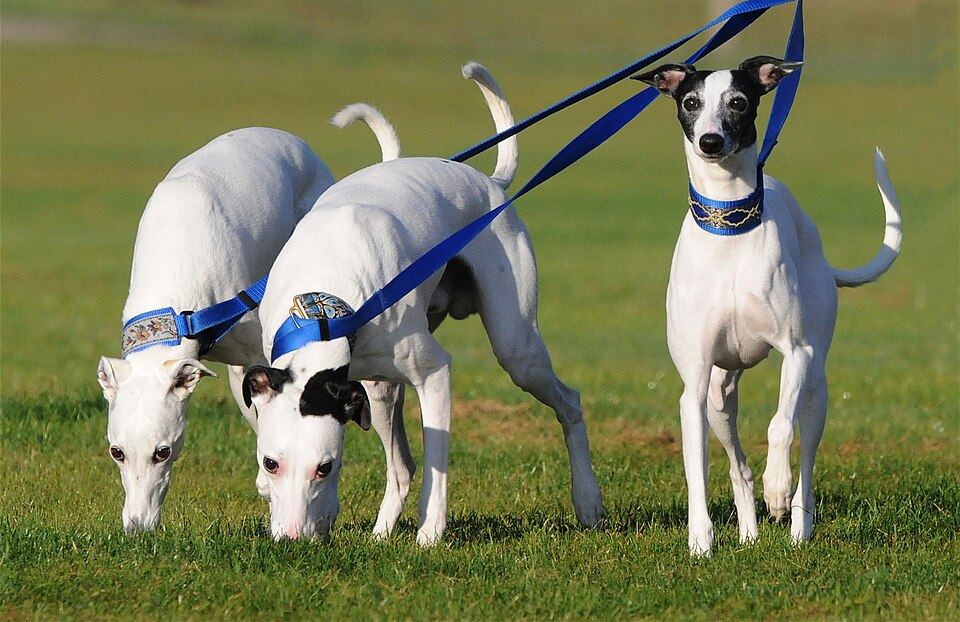
The answer is in her shape. A greyhound is around thirty kilos of lean muscle with almost no body fat, a coat you can see skin through, and a skeleton with very sharp corners. Hips, shoulders, elbows, the ridge of the spine. When that shape lies down on a bed, all of its weight goes through about four small contact points. Whatever is underneath those points gets compressed to nothing.
Why standard beds fail them
Most pet beds are filled with polyester fibre, the same material as a cheap cushion. It's light, it's soft when it's new, and it's washable — all genuinely good things. But fibre fill has no structural memory. Put a broad, soft, well-padded dog on it and it springs back fine. Put a lean, heavy, angular dog on it and within about six weeks there are two permanent dents where the hips go, with nothing left underneath.
At that point the dog isn't lying on a bed at all. They're lying on a folded-up piece of fabric on a hard floor, and the hip bone is taking the full load. This is why greyhound owners so often report that their dog abandons a bed that still looks perfectly good. From the top it looks fine. From underneath it's flat.
It's also why greyhounds are prone to pressure sores — those hard, callused patches on elbows and hips that every sighthound owner eventually notices. They form from repeated pressure on a hard surface. That's a comfort and skin-integrity issue, and while it isn't a disease, a sore that breaks open does need veterinary attention.
What actually works
Depth of real padding, and a base that resists compression. That's the whole brief. A high-density foam base, or a thick foam mattress, holds its shape under a pointed load in a way fibre fill simply doesn't. If you're using a fibre-filled bed — and plenty of people do, because they're washable and affordable — expect to replace or re-fluff it more often than you would for a fluffier breed, and check it monthly by pressing your hand where their hips land.
Length is the second thing. Greyhounds sleep stretched out more often than curled, and a bed sized to their curled length is too short. Measure from nose to the base of the tail with them lying flat, then add ten to fifteen centimetres, and check the internal sleeping measurement rather than the outside of the bed — raised sides eat a surprising amount of usable length.
- Use a high-density foam base that holds shape.
- Add real padding depth under the hips.
- Size for the stretched length, plus ten to fifteen cm.
- Check monthly by pressing where hips land.

Cold, and the other half of the problem
The other reason Pip was shifting off her bed is temperature. With no insulating coat and no fat layer, a greyhound on a cold floor loses heat steadily all night. This is the most under-recognised thing about living with one, and it's why so many of them end up under a doona with their owner by about the second winter.
An enclosed or semi-enclosed bed with a raised edge helps in two ways: it holds a pocket of warm air around them, and it gives them something to lean against, which a dog with prominent bones genuinely appreciates. In a Hobart winter I add a rug underneath as well, because the floor itself is the coldest part of the equation.
Then the opposite problem in summer: the very same enclosed bed is too warm. Most greyhound households I know end up with a padded bed for winter and a flat cotton one for summer, and the dog moves between them without being asked.
For older greyhounds
Pip is twelve now and stiff in the mornings, and three things changed. A low or step-through entry, because a raised edge she used to hop over is now something she hesitates at. A non-slip base, because a bed that slides when she steps onto it makes her reluctant to use it. And a surface she can get purchase on when standing up, which matters more than softness once joints get sore.
I want to be careful here: a bed doesn't treat arthritis, and it doesn't prevent it. What it does is reduce the pressure on those bony points and keep her off a cold hard floor. If your older dog is slow to rise, reluctant on stairs, or stiff for more than a few minutes after getting up, that's a vet conversation about pain management, and no bed replaces it.

If you've adopted a retired racer and they keep abandoning their bed, press your hand into it where their hips land. I'd bet money it's flat. Buy for depth and density rather than for softness, size for the stretched length, and be ready to run two beds — one for winter, one for the months when the enclosed one is too warm. — Tessa, Hobart, sharing a house with a greyhound who has strong opinions about all of this.
Frequently Asked Questions
Why do greyhounds need thicker beds?
They carry almost no body fat and have very prominent hip, shoulder and elbow bones, so their weight presses through a few small contact points. Thin or fibre-filled padding compresses at exactly those points, leaving them effectively lying on a hard floor.
What's the best bed filling for a greyhound?
A high-density foam base holds its shape under a pointed load far better than polyester fibre fill. Fibre beds can work, but expect to re-fluff or replace them more often, and check monthly by pressing where your dog's hips land.
How do I size a bed for a greyhound?
Measure from nose to the base of the tail with them lying flat and stretched out, then add 10 to 15 cm. Check the internal sleeping measurement rather than the external one, since raised sides reduce usable length.
Do greyhounds get cold at night?
Yes, more than most breeds. With no insulating coat and no fat layer, they lose heat steadily to a cold floor. An enclosed bed plus a rug underneath makes a real difference in southern Australian winters, while a flat breathable bed suits summer better.
My older greyhound is stiff in the mornings. Will a better bed help?
A supportive bed can reduce pressure on bony points and keep them off a cold floor, which helps comfort. It does not treat arthritis. If stiffness lasts more than a few minutes or they're reluctant on stairs, book a vet check to discuss pain management.
Size & Fit Reference
| Size | External (L×W×H) | Internal sleeping area | Suits pets up to | Typical pets |
|---|---|---|---|---|
| S | 43 × 32 × 10 cm | ~36 × 25 cm | 30 cm curled | Kittens, toy breeds, small cats |
| M | 54 × 42 × 11 cm | ~46 × 34 cm | 45 cm curled | Cavoodle, Pug, average cat |
| L | 66 × 50 × 12 cm | ~57 × 41 cm | 55 cm curled | Cocker Spaniel, large cat |
| XL | 80 × 60 × 13 cm | ~70 × 50 cm | 70 cm curled | Kelpie, Border Collie |
| XXL | 95 × 72 × 15 cm | ~84 × 61 cm | 85 cm stretched | Labrador, two small dogs |
| 3XL | 110 × 82 × 15 cm | ~98 × 70 cm | 100 cm stretched | Great Dane, two medium dogs |
Between two sizes, size up. Note that soft polyester fill compresses under weight — for dogs over about 30 kg, a denser foam base will hold its loft far longer than fibre fill.
Looking for beds & mats?
We stock the gear covered in this guide, with Australia-wide shipping and Afterpay at checkout.
Popular in this range: self-cooling pet mat
Shop Beds & Mats at Paws of Oz