What Australian Crash Data Means for an Unrestrained Dog
Short answer: the crash and injury material points the same way every time, an unrestrained dog becomes a projectile in a sudden stop, and the heavier the dog the greater the risk to everyone in the cabin. Exact Australian counts are not something I will invent, but the consistent message from road-safety bodies is that loose pets turn a bump into a multi-person injury. A cover keeps the dog in a spot, but only a tether or crate actually restrains them, so treat the cover as comfort and the tether as the safety step, and use both rather than choosing one and calling it done.
What the patterns actually show
Across the road-safety material published over the last few years, the theme is that occupants and pets move together in a crash, and an unsecured animal adds mass flying forward. Industry estimates put the force on a dog in a hard stop at many times its weight, which is the part owners seldom picture when they let a dog roam the cabin on a quick trip.
I avoid quoting a single tidy number because the surveys differ, but the direction is not in doubt. Loose is risky, secured is safer, full stop, and the pattern holds across vehicle types and dog sizes, which is why the guidance does not change with the make of the car or the breed of the dog sitting in the back.
Why the dog is not the only one at risk
A dog thrown forward can strike a person in the front, and a dog panicked after a crash can block rescue or bolt into traffic. The material on post-crash chaos is mostly anecdotal, but it fits the physics, and restraint is not just for the dog, it is for the people beside them who never expected to be hit by the family pet at speed.
- Unrestrained mass multiplies in a stop.
- A panicked dog hinders help after a bump.
- A tether keeps them where you can reach them.
- A crate contains the dog and the mess alike.
The reach point matters. A dog loose in the cabin after a crash is harder to grab and calm, while a tethered dog stays put so you can check them and the people first. That small containment is the difference between a manageable scene and one where the dog is under your feet while you are trying to think.
The cover's real job here
A cover marks a spot and catches mess, but it does not hold a dog in a crash. Some owners tell me the cover keeps them safe, and that is where the confusion sits. The cover is the floor, the tether is the seatbelt, and both together is the setup the safety bodies describe, not the cover alone with a hopeful story attached to it.
This is the honest split I push in every write-up, because mixing the two up gives a false sense of security. A dog on a cover with no tether is a dog with a clean seat and no restraint, and the clean seat does nothing at the moment the car stops hard, which is the moment the restraint is the only thing that counts.
Reading the survey noise
You will see bold percentages flying around, and I would not trust a precise one, because the surveys use different methods and the local counts are not something I can verify. What I report is the range and the direction, industry estimates suggest loose pets add real risk, and the safe move is to secure the dog rather than to argue the exact figure down.
If a source quotes a number that sounds too clean, treat it as illustrative, not measured. The useful takeaway is the pattern, not the decimal, and a reader who remembers the pattern secures their dog, while a reader chasing the exact stat forgets the action that the stat was meant to prompt in the first place.
Pairing cover with tether
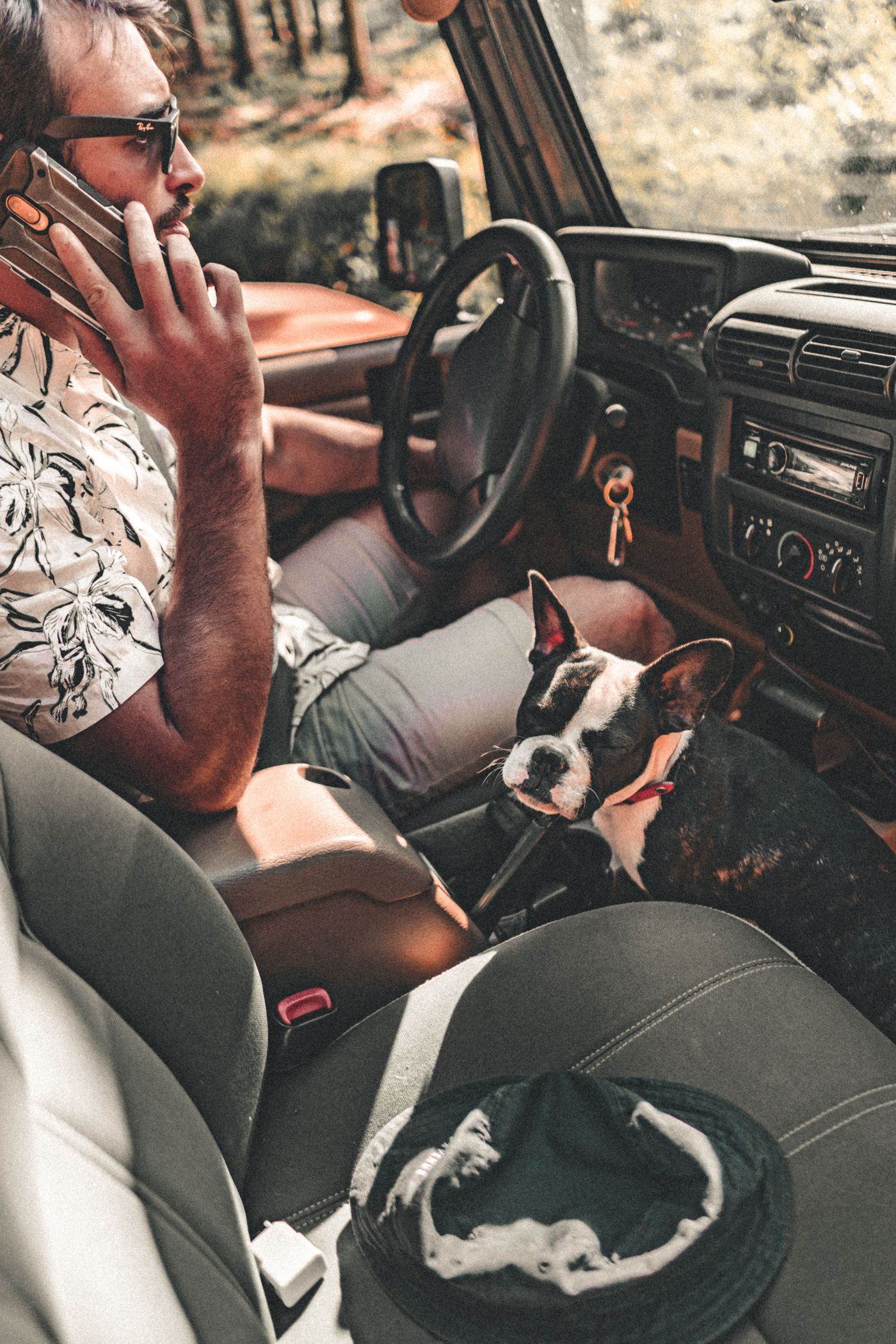
The practical setup is a cover for the seat and a tether clipped to the existing seatbelt or a rated anchor, kept short so the dog cannot launch but can still lie down. A crate does the same job for a dog who travels often, and either option beats a cover alone by a clear margin when the car actually stops in a hurry.
I like the cover plus tether because the dog still gets a clear, comfy spot, which keeps the training from the settle guides intact, and the tether simply adds the restraint the cover was never built to give. Two jobs, two tools, no confusion about which is which, and the dog rides calm and contained.
What I would tell a new owner
Buy the cover for the seat, buy the tether for the dog, and use both every trip, even the short ones to the shops, because most bumps happen close to home. The cover is the easy sell, the tether is the safety step, and skipping one leaves exactly the gap the crash material keeps pointing at, which is not a gap worth leaving.
| Dog weight | Force in a stop | Risk to cabin | Restraint that helps |
|---|---|---|---|
| 10 kg | several times mass | moderate | tether or crate |
| 20 kg | many times mass | high | tether or crate |
| 30 kg | large multiple | severe | crate preferred |
| 40 kg plus | very large | severe | rated crate |
Frequently Asked Questions
Does a cover restrain my dog?
No. A cover marks a spot and catches mess, but it does not hold a dog in a crash. The cover is the floor, the tether is the seatbelt, and both together is the setup the safety bodies describe. A dog on a cover with no tether has a clean seat and no restraint, and the clean seat does nothing at the hard stop.
What actually restrains a dog?
A tether clipped to the seatbelt or a rated anchor, kept short so the dog cannot launch but can still lie down, or a crate for a dog who travels often. Either beats a cover alone by a clear margin when the car stops hard. The tether is the safety step, the cover is the comfort, and you want both on every trip.
Can you quote the crash statistics?
I will not invent a precise local count, because the surveys differ and the numbers are not something I can verify. What I report is the direction: loose pets add real risk in a stop, and securing the dog is the safe move. Treat any too-clean percentage as illustrative, and act on the pattern rather than the decimal.
Why secure the dog on short trips?
Most bumps happen close to home, on the quick runs to the shops, not on the long drives where owners remember the tether. A loose dog in the cabin is a projectile on any trip, so use the tether every time, even for five minutes, because the hard stop does not check the distance first before it happens.
Crate or tether?
A tether suits a dog who rides occasionally and likes a spot, while a crate suits a frequent traveller or a heavy dog, because it contains the dog and the mess alike and is easier to secure for a large breed. Either is far safer than a cover alone, so pick by how often and how big the dog is, and use it every trip.
Looking for dog car seat covers?
We stock the gear covered in this guide, with Australia-wide shipping and Afterpay at checkout.
Popular in this range: boot liner / cargo liner · waterproof hammock seat cover
Shop Car Seat Covers at Paws of Oz