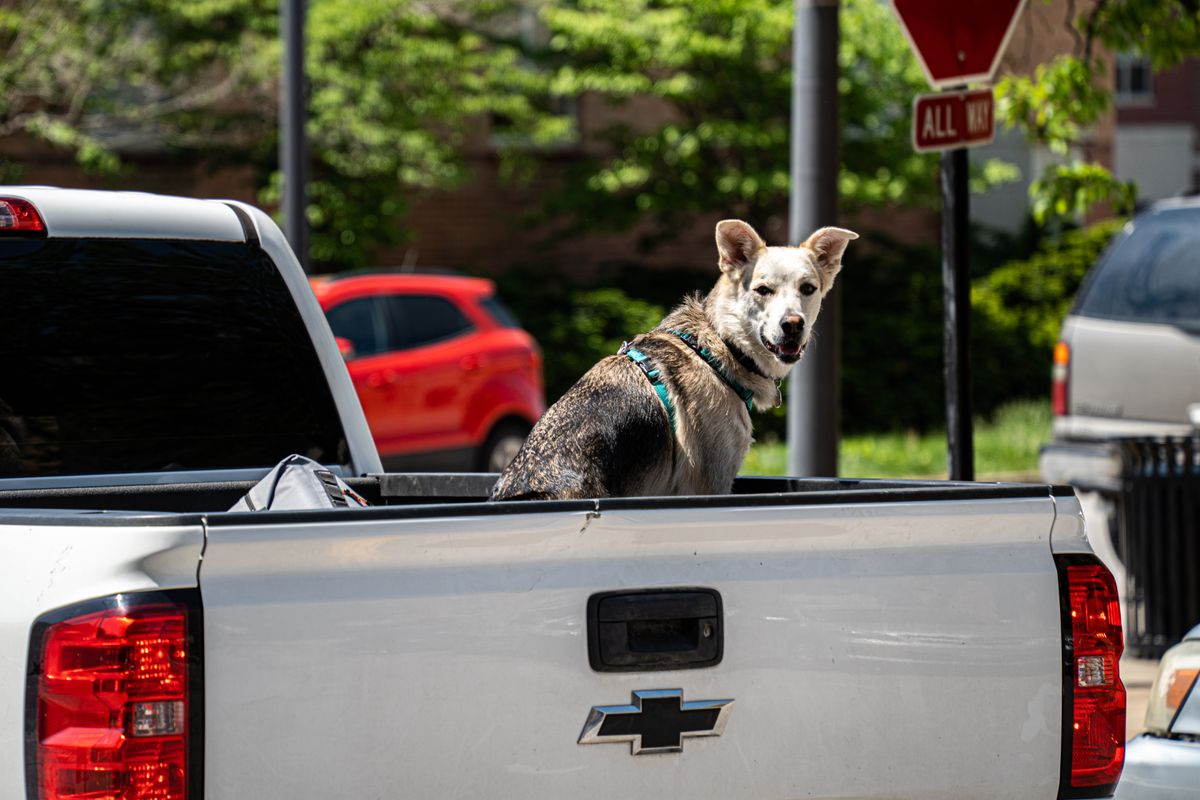
Hot Cabin Checks I Teach Before Any Summer Road Trip With a Dog
Of all the emergencies that walk into a first aid class through somebody's story, heat is the most preventable and the least forgiving. I teach on the Gold Coast, where a February cabin is an oven before morning tea, and where well-meaning owners get the details wrong in ways that cost them the trip or, occasionally, the dog. This is the cabin checklist I teach, and I want to say up front that none of it is complicated. It is a habit, the same five minutes every time, and habits are what hold up when the beach is calling.
How fast a cabin actually heats
The number people find hard to believe is that a parked cabin passes thirty degrees above outside on a warm, sunny day, and most of that rise happens inside the first half hour. Colour, window tint and a breeze change the timing, not the destination. A car parked in shade on a 29-degree day is not a cool car; it is a slow car.Cracked windows are folklore at these temperatures, worth a degree or two at best. The rule I teach is unglamorous: if you are leaving the cabin, the dog leaves the cabin. There is no five-minute exception worth the risk, because five minutes becomes fifteen when the shop queue is long.
The moving cabin is a different animal, and this is where summer road trips go wrong in a sneakier way. While you are driving, airflow and air con keep the cabin honest. The moment you stop for fuel and shut off the engine, the clock starts, and an hour into a 34-degree afternoon the back seat your dog was lying on is radiating heat from underneath as well as above. My classroom rule for trips is that fuel and food stops are toilet-and-water stops, done with the dog out on a lead in the shade, never a sleep-in-the-car stop.
The five-minute check before you load the dog
Touch the back seat surface, the seatbelt buckles and the floor with the back of your hand and count to five. If you cannot hold your hand there, neither can your dog, and the floor matters more than people expect because dogs cook from below. Check where the sun will be, not where it is: an east-morning drive becomes a west-afternoon drive eventually, and the sunny side changes at midday. Run the air con before the dog boards and confirm it actually reaches the back, because plenty of small cars cool the front seats and trickle at the rear. And check the water plan: a spill-proof bowl, water on board, and a stop schedule that includes a drink before the dog asks for one.
Early heat stress: the signs in the order they arrive
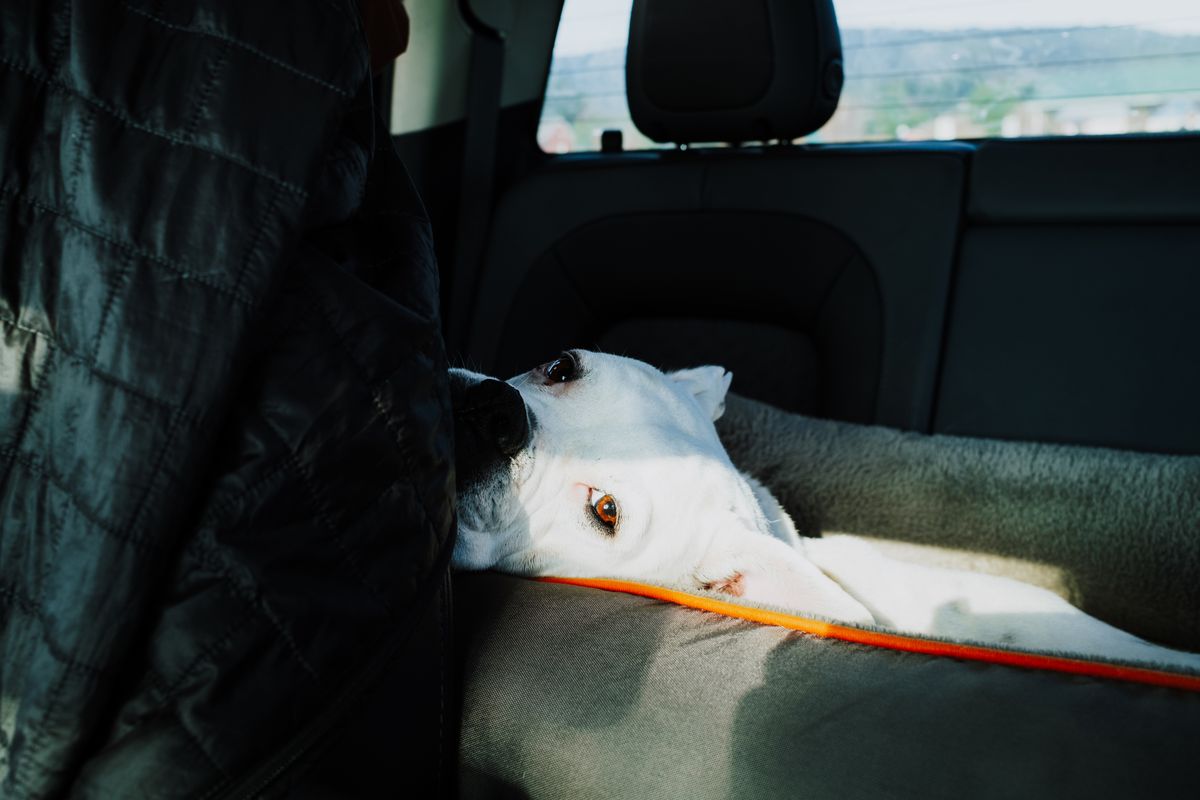
This is the part of the checklist that lives beyond the car park, because cabins are only half the summer story. Heat stress shows up in a predictable order, and knowing the order buys you time. First comes heavy, fast panting that does not settle in the shade. Then thickening drool, bright red gums and tongue, and a search for floors and shade. Then the wobble: weakness in the back end, stumbling, glassy eyes. Vomiting or diarrhoea follows. Past that point you are into an emergency, and the number that matters is your vet's, not mine, because severe heat stroke is a hospital case even after the dog looks better. Cooling on the way to care is wet towels against the groin and armpits, cool not icy, air con on, and windows down. Never ice baths, which clamp the blood vessels in the skin and trap the heat in the core where it does the damage.
Flat-faced breeds, overweight animals, seniors and thick-coated breeds start this ladder several rungs up. If that is your dog, your summer trip rules are stricter: earlier starts, shorter legs of the journey, and a hard look at whether the trip needs the dog at all. Loving the beach and coping with the drive to it are different skills.
Covers, windows and the myths worth dropping
A seat cover does not cool a cabin; it changes what the sun does to the surfaces. A light-coloured cover on a black bench seat genuinely drops the surface temperature and saves paws and hocks, and that is worth having. What it does not do is make a parked cabin safe, and I would rather owners know that clearly than trust a cover for a margin it was never designed to give. Windows down a hand's width at highway speed mostly adds wind noise and an ear infection risk for dogs who lean into the breeze, and it does nothing for a parked cabin's temperature. And the boot of a sedan in summer is not cooler than the cabin; it is unaired, unmonitored and out of your sightline, which makes it the worst seat in the house on a hot day.
| Check | When | What good looks like |
|---|---|---|
| Back of hand on seat, buckles and floor | Before loading | Five seconds comfortable on all three surfaces |
| Air con reach | Before loading | Cool air measurable at the back seat, not just the front |
| Sun side plan | Before loading | Dog positioned on the shade side for the whole leg, not just the start |
| Water stops | Every one to two hours | Shade, lead, drink before panting starts |
| Panting check | Continuously | Panting settles within a few minutes of shade and water |
| Never-left-alone rule | Always | Dog exits the cabin whenever the engine does |
What I pack for a warm-weather trip
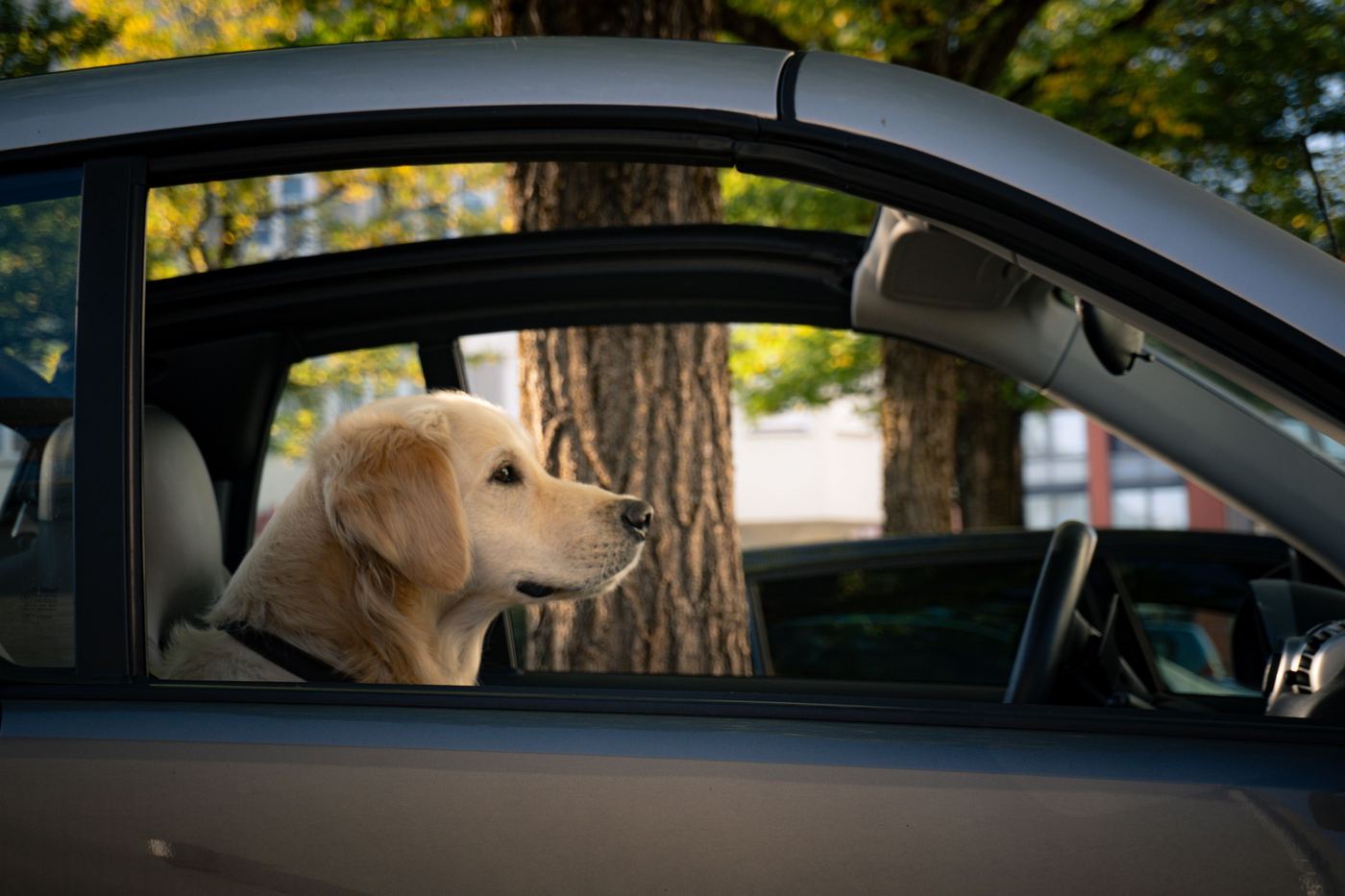
The kit that earns its space: a light-coloured cover or platform, a spill-proof water bowl and more water than seems reasonable, a spray bottle for dampening the chest at stops, a towel for wet-downs, and a shade windscreen for when you park at your destination in full sun and unload in the shade side. Add a copy of your vet's number and the nearest emergency vet to wherever you are headed, saved in your phone before you leave, because the moment you need one is not the moment to be roaming for coverage on a hinterland road.
Frequently Asked Questions
Is it safe to leave my dog for five minutes with the air con running?
I don't teach it, and here is why: air con fails, keys get locked in, and five minutes stretches in exactly the way queues make them stretch. Some owners run a second key and accept the risks. My checklist says the dog leaves the cabin with the engine, every time, because the habit without exceptions is the one that survives a busy day.
Which dogs need the strictest summer rules?
Flat-faced breeds like bulldogs and pugs, overweight animals, seniors, puppies, thick double coats like huskies, and any animal with a heart or airway condition. For those dogs, shift the whole plan: travel at dawn, keep trips short, and consider whether the trip needs them along at all. Their heat ladder is shorter from the first rung.
Are light-coloured seat covers actually cooler for dogs?
For surfaces, yes. A pale cover on a dark bench can drop the touch temperature noticeably, which matters for paws and for dogs lying on their sides. But a cover changes surfaces, not air temperature, so it never makes a parked cabin safe. Think of it as comfort equipment, not cooling equipment, and the distinction will keep your decisions honest.
What do I do in the first minute of suspected heat stroke?
Shade, immediately, then start cooling: cool water, not ice, against groin and armpits and belly, air con or windows down on the drive, and ring the vet while you work so they are expecting you. Offer small sips of water but do not force it. The mistake people make is waiting to see whether the wobble passes; wobbling back legs are already late in the sequence, so move.
How often should we stop on a long summer drive?
Every one to two hours as a rhythm, and always at the first restlessness. Shade, a short walk on lead, water, and a hand on the seat surface again before you reload. The stops feel like they cost an hour across a day; in practice they cost minutes and they are the reason the dog at the end of the trip is the same bright animal that started it.
Looking for dog car seat covers?
We stock the gear covered in this guide, with Australia-wide shipping and Afterpay at checkout.
Shop Car Seat Covers at Paws of Oz