
Moving With a Nervous Kitten: What Actually Settled Miso
Short answer: moving Miso, our rescue kitten, between two Perth rentals turned her into a furry ghost for nearly a week. What finally worked was one quiet room, a predictable routine and a pheromone calming collar, not the three gadgets I'd panic-bought beforehand. The room did most of the work and the collar took the sharpest edge off once she had somewhere to feel safe. If you rent with a cat and a move is coming, set up a single safe room first and let your cat decide when the rest of the house is worth visiting.
The move that turned Miso invisible
We shifted on a Saturday, and by Sunday Miso had vanished behind the water heater. I'd packed her favourite blanket in her carrier but forgot that a new place smells of nothing familiar. Cats map their world through scent, and ours had been scrubbed clean by the outgoing tenants and a bottle of eucalyptus cleaner.
For the first two days she only came out to eat at 3am. I kept checking on her with a torch, which probably made things worse. She needed stillness, not a worried human crouching at the cupboard every forty minutes. Looking back, the hardest part of that week was resisting the urge to fix it quickly, because quick fixes are exactly what a hiding cat rejects.
Mistake one: letting her roam too soon
On day three I opened the whole apartment, reasoning she'd explore once she realised the boxes were gone. Instead she bolted to the top shelf of the wardrobe and froze there for hours. Giving her access to space she wasn't ready for simply confirmed that the world was unsafe.
The better approach, which I learned late, is to expand territory one room at a time. A cat that properly owns one space will claim the next far faster than one that's been overwhelmed by all of it at once. Small is fast, in cat terms, which is not intuitive when you're watching a small animal hide and your instinct says open everything up.
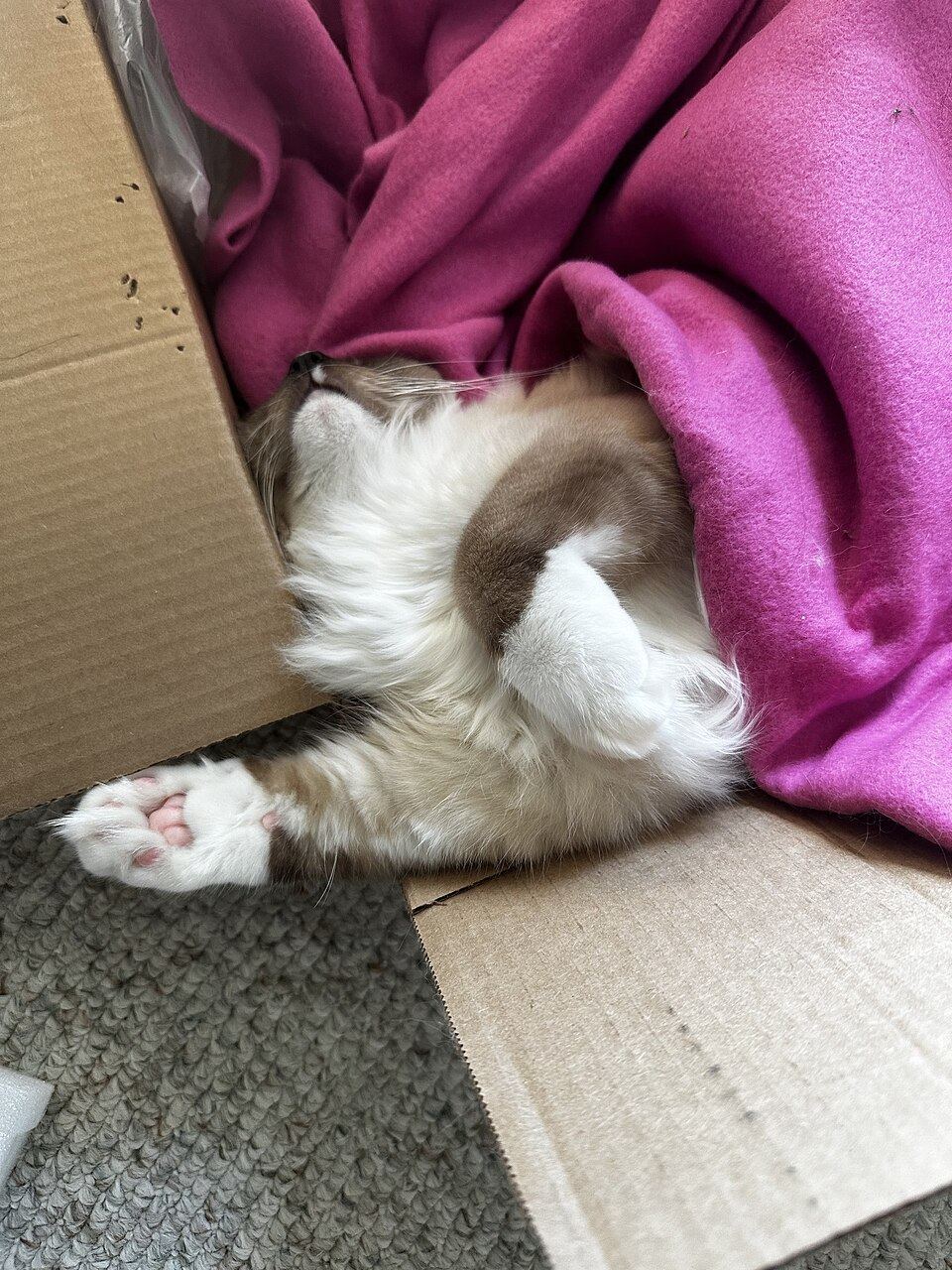
The one room that became her world
I reset by closing her into the bedroom with food, water, a litter tray and that blanket. I visited on her schedule, sat on the floor rather than looming, and read aloud so my voice became part of the background. Within two days she was kneading the blanket, which for Miso is the closest thing to a thank-you.
Once she was eating in the open and greeting me at the door, I cracked the bedroom door and let the hallway happen. She took it at her own pace, and by the following weekend the whole apartment was hers without a single bolt. The room wasn't a cage, it was the launch pad that made the rest survivable.
Where the collar actually helped
I'd bought a pheromone collar in the panic-buying phase and nearly returned it. Instead I put it on once she had the safe room, and the change was subtle but real: she came out a little sooner each evening and groomed in the open, which she hadn't done since the move. I wouldn't credit the collar alone, but paired with a stable room it smoothed the edges.
What I'd avoid is the spray-and-diffuser combo I also bought. The spray smelled faintly of the cleaner she already disliked, and the diffuser was in a room she wasn't using yet, so neither reached her where she actually was. Match the aid to the cat's current corner of the world, not to the whole floor plan.

Setting up the next move better
We've since moved once more, and the difference was planning. This time her safe room was unpacked before the first box hit the new lounge, her blanket went in the carrier, and I kept the same feeding times across both ends of the trip. She was out and bossing the place within two days instead of a week.
The takeaway for any renter is that cats don't mind a move nearly as much as they mind losing their scent and their rhythm. Keep those two things constant and the rest is logistics. A collar can help, but the room and the routine are the medicine, and they cost nothing but a bit of forethought.
- Unpack one quiet room fully before the cat arrives.
- Keep feeding times identical across the old and new home.
- Move the cat last, in a familiar carrier with her blanket.
- Expand territory one room at a time, on her terms.
- Save the collar for after she has a safe space to wear it in.
| Home type | Best safe room | Must-haves | What to avoid |
|---|---|---|---|
| Studio apartment | Bathroom or built-in robe | Blanket, litter tray, low light | Forcing access to the open plan |
| Two-bed rental | Spare bedroom | Food, water, a hiding box | Unpacking noise nearby |
| Townhouse | Upstairs bedroom | Familiar scent, quiet radio | Stairs she must cross |
| House with yard | Internal laundry | Closed door, soft bedding | Outdoor access too early |
| Short-term stay | One quiet corner | Portable crate, her blanket | Constant visitors |

Frequently Asked Questions
How long should I keep a cat in one room after moving?
Long enough that she is eating, grooming and greeting you in the open, which for a nervous kitten is often two to five days rather than a single afternoon. Don't watch the calendar, watch her behaviour, because a cat who is still hiding at mealtimes isn't ready for the hallway. Once she owns that room, crack the door and let her set the pace for the rest of the home.
Do pheromone collars work for rescue kittens?
They can take the sharp edge off, but only once the kitten already has a safe space and a routine, which is where the real settling happens. On their own they won't undo fear, and a collar on a cat with no territory to feel safe in is just a strap. Used as a top-up after the room is sorted, plenty of owners notice quicker, calmer exploration, which matches what I saw with Miso.
Should I use a diffuser or a spray instead?
A diffuser helps if it sits in the room your cat actually lives in, which is why mine missed while Miso was still in the bedroom. A spray can work on bedding, but pick one with no scent she already dislikes, because a smell linked to cleaning can set you back. Honestly, for a move the single safe room does more than any of the three products combined.
My kitten hides and won't eat, is that normal?
A day of reduced eating during a move is common, but a kitten who won't eat at all for more than a day needs a vet look, because young cats decompensate quickly. Offer food in the dark, on her schedule, and don't stare at her while she eats. If she's also limp, drooling or vomiting, that's not moving stress, that's a clinic trip, not a calming product.
How do I stop the next move being so hard?
Set up the safe room before the first box lands, keep feeding times identical, and move the cat last in her own carrier with her blanket inside. Those three steps did more for our second move than anything I bought, and she was out within two days instead of a week. Cats cope with change fine when their scent and rhythm stay constant through it.
Looking for calming & anxiety?
We stock the gear covered in this guide, with Australia-wide shipping and Afterpay at checkout.
Shop Calming at Paws of Oz