Lead Storage at Home: Hooks, Tangles and Wear
Short answer: Most leads do not wear out on walks. They wear out in storage, where tight coils crack webbing, stacked hooks strain clips and a damp swivel seizes solid. Hang each lead loosely on its own wide peg, dry it fully before it goes up, and it will last years longer.
A customer rang us last winter about a lead that had gone stiff and pale along one edge, barely two years old. She had hung it on a nail by the laundry window, coiled tight with a knot to keep it tidy. Nothing was wrong with the lead. The nail, the knot and the afternoon sun had quietly ruined it. I thought about the hook wall in our own stockroom, where leads hang loose and dry and last for years of handling by hundreds of customers. Storage is the part of a lead's life nobody thinks about, so I asked around the team and wrote down the habits that actually matter.
The hook by the back door
Most homes have one hook, and every lead in the house fights for it. The clip of the bottom lead carries the weight of the ones above it, and the webbing presses into the same narrow groove for months. That crowding does slow damage. Narrow hooks hold a lead at one sharp bend, so the webbing keeps a permanent crease right where it bends hardest. Clips stay loaded even when nothing is moving. None of this shows on any given day. It shows up two years later as a stiff line, a sticky swivel and a handle stitching that gave up before its time. The good news is that the fix costs almost nothing and takes one trip to the hardware shop.
Tight knots crack webbing
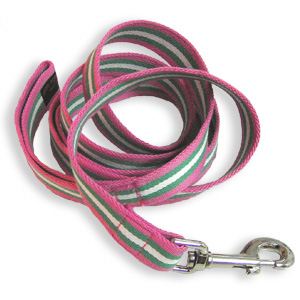
A coiled lead wants to spring open, so people tie it in a knot to keep it neat. Neat is the enemy here. Every sharp fold presses the outer coating and the inner fibres at the same point, day after day. Nylon is the worst affected. It develops a hard crease that eventually looks like a hinge, and a hinge is exactly where a lead fails under load. Rope handles coiling better but hates being knotted hard for the same reason. Biothane wipes clean and shrugs off most of it, though even it prefers a relaxed shape. The habit worth building is simple: loop the lead once or twice over a wide peg and let it drape. A wide peg spreads the bend across centimetres instead of millimetres, and the webbing keeps its shape instead of memorising a fold.
Sunlight through a laundry window
The sunniest spot in a laundry is the worst spot for a lead. Ultraviolet light fades nylon from bright to chalky and makes the outer fibres brittle, so the webbing stiffens and frays at the edges long before the stitching does. A lead on a windowsill or on a hook beside a glass door cops this every single day, even in winter. Melbourne or Brisbane, the physics does not change. Biothane and coated webbing resist fading better, but their metal clips still corrode faster in a hot, bright, humid corner. The fix is to move the hook to a shaded wall, even half a metre out of the beam. Your lead does not need a view. It needs shade, air and dryness, in that order.
Damp leads seize swivels
Wet leads go straight back on the hook in most houses, and that habit costs more leads than any walk ever will. A swivel is a tiny moving joint, and it has no defence against water left sitting inside it. Salt water is the worst offender. After a beach walk, salt dries into the joint and the clip starts to grind, then sticks, then refuses to turn at all. Rain is gentler, but a lead hung coiled still stays damp for days, and damp webbing grows musty and stiff. The routine that works is short. Rinse a salty lead in a bucket of fresh water, shake it out, and hang it uncoiled over a rail or the shower until it is properly dry. Only then does it go back on its peg.
- Loop leads loosely over a wide peg instead of tying them in knots.
- Give every lead its own hook so clips and webbing carry no stacked weight.
- Rinse salt water off, then drip dry the lead uncoiled before storing it.
- Move storage hooks out of direct sun, even half a metre helps.
- Glance over stitching and the swivel once a month while the kettle boils.
A door setup that works
The setup I suggest to customers takes ten minutes. Screw two wide pegs into the wall beside the door you actually leave from, one at reachable height for the daily lead and one higher for the spare. Add a third hook or a simple rail lower down if you have the space, purely for drying, so a wet lead never has to share a peg with a dry one. Keep a soft brush in the same spot for flicking off sand and burrs before a lead goes up. When customers ask which lead suits this kind of setup, I point them to the range of dog leads we run and tell them the honest truth: almost any well-made lead lasts years if it hangs dry, loose and shaded between walks.
| Storage habit | Damage it does | The better habit |
|---|---|---|
| Tied in a knot to stay coiled | Sharp folds crease and crack webbing | Loop loosely over a wide peg |
| Four leads sharing one narrow hook | Stacked weight strains clips and stitching | One lead per hook |
| Hung wet after a beach walk | Salt seizes the swivel solid | Rinse in fresh water, drip dry uncoiled |
| Living on a sunny windowsill | UV fades and stiffens nylon | Shaded wall, out of the beam |
A monthly glance at stored leads
Once the setup is right, the only job left is a slow look. Once a month, while the lead is in your hands anyway, run the webbing between your fingers from handle to clip. You are feeling for hard creases, frayed edges and stiff spots. Work the swivel a few times and listen for grinding. Check the stitching at the handle, which carries the most strain and fails first. If a lead has developed a hinge-like crease or a swivel that no longer spins freely, retire it from daily duty rather than trusting it near a road. A lead is the one piece of gear you hold when everything depends on it, so it deserves the least glamorous maintenance of all: a dry hook and thirty seconds of attention.

Frequently Asked Questions
Is hanging a lead by its clip bad for it?
Not on its own. A dry lead hanging straight from a wide hook is fine. The trouble starts when several leads share one hook and the bottom ones carry the rest, or when a narrow nail holds the webbing at a sharp bend for months. The clip itself takes hanging weight easily. Spread the leads out and hanging does no damage at all.
How should I dry a lead after a wet walk?
Shake off the drips, then hang the lead uncoiled over a rail, the shower frame or a veranda line in the shade. Clip end pointing down lets water drain out of the swivel instead of pooling in it. If the walk was at the beach, rinse the lead in a bucket of fresh water first. Once it is fully dry, which takes hours rather than minutes, it can go back on its peg.
Why did my nylon lead fade and stiffen near the window?
Sunlight did that. Ultraviolet light breaks down the outer fibres of nylon over months, which is why the webbing turned pale, chalky and stiff along one face. The damage cannot be reversed, so judge how deep it goes: if the webbing still feels supple and the stitching is sound, the lead has life left in it. Move its hook to a shaded wall so the replacement does not suffer the same fate.
Can I keep a spare lead coiled in a drawer?
Yes, with two conditions. The lead must be completely dry before it goes in, because a drawer traps moisture against the webbing and the swivel. And coil it in loose, generous loops rather than a tight knot, so the webbing is not held at a sharp crease for months. A cotton bag or an old pillowcase in the same drawer keeps dust off without sealing moisture in.
How many hooks does a single-dog home actually need?
Two is plenty for most homes. One peg at shoulder height for the lead you use every day, and one higher up for the spare, kept out of the sun. If you also own a long line or a hands-free lead, add a third, because nothing tangles a storage wall faster than a lead with extra hardware. A rail for drip drying can sit lower and out of the way.
Looking for dog leads & walking gear?
We stock the gear covered in this guide, with Australia-wide shipping and Afterpay at checkout.
Popular in this range: escape-proof harness set · mesh harness & lead set
Shop Leads & Walking at Paws of Oz