Laser Toys: Fun, Until the Light Vanishes
Short answer: a laser is safe only if every session ends with a real catch, because the dot never dies and an unresolved hunt builds agitation. The truth is closure matters more than the chase — let the dot 'land' on a treat or toy, then flick it off as your cat pounces, and keep to five or ten minutes. I'm the one with strong feelings about using it well, so a short wind-down is non-negotiable.
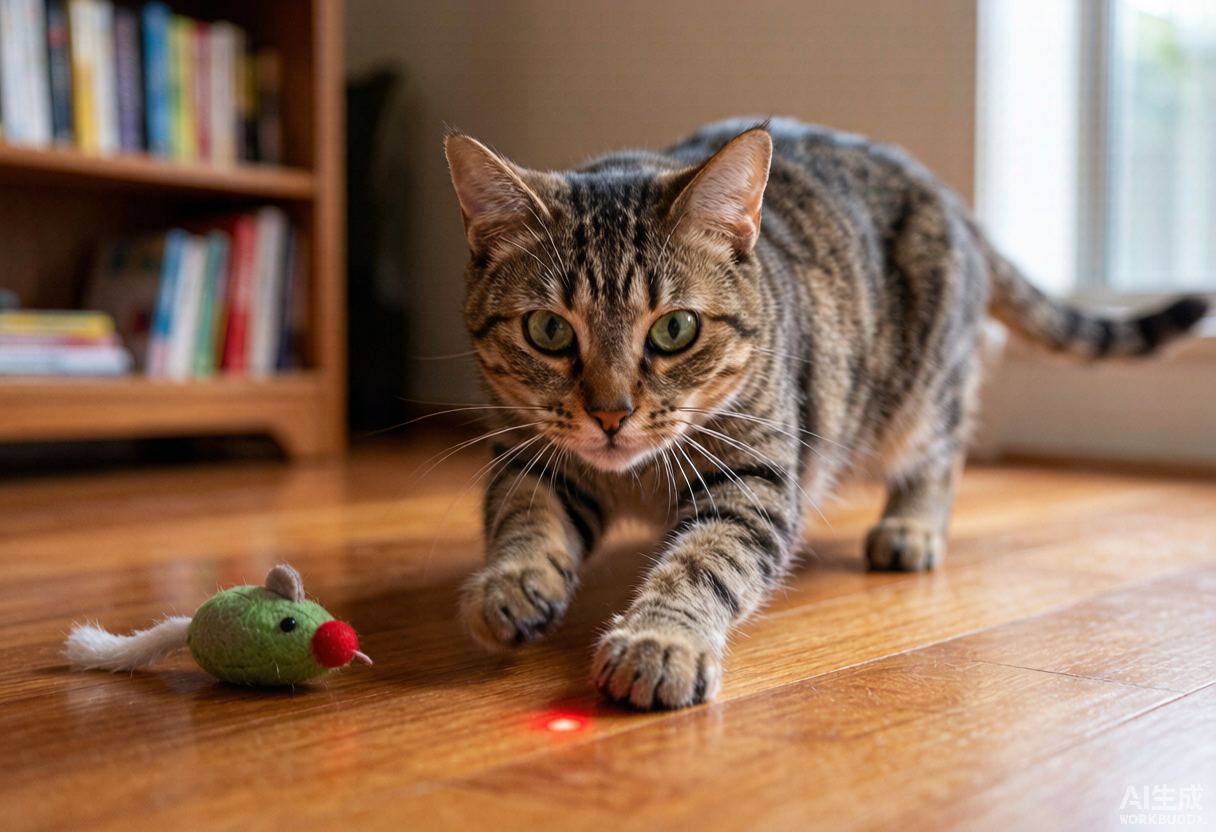
Nothing gets a cat moving like a little red dot. Nothing frustrates one faster, either. A laser chase has no ending — the dot never dies — and for a predator, that unresolved hunt can build agitation rather than satisfaction. It's the one toy in the cupboard I have strong feelings about using well.
Rules for a happy laser session
The fix is simple: end every session with a physical catch. Let the dot "land" on a treat or a favourite toy, then flick the laser off as your cat pounces on something real. That closure matters. Keep sessions short, avoid shining near eyes, and never use a laser to tease a cat that's already over-aroused.
| Laser style | Good for | Note |
|---|---|---|
| Handheld pointer | Directed play | Always end on a physical catch |
| Motion-activated tower | Solo sessions | Auto shut-off is a plus |
| Rolling LED ball | Self-play | Check battery life and floor type |
For households where the cat plays alone for hours, a motion-activated option with an automatic rest cycle is the better pick — the unpredictability keeps interest, and the pauses stop it becoming constant, unresolved stimulation.
- End every session with a physical catch on a treat or toy.
- Keep sessions short and avoid shining the laser near the eyes.
- Never use a laser to tease a cat that is already over-aroused.
- A motion-activated tower with auto shut-off suits solo play.
- A rolling LED ball works for self-play; check battery and floor type.
Reading the room first
Before I switch the laser on, I take a beat to check the space around us. A quiet spot with a clear floor means the dot has somewhere to travel and the cat isn't spooked by a sudden noise halfway through the chase.
I also make sure nothing breakable is within a paw's swipe, because a cat at full stretch doesn't care about the shelf. Setting the scene takes longer than the play itself some days, but it keeps the fun from turning into a mess I have to tidy while she's still wired.
A calm wind-down
Once the catch is done and the light is off, I give the cat a minute to settle rather than diving straight into the next thing. The switch from full sprint to stillness is the part she seems to need, and rushing it just leaves her prowling.
I'll often sit nearby without engaging, let her groom or wander, and only then move on with the day. It's a small courtesy that grew from watching her pace the room after a session that ended too abrupt. The quiet minute does more than the play sometimes.
Storing the laser away
When we're finished I put the laser back where the cat can't reach it, because a red dot she can switch on herself is a recipe for an unresolved chase with no one to end it. Out of sight keeps it as a shared thing, not a permanent tease.
The batteries come out if it's going to sit for a while, and the spot is the same drawer every time so I'm not hunting for it mid-play. It's a dull habit, but it means the toy stays a treat rather than a fixture she learns to expect on her own terms.
Frequently Asked Questions
Frequently asked questions
Are laser toys bad for cats?
Used well — short sessions, ending in a physical catch — they're safe, rewarding exercise.
Why does my cat seem frustrated after laser play?
The hunt never ends in a catch. Finish on a treat or toy.
Can a laser hurt a cat's eyes?
Avoid pointing at eyes directly; choose pet-rated, low-power devices.
Do motion-activated lasers work for solo cats?
Yes, especially with auto shut-off. Pair with real toys for balance.
How long should sessions last?
Five to ten minutes, then a catch and a wind-down.
Looking for cat & dog toys?
We stock the gear covered in this guide, with Australia-wide shipping and Afterpay at checkout.
Shop Toys at Paws of Oz