Puzzle Feeders for Cats Who inhale Their Dinner
Short answer: a puzzle feeder turns a forty-second inhale into a twelve-minute forage, but only if you start easy or your cat walks off and sulks. The truth is the first swap should be a snuffle mat or ball-roller where food falls freely, then graduate to sliders once she gets it, because a wild cat hunts small meals and this recreates that work. Measure portions first — a puzzle paces the same food, not a weight-loss plan.
A cat that finishes dinner in forty seconds isn't thriving — it's vacuuming. Fast eating in cats can bring regurgitation, and just as importantly, it wastes the single easiest enrichment opportunity of the day. In the wild, a cat hunts several small meals; a puzzle feeder recreates that work with none of the feathers.
Start easy, or they'll boycott
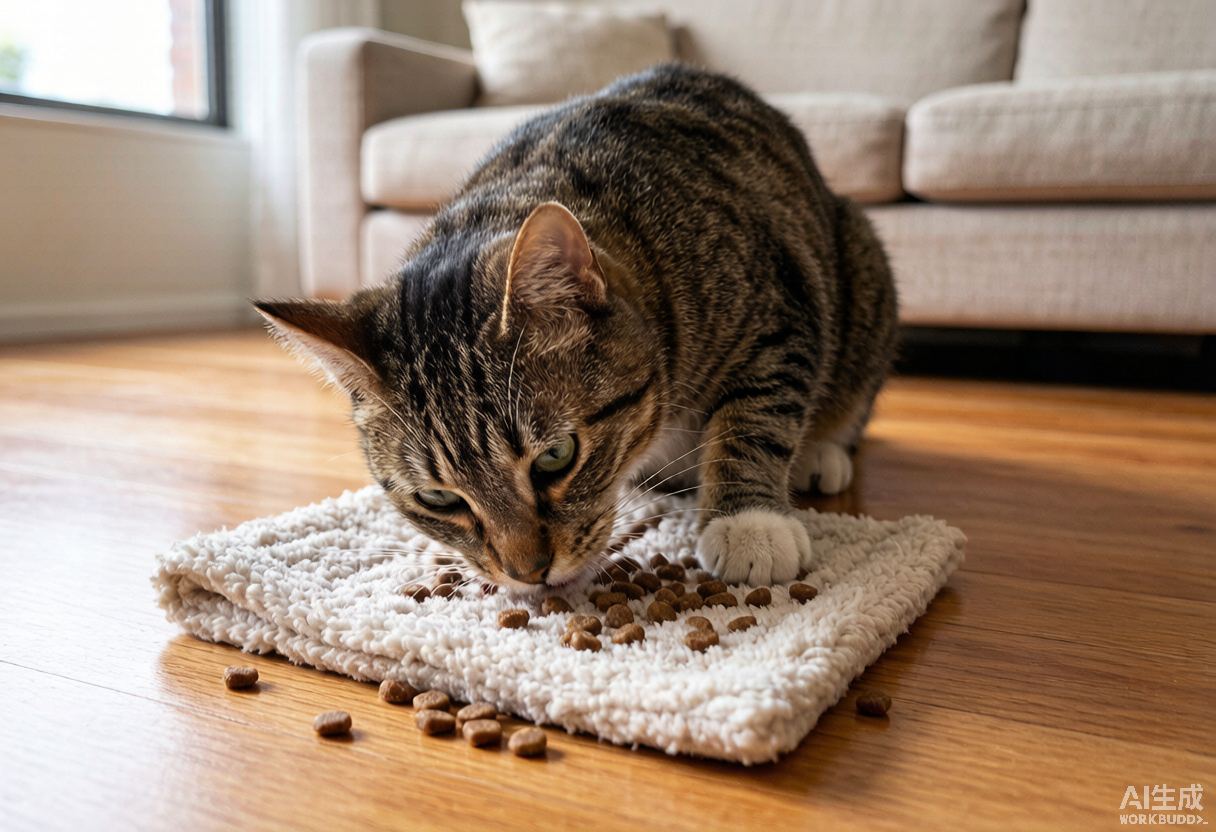
The number-one mistake is starting too hard. A frustrated cat simply walks off (and sulks). Begin with a snuffle mat or a simple ball-roller where food falls easily, and only graduate to sliders and multi-step puzzles once your cat has the idea. With my speed-eater, one slow-feeder swap stretched dinner from forty seconds to twelve minutes.
| Feeder type | Difficulty | Best for |
|---|---|---|
| Snuffle mat | Easy | First-timers, sniffers |
| Rolling treat ball | Easy | Young, playful cats |
| Maze bowl | Easy–medium | Speed-eaters at mealtimes |
| Slider / hidden-compartment puzzle | Medium+ | Confident, food-driven cats |
One caution worth stating plainly: puzzles are enrichment, not a weight-loss plan on their own. If your cat is carrying extra weight, measure portions first — a puzzle just paces the same food over more time.
- Starting too hard makes a cat walk off and sulk.
- Begin with a snuffle mat or a simple ball-roller that drops food.
- Graduate to sliders and multi-step puzzles once they get it.
- One swap stretched our speed-eater's dinner from forty seconds to twelve minutes.
- Puzzles pace the food but are not a weight-loss plan alone.
Pick a calm feeding spot
I set the puzzle in a quiet corner away from the household traffic, because a cat who feels watched is quicker to bail on the whole idea. A steady, low-key spot lets her focus on the food instead of the noise around her.
The same place each time helps too, so the feeder becomes part of the scenery rather than a surprise. Once she knows where dinner lives, she heads there on her own, and the forage starts without me coaxing her across the room.
Read her mood at first
The first week I kept an eye on how she took to it, ready to lift the puzzle away if she got cross. A cat who stamps off once can be coaxed back, but a cat who stamps off night after night learns the feeder means frustration.
I watched for the signs she was enjoying it, the ears forward, the steady pawing, and let that guide how fast we moved. Going at her pace kept the whole thing a game instead of a chore, which is the only way it sticks.
Wash the feeder often
These things get greasy fast, and a grimy puzzle puts a cat off the food it's meant to slow down. I rinse ours after the evening meal and give it a proper wash when the week's crumbs build up, since a clean surface keeps the foraging fun.
A dry feeder also stores better and doesn't trail smells through the cupboard where the kibble lives. A few seconds of care keeps the whole setup inviting, and an inviting puzzle is the one she'll actually come back to night after night.
Frequently Asked Questions
Frequently asked questions
Do puzzle feeders slow fast eating?
Yes — a maze bowl or rolling feeder can stretch a meal several-fold.
Can I use one with wet food?
Lick-style mats and shallow puzzles suit wet food; wash daily.
What if my cat gives up?
Drop the difficulty, show her a treat falling out once, and try again hungry — not starving.
Are they good for kittens?
Yes, start with the simplest level so they learn by winning.
How many puzzle feeders do I need?
Two — one easy, one harder — plus rotation keeps both interesting.
Looking for cat & dog toys?
We stock the gear covered in this guide, with Australia-wide shipping and Afterpay at checkout.
Shop Toys at Paws of Oz