Kitten-Proofing the Toy Box: Sizes and Small Parts
Short answer: sort the toy box before the kitten finds it. Pull out anything that fits through a toilet roll tube, anything with glued-on parts, and anything with loops or elastic. A kitten's toys should be bigger than its mouth, solid, and checked by hand before every play session.
Kittens would arrive at the cattery barely twelve weeks old and treat the play pen like a demolition site. I learned in my first season that a toy box safe for grown cats is not safe for kittens. A plush mouse with one glued eye working loose, a bell coming out of a ball, a wand with cracked string: each of these sat in our box one morning and each had to come out. From then on, every kitten booking started with a sorting session at the toy trolley before the kitten ever saw it. Half an hour with a rubbish bag and a torch saved me from every escalation I have since heard about from owners. The rules are simple enough to run in any lounge room.
The toilet roll size rule
The rough test I use works just as well in a cat household: if a piece can pass through a toilet roll tube, it is a choking-size piece for a kitten. Pom-poms are the classic offender, sitting right on the line. Small jingle balls around two and a half centimetres across generally stay on the safe side of the tube, but a ball under two centimetres goes back on the shelf until the kitten is grown. The test is not a laboratory standard and it is not a guarantee, but it catches most of what a kitten can get right down its throat. Run it on every toy, including ones that arrived from a pet shop looking perfectly kitten-sized. Sizes vary between brands and batches more than people expect, and the tube does not care what the packaging says.
Parts that come loose first
Glue fails before fabric does. Eyes and noses on plush mice, feathers on plastic shafts, bells held in ball centres by a single line of cotton: all of these let go under a determined kitten. I checked plush toys with a firm thumbnail press every week, and anything that shifted was restitched or retired. Cracked elastic and worn string on wands tell the same story with a worse ending, because string is the one part a kitten reliably swallows. Felt tails, rope ends and any dangling thread get trimmed close before play. The pattern I noticed was simple: a toy survives its first week on looks, and everything that was going to fall off falls off in the second and third. Whatever state a toy reaches by week three is roughly what it will stay, so re-check the whole box then.
Shapes that catch a kitten claw
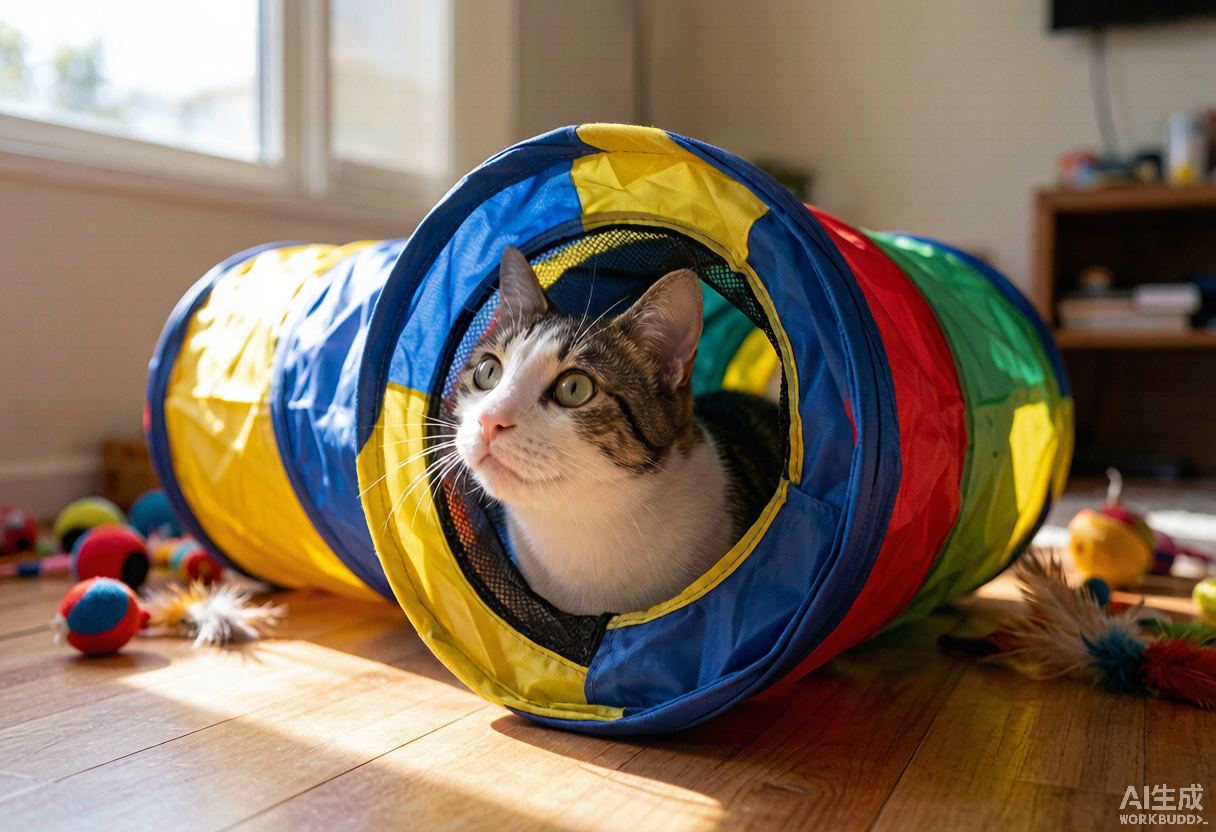
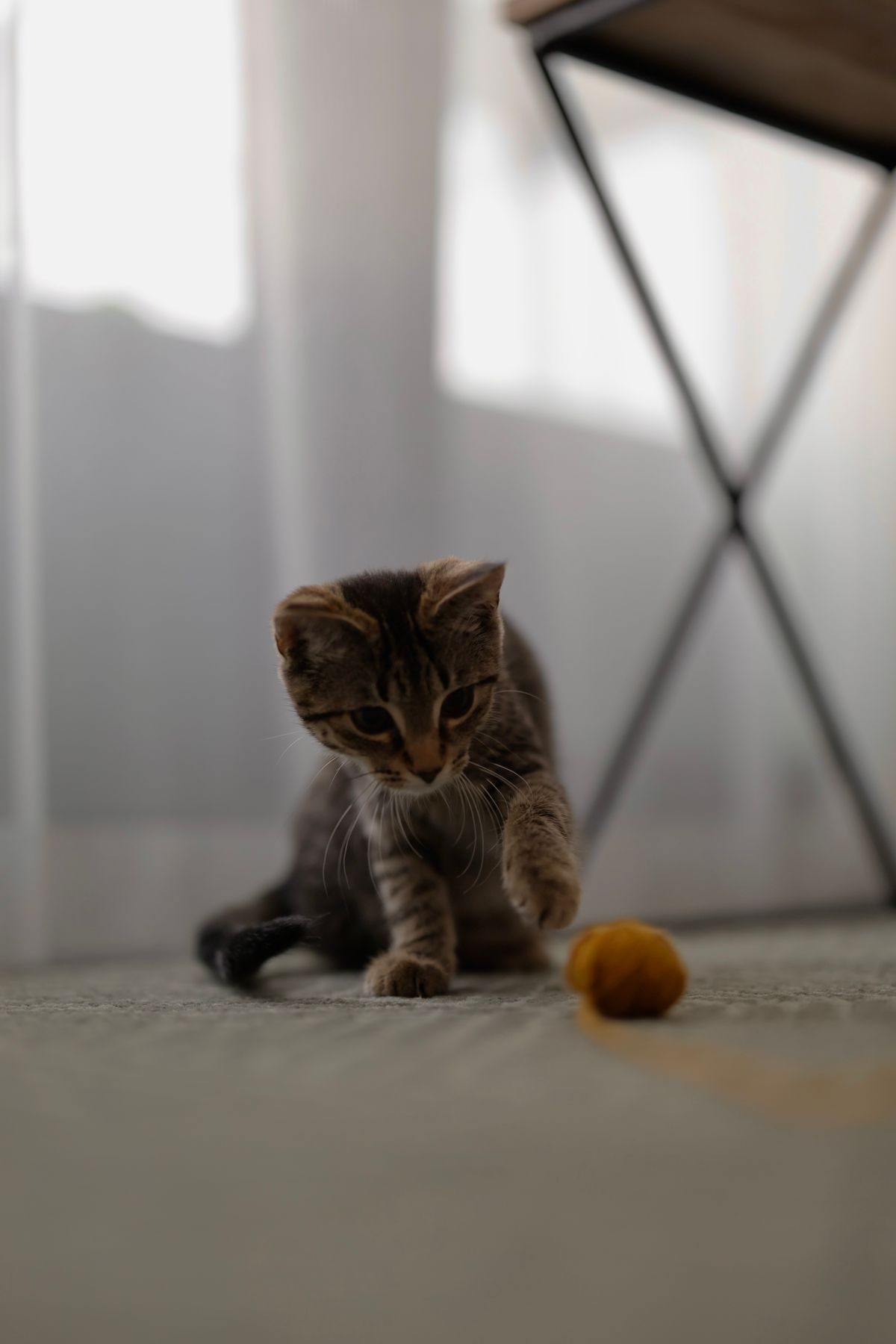
Size is half the audit, and shape does the rest. Tunnels with soft walls can collapse onto a kitten mid-game, and loops are the real trap: handle loops on plush toys, the gap between a ball and its elastic tether, fabric rings a paw fits into but a leg does not. A claw caught in a loop while the toy is being dragged at speed sends even a calm kitten into a panic, and panicked kittens tear whatever they are attached to. In the pen I cut every handle loop off with scissors, and I skipped elastic-tethered balls entirely for kittens under about sixteen weeks. Solid shapes, rolled balls, kickers without dangling parts and flat crinkle mats have no gaps to catch, which is why they filled the kitten shelf. If you can slide a finger through a gap with room to spare, think about whether a claw can too.
- Anything that fits through a toilet roll tube waits until the kitten is grown.
- Press a thumbnail on glued eyes and bells before every play session.
- Cut handle loops and tether elastics off toys meant for young kittens.
- Trim loose threads, felt tails and worn string close before play starts.
- Re-sort the whole toy box every fortnight as glue and seams age.
The sorting routine before play
The routine took about ten minutes and ran the same way every time. Everything comes out of the box onto the floor, because you cannot inspect a pile by rummaging. Each toy gets three checks in the hand: a squeeze for parts that shift, a pull on anything stitched, and a look over for cracks or splits. Then the size test, then a wipe for anything sticky, since a toy that has collected dust and old food belongs in the wash pile, not the play pile. Sorted toys go back in two groups: the approved set the kitten plays with now, and the grow-into set that waits on a high shelf. The discard bag leaves the room straight away. Sorted before play, the box is safe for a kitten left alone with it. A mixed box is not.
What the toy box itself needs
The box matters as much as the contents. An open basket on the floor becomes a nest first and a toy box second, and kittens dig, so anything brittle at the bottom gets crushed and cracked. I used a shallow, lidded plastic tub with a cloth in the base, wiped out weekly. The lid keeps the grow-into set out of reach between sessions, which is the whole point of having two groups. Storage also decides how toys age: sealed tubs keep elastic and string from drying out through a hot summer, while toys left on a sunny floor stiffen and crack faster. If you are building a kitten's first set, look at the cat toys on offer with fresh eyes and buy fewer, bigger, solid pieces. Three good balls, one sturdy kicker and a wand you hold between sessions will outlast a box of mixed cheap smalls.
| Toy type | Suits best | Check before play |
|---|---|---|
| Solid jingle balls | From arrival home | Diameter over about 2.5 cm |
| Plush mice and kickers | From arrival home | Glued eyes, seams and loose threads |
| Wand toys | Supervised play only | String wear and a secure handle |
| Crinkle balls | Larger sizes only | Passes the toilet roll test |
| Play tunnels | Once the kitten is steadier | No collapsing walls or small gaps |
Growing the set over time
A kitten's toy box should change faster than an adult cat's, and the grow-into shelf is how the transition works. Every month or so, re-run the tube test and the hand checks, because a kitten that has grown past a choking-size ball has also grown cleverer with its paws. Small pom-poms that waited in the cupboard can come down, elastic-tethered balls can follow once the kitten stops dragging toys at a flat sprint, and the wand can slowly become a shared game rather than a supervised one. Retire toys on the way up as well. A plush mouse that survived the kitten stage is usually bald and threadbare by the end of it, and a bald mouse sheds its stuffing exactly when a kitten is at its most destructive. Growing the set means adding and subtracting in the same session.

Frequently Asked Questions
How do I know if a toy is too small for my kitten?
Use the toilet roll tube as your guide. If the toy, or any part of it, slides through the tube, treat it as a choking risk for a young kitten and put it away. Pair the test with a hand check for loose parts, and lean towards bigger, solid toys while your kitten is growing.
Are catnip kickers safe for young kittens?
A well-made kicker without dangling parts is about as safe as a cat toy gets, because it is large, soft and has nothing to catch a claw. Check the seams and trim stray threads first. As for catnip, some kittens respond and many do not until they are older, which is completely normal.
How often should I check my kitten's toys?
Give the whole box a proper hand inspection every fortnight, and glance over each toy before a session. Glue, seams and elastic fail on their own schedule, not on yours, and a toy that was sound last month can shed a bell this month. A fortnightly sort takes ten minutes and catches most problems early.
Can kittens play with the same toys as my adult cat?
Some can, but the kitten's size sets the limit, not the adult cat's habits. Anything your adult cat has owned for years will have worn seams, softened string or loosened parts by now, so re-check the old favourites before a kitten gets near them. The simplest approach is two sets, with the kitten's set held to stricter size rules.
What should I do if a toy breaks during play?
End the session and count the parts. Gather every piece that came loose before the kitten does, then bin the toy unless the break is a clean seam you can restitch firmly by hand. Do not hand back a toy with a weak spot. If you think a kitten has swallowed something, call your vet straight away.
Looking for cat & dog toys?
We stock the gear covered in this guide, with Australia-wide shipping and Afterpay at checkout.
Popular in this range: foldable rainbow cat tunnel
Shop Toys at Paws of Oz