Flying with a Cat in Australia: What an Airline-Approved Backpack Must Have
Short answer: an airline-approved backpack has to fit under the seat and meet IATA ventilation rules, because Mochi flies cabin only if I add her to the booking well before check-in. If you only do three things, confirm the cabin dimensions, pack her vaccination record and a recent vet certificate, and keep the interior nearly empty so it stays within the size limit. Practise the under-seat fit at home for a week, and rest your hand on the mesh so she can smell you.
I never thought I would fly with a cat. Then a family thing in another state meant either a three-day drive or a two-hour flight, and Mochi is not a three-day-drive kind of cat. So I booked her a seat, or rather a spot under my seat, and spent a frantic week learning what "airline approved" actually means. If you are about to do the same, here is what I wish someone had told me before I stood at the check-in desk sweating.
Booking the cat, not just the bag
The first surprise: you cannot just show up. Every Australian domestic airline I looked at requires you to add the pet to the booking in advance, and cabin travel is usually limited to small cats and dogs under a combined weight. Mochi at four kilos qualified, but the carrier counts toward the rules, so the bag had to fit the published dimensions. That is where an airline-approved pet carrier Australia listing stops being marketing and starts being the gatekeeper to your trip.

I printed the airline's dimension sheet and measured the bag with Mochi inside, zipped, at her calmest. It passed with maybe two centimetres to spare. Do not trust the listing photo alone. Measure your actual packed bag.
Cabin dimensions are non-negotiable
What an airline cabin pet carrier Australia must do is slide under the seat in front. That sounds obvious until you realise many "pet backpacks" are tall bubbles built for walking, not flying. The one I used squishes down, soft-sided, so it conformed to the space. A rigid bubble would have been a problem. The staff at the gate did glance at it, and the fact that it clearly flattened under the seat is what let us board without a word.
Pro tip from my mistake: practice the under-seat fit at home. I practised by shoving the bag under the dining chair. Mochi thought I had lost my mind, but it meant zero surprises at the airport.
IATA rules and why they matter here
People hear IATA pet carrier rules and assume that is only for cargo and international flights. Not quite. The principles show up in domestic cabin policies too: the animal must be able to stand, turn around, and lie down naturally inside. That is the real test. If Mochi could not rotate, the airline could have refused her.
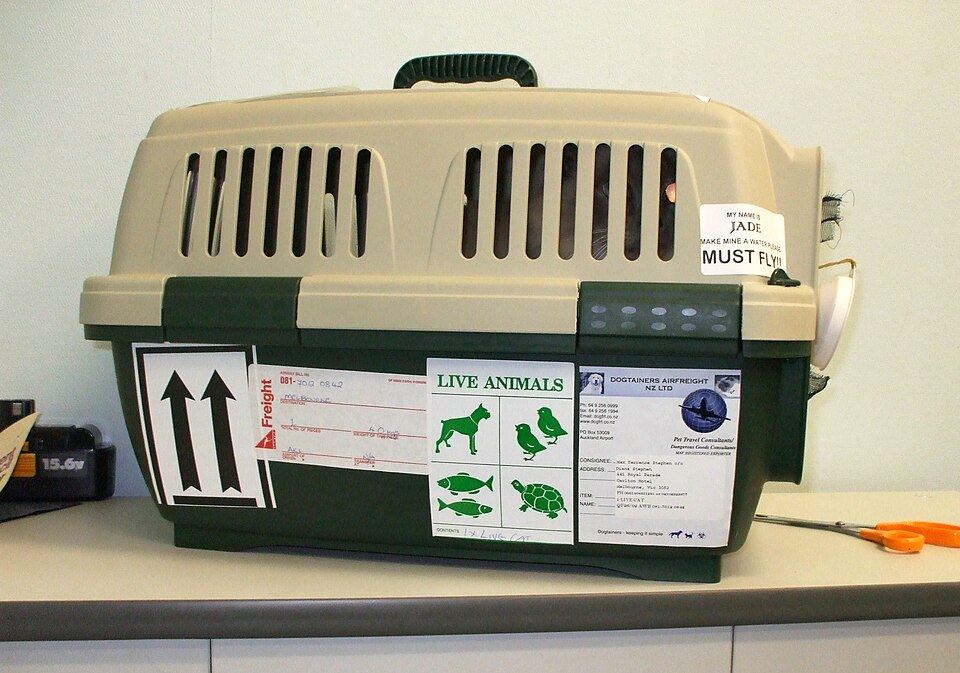
So when you shop, ignore the cute windows for a second and check the interior floor space. A cat backpack for flight needs enough footprint for that rotation, not just a tall bubble she can't use. I chose one with a slightly longer base for exactly this reason, and it made the difference between "cramped" and "acceptable" for a two-hour flight.
Ventilation and the no-hard-bits rule
Two more things the airlines care about that I almost missed. Ventilation has to come from at least three sides, which a mesh-forward backpack handles easily. And there cannot be hard protruding bits, no sharp corners poking into the seat or other passengers. Soft sides win again here. I removed a dangling clip I normally keep on the outside so nothing stuck out past the bag's silhouette.
They also want the carrier to be leak-resistant on the bottom. I added a small absorbent pad, the kind you'd use for a puppy, just in case. Better to look prepared than explain a puddle at thirty thousand feet.
- Mesh on at least three sides gives the cat fresh air.
- Remove hard clips so nothing pokes past the silhouette.
- A leak-resistant bottom pad copes with any accident.
- Soft sides win for ventilation and the no-hard rule.
Paperwork you actually need
Domestic flights inside Australia are lighter on documents than international ones, but don't turn up empty-handed. I carried Mochi's vaccination record and a recent health certificate from her vet just in case, plus the booking confirmation showing she was listed as a cabin pet. No one asked for them at the desk, but the calm of having them in my phone and my folder was worth more than the paper weight. Airlines can and do request proof, and arguing at the counter is the worst possible start to a trip.
What went in the bag on flight day
Less is more when you are airborne. I packed one absorbent pad, a folded tea towel that smells like home, a single treat, and a tiny zip of her regular food in case of delay. No dangling toys, no bulk. The cat backpack for flight needs to stay within the size limit even when packed, so I kept the interior nearly empty and let her have the floor. A water clip stayed on the outside pocket for after we landed, not during, since opening it mid-flight would have meant a lapful of spill.
The flight itself
Honestly? Easier than the car. Mochi meowed for the first ten minutes, then the engine hum seemed to suit her, and she curled up. I kept my hand on the mesh so she could smell me. Going through security they asked me to take her out briefly while the bag went through the scanner, which is why a calm, handleable cat matters. We practised "step into the harness" at home for a week beforehand.

Would I fly with her again?
Yes, with the same bag and the same prep. The key was treating the airline rules as the real spec sheet, not the product photos. Measure, practise the under-seat fit, confirm the turn-around space, and strip off anything that sticks out. Do that, and a cat backpack for flight turns a scary first flight into a story you tell at dinner instead of a disaster you never repeat.
Frequently Asked Questions
Can I take a cat in the cabin on an Australian flight?
Yes, most domestic airlines allow small cats and dogs in the cabin if you add them to the booking in advance and the carrier fits under the seat. Cabin travel is usually limited by a combined pet-plus-carrier weight, so check before you book.
What size must an airline-approved backpack be?
It has to slide under the seat in front, so soft-sided packs that flatten work best. Print the airline's dimension sheet and measure your actual packed bag with the cat inside rather than trusting the listing photo.
What do IATA-inspired rules require for the pet?
The animal must be able to stand, turn around, and lie down naturally inside. That means enough interior floor space for a full rotation, not just a tall bubble she can't use.
What documents should I carry for a domestic flight?
Bring the booking confirmation showing the pet as a cabin passenger, plus her vaccination record and a recent vet health certificate just in case. No one may ask, but the calm of having them is worth it.
How do I keep my cat calm on the flight?
Practise the under-seat fit and "step into the harness" at home for a week, keep the interior nearly empty so it stays within the size limit, and rest your hand on the mesh so she can smell you. A calm, handleable cat also makes security easier.
Size & Fit Reference
| Size | Pet weight | Internal dimensions (L×W×H) | Best for |
|---|---|---|---|
| S | up to 5 kg | 30 × 28 × 42 cm | Cats, toy breeds, kittens |
| M | 5–7 kg | 33 × 30 × 45 cm | Average cat, small dog |
| L | 7–10 kg | 36 × 32 × 48 cm | Large cat, small–medium dog |
Looking for pet carriers & backpacks?
We stock the gear covered in this guide, with Australia-wide shipping and Afterpay at checkout.
Popular in this range: cartoon carrier tote
Shop Carriers at Paws of Oz