
Escape-Proof by Design: The Tether That Stopped a Near-Disaster
Short answer: clip the tether to a harness, never to a collar. You'll want the load across her chest, not on her neck — I got that wrong once, and a single lunge put the whole weight on Mochi's throat inside a carrier she was already frightened of. On a harness the same tether spreads the force, and once she felt properly held she stopped scanning every shadow and started sleeping on the way.
I used to think "escape-proof" was just a marketing word. My cat Mochi is a calm indoor girl, the kind who watches birds from the window and judges the neighbours. I never imagined she had a fugitive hiding inside her. Then one ordinary afternoon at the park, she proved me completely wrong, and a small plastic clip is the only reason she is still here.
This is the story of the internal tether that saved my sanity, and the mistake I made with it that I will never, ever repeat.
The afternoon everything went sideways
It was a warm Saturday and I had Mochi in her backpack, the top mesh window unzipped a few centimetres so she could feel the breeze. We were sitting on a bench, me sipping a bad coffee, when an off-leash dog bounded past at full speed. Mochi went from sleepy to pure rocket in half a second. She launched up through the gap before I could blink, and for one horrible moment she was on my shoulder, claws out, deciding whether to leap for a tree.
That is when the internal tether did its job. A short elastic lead inside the bag was clipped to her collar, and it caught her mid-launch. She dangled, screaming, for two seconds that felt like twenty, and then I got both hands on her and pulled her back in. My heart was doing sprints. But she was safe.
The mistake I made with that tether
Here is the part I am embarrassed about. I had clipped the tether to her regular breakaway collar. Breakaway collars are designed to snap open if they catch on something, which is normally a safety feature. But in a panic-launch, the force was enough that the collar popped its clasp and the tether went slack. Mochi was only saved because my hands were already moving. If I had been a step slower, or not looking, she would have been gone into the bush.
That night I read everything I could, and the advice is unanimous and blunt: a leash attachment inside a backpack must clip to a harness, never a collar. A harness spreads the force across the chest and shoulders, and it cannot slip off the way a collar can. Collar clips are for photos, not for safety. I felt stupid, but I also felt lucky, and lucky is better than smart.
Why a harness changes everything
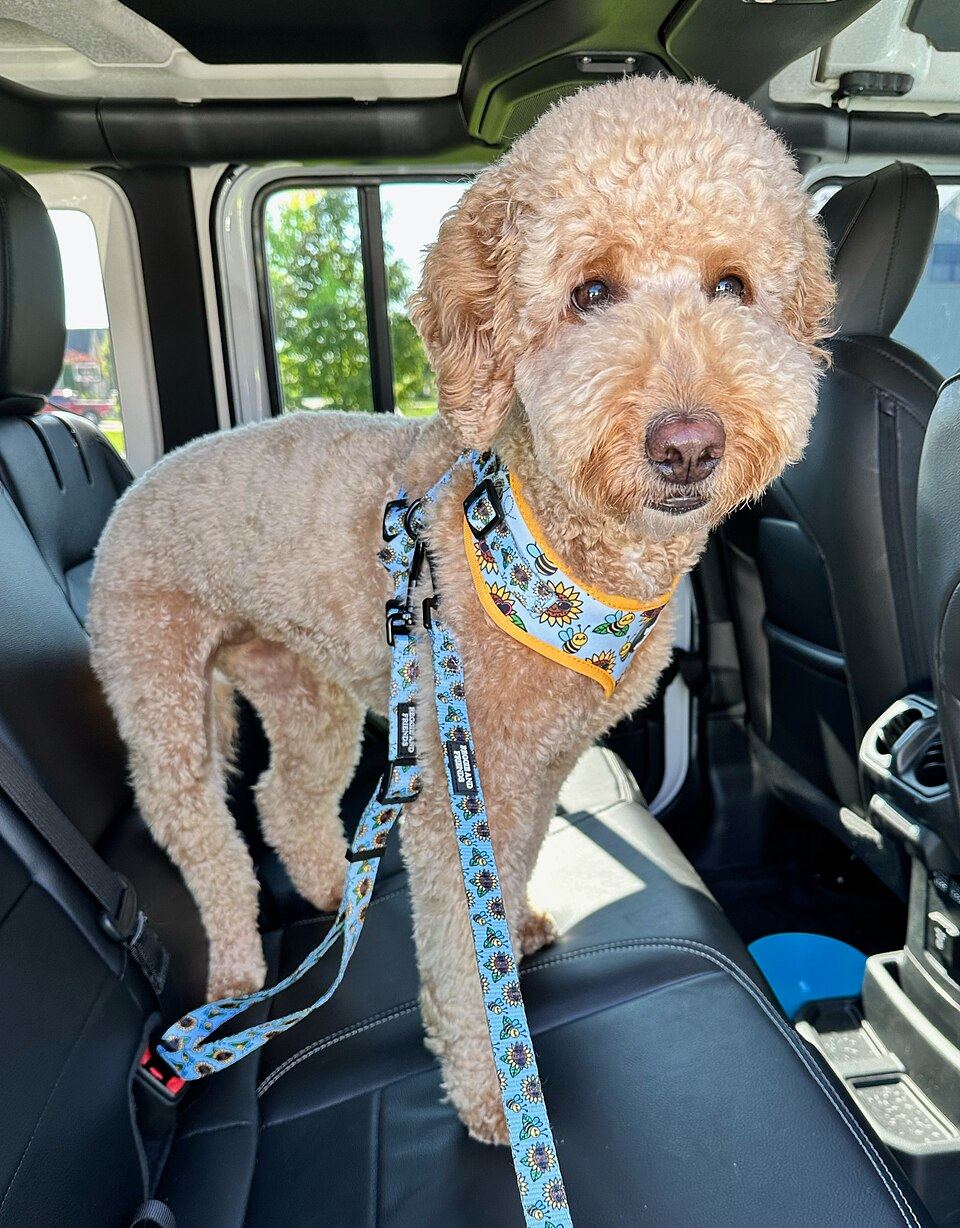
I bought Mochi a properly fitted walking harness the next day, the kind with both a chest strap and a girth strap so it cannot spin or back out. Now the tether clips to the harness ring, and when she inevitably gets startled, the lead catches her without choking her or popping loose. The difference is night and day. She can thrash, and the harness holds; a collar would have failed again.
If you are shopping, look for a harness made for backpack use specifically, one that is lightweight but secure, because your cat will be wearing it inside the bag, not just on walks. A bulky hiking harness is miserable to sit on for an hour. I found a thin padded one that she tolerates, and she now wears it on every trip by default, even short ones, because the routine itself reduces her stress. Fit matters as much as type: I can slide two fingers under the straps but no more, which keeps it snug without rubbing, and I re-check the fit every few weeks because she gains winter fluff and the straps loosen.
- A harness spreads force across chest and shoulders.
- Clip the tether to the harness ring, never the collar.
- Pick a lightweight padded harness made for backpacks.
- Two fingers of slack keeps the straps snug, not rubbing.
- Re-check the fit every few weeks as her fluff grows.

Peace of mind is the real product
People buy carriers thinking about comfort and style, and those matter. But the thing I value most now is the quiet confidence that, if something spooks her, she is not going anywhere. That tether, used correctly, turned a terrifying afternoon into a story I can tell instead of a loss I would still be grieving.
I have since made it a rule for every pet owner I know: test your tether at home, clip it to a harness, and give it a gentle tug before you zip up. Do not wait for a dog, a loud truck, or a sudden gust to find out whether your setup works. Mochi forgave me quickly, mostly because treats were involved, but I have not unclipped that harness since, and I never will on a trip.
After that day I also changed how I open the bag outdoors. I used to unzip the top wide the moment we sat down, because she liked the breeze. Now I only crack it a finger's width, and only when she is tethered and I have a hand on her. The habit of "open less, hold more" has stopped two more near-leaps that I would otherwise have missed. A leash attachment only works if you respect that your pet is one startle away from flight, every single time, even on a calm day. The tether is backup, not permission to be careless.
There is a quieter benefit too. Once Mochi realised the harness meant she was secure and the world could not grab her, her whole body relaxed on outings. She stopped scanning every shadow and started napping with the window open. The right tether did not just prevent an escape, it let her actually enjoy going outside, which was the whole point of the backpack in the first place.

— Written by Mochi's relieved human. Check the clip. Clip the harness. Then breathe easy.
Frequently Asked Questions
Should the tether clip to a collar or a harness?
Always clip it to a harness, never a collar. A harness spreads the force across the chest and shoulders and cannot slip off the way a collar can. A collar clip is for photos, not for safety, and a breakaway collar can pop open at exactly the wrong moment.
Why is a breakaway collar unsafe with a tether?
Breakaway collars are designed to snap open under pressure, which is normally a safety feature. But during a panic-launch the force is enough to pop the clasp, leaving the tether slack. Your cat is only saved if your hands are already moving, which is not a chance worth taking.
What kind of harness works best for a backpack?
Look for a lightweight but secure walking harness with both a chest strap and a girth strap so it cannot spin or back out. It should be thin and padded because your cat wears it inside the bag for an hour. Fit it so you can slide two fingers underneath, and re-check every few weeks.
How do I check my tether before a trip?
At home, clip the tether to the harness and give it a gentle tug before you zip up. Make it a routine: test the clip, confirm the harness is on, then open the bag only a finger's width outdoors with a hand on your pet. Do not wait for a real scare to find out if it works.
Can a tether stop a cat from escaping entirely?
Used correctly with a harness, it is the best backup you have, but it is not permission to be careless. A startled cat is one leap from flight on any calm day, so the tether is a safety net, not a replacement for keeping the bag zipped and a hand on your pet.
Size & Fit Reference
| Size | Pet weight | Internal dimensions (L×W×H) | Best for |
|---|---|---|---|
| S | up to 5 kg | 30 × 28 × 42 cm | Cats, toy breeds, kittens |
| M | 5–7 kg | 33 × 30 × 45 cm | Average cat, small dog |
| L | 7–10 kg | 36 × 32 × 48 cm | Large cat, small–medium dog |
Looking for pet carriers & backpacks?
We stock the gear covered in this guide, with Australia-wide shipping and Afterpay at checkout.
Popular in this range: cartoon carrier tote
Shop Carriers at Paws of Oz