The First-Fortnight Playpen Setup I Use for Every New Foster
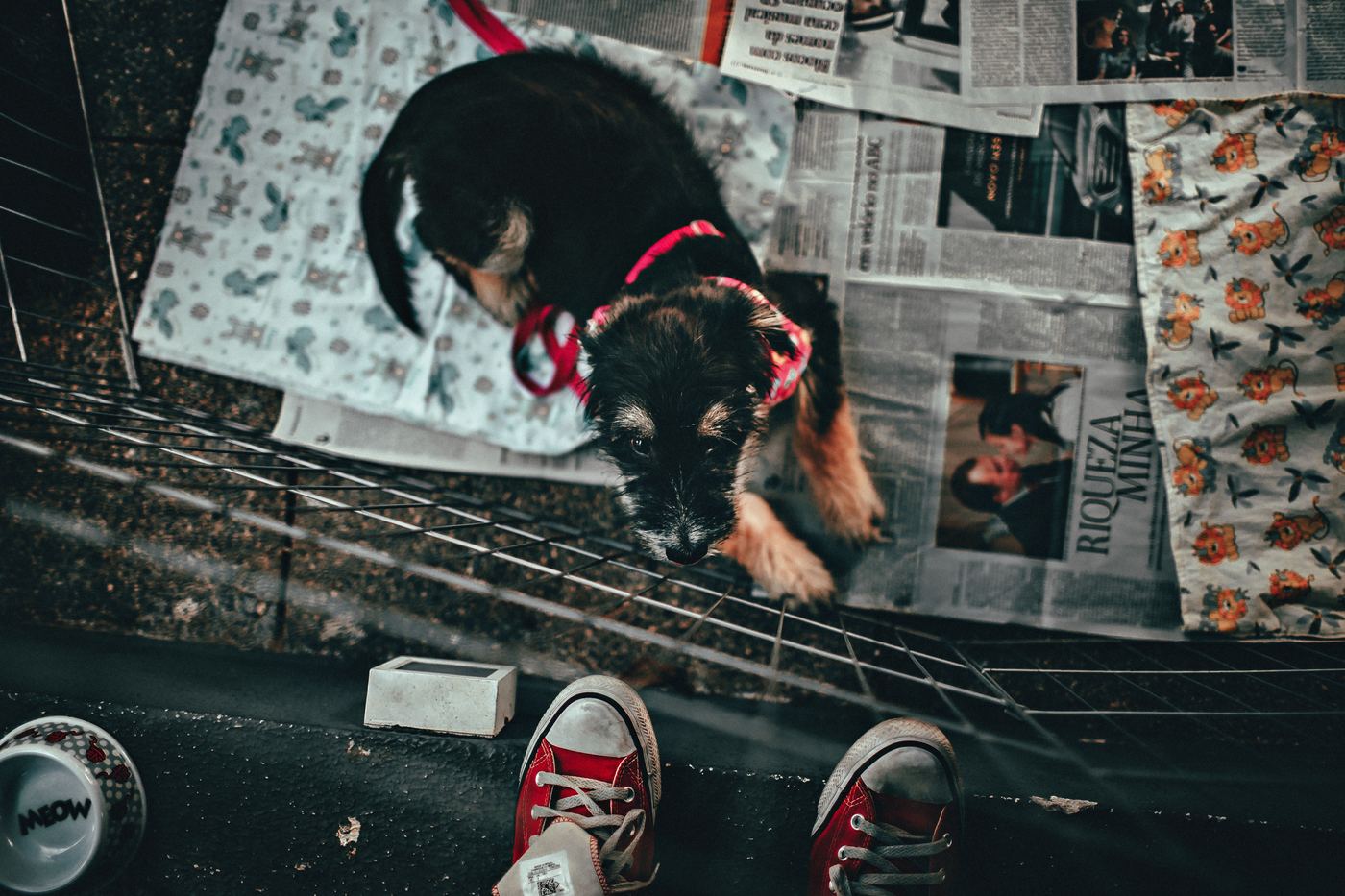
Every foster comes through my door with a file full of history and no idea how to be in a house. Forty-odd animals down the track, the ones that settled fastest all had one thing in common: somebody decided the first fortnight for them, calmly and kindly, instead of letting the house decide. The playpen is how you decide it. Used well it is not a cage, it is a nursery, a room-sized promise that nothing bad happens here and everything understandable happens in the same place every day. This is the setup I use, and the reasons it works.
Why the first fortnight decides everything
A new dog or cat spends its first days with you learning one enormous question: what is safe here? Answer it predictably and you get a learner. Answer it chaotically, with full-house freedom from day one, and you get a scavenger, a wall-soiler or a shadow that never leaves your heels. Decompression research from shelter work keeps landing on the same number: most animals need roughly three days to stop surfacing from panic, three weeks to learn your routine, and three months to show you who they actually are. The fortnight pen plan covers the hardest part of that curve and hands the animal a small, understandable world while the big one organises itself.
Where the pen goes
Placement does more work than any purchase. The pen wants to live in a room the household actually uses, because isolation reads as exile to a social animal, but away from the doorway gauntlet of arrivals. In my Ballarat house that is the loungeroom corner near the kitchen pass-through: the animal can see and smell ordinary life without having to join it. Avoid the laundry-and-forget setup unless the laundry is genuinely a family room. Avoid direct afternoon sun through glass, and dodge the draughty hallway. Floor first: hard flooring beats carpet for the inevitable accidents, and if you are on carpet, lay a cheap tarp and a mat under the pen and thank yourself in a fortnight.
What goes inside, and what deliberately doesn't
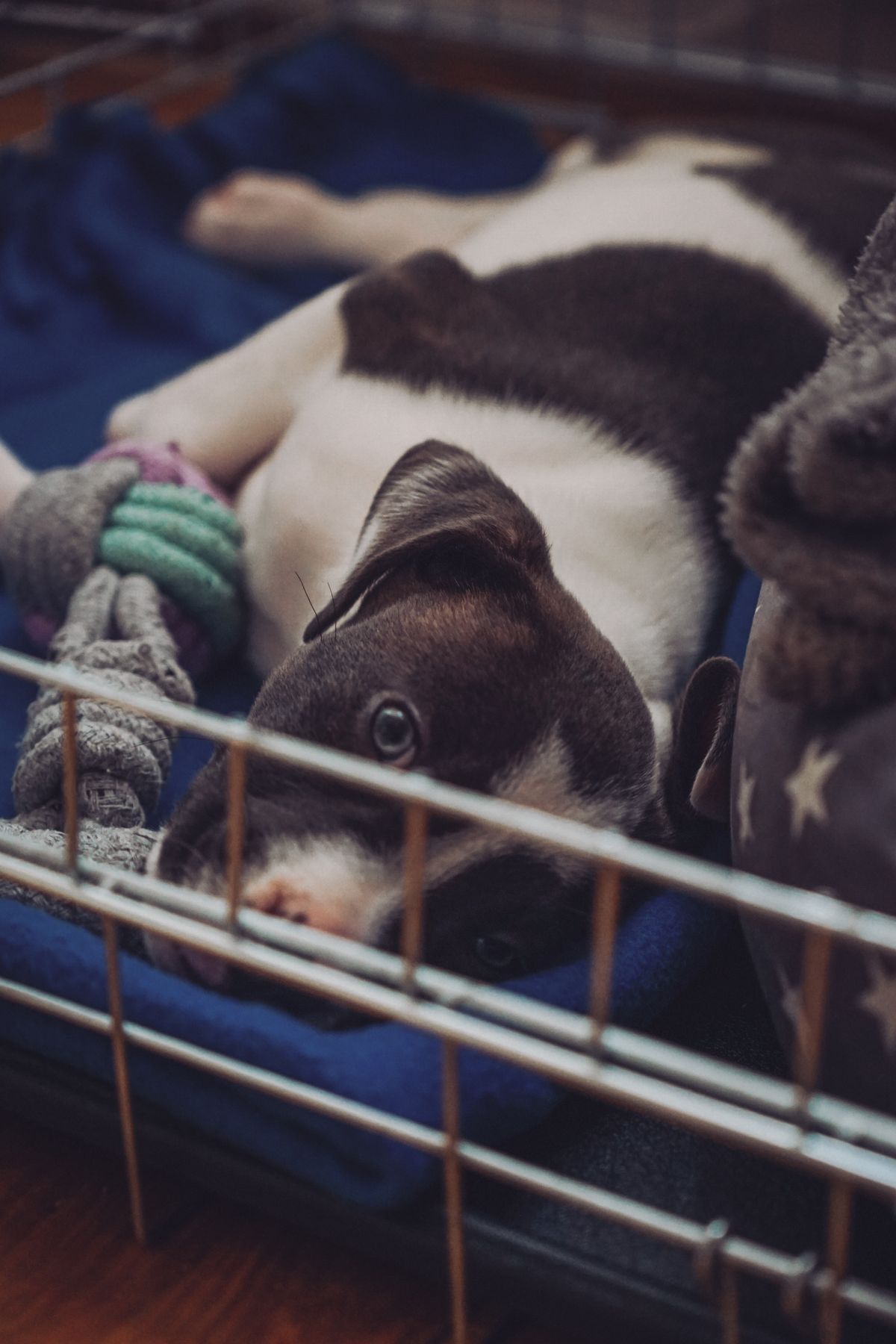
The inventory is short and boring on purpose. Bed in the corner furthest from the door, so the animal has a defensible spot with a wall behind it. Water that cannot tip. One bed-appropriate toy and one long chew, rotated every second day so nothing goes stale. For the first three days, that is all. No pile of toys, no rope tug, no squeaky orchestra. Overloaded animals pick nothing and pace. A pee pad at the far end from the bed if the animal is unverified on housetraining, positioned so the bed-to-toilet distance teaches the preference you want. And nothing with a string, a stuffing or a squeaker for a destructo, because the vet bill for a swallowed sock has ruined better budgets than mine.
Door discipline: the part everyone skips
Door discipline means the pen door is boring. It opens for calm, it opens on a routine, and it never opens to whining, because a door that answers whining has just taught a lesson that takes a fortnight to unteach. Open it when the animal is settled, attach a cue word, and make the first freedom sessions short and boring: ten minutes of loungeroom with you not making a fuss, then back in, then longer. The pen stays part of the house routine even after the animal has earned rooms, door open, because a bed they choose to return to is the actual goal. Freedom is a gradient here, not an event.
| Days | Focus | Freedom | Sign you can move on |
|---|---|---|---|
| 1 to 3 | Decompression, routine, sleep | Pen only, humans calm and boring | Eats, drinks, sleeps stretched out |
| 4 to 7 | Patterns: feed, toilet, settle cycle | Toilet runs on lead, pen between | Comes back from toilet run and settles |
| 8 to 11 | Supervised loungeroom sessions | Pen door open while you sit nearby | Chooses the pen or mat voluntarily |
| 12 to 14 | Room by room expansion | One new room at a time, pen always open | Settles in the new room without patrolling |
Reading the signals that say ready for more
The upgrade signs are quiet ones. Soft body in the pen, sleeping on the side rather than curled nose-to-tail. Eating without checking on you mid-bowl. Taking the chew to the bed instead of guarding it under the belly. A tail that wags at the routine rather than flinching at it. The downgrade signs are just as clear and just as temporary: pacing at the door, screaming at night past the fourth day, toilet accidents in the bed itself, or the classic politics move, throwing the water bowl. Any of those and you go back a step for a few days without drama. Nobody fails the fortnight. Some animals just need it twice.
Frequently Asked Questions
Isn't a playpen cruel for a dog that has just come from a cage?
It can be, if it is used as a cage, which is why placement and door discipline matter more than the panels. A shelter kennel is unpredictable noise, concrete and no choices. A loungeroom pen with a bed, a routine and a visible family is the opposite of that: it is the first small world the animal controls. The goal from day one is the pen becoming boring in a good way, a bedroom rather than a boundary.
How big should the pen be for the first fortnight?
Big enough for a bed, water, a toilet corner if needed, and a stretch of clear floor, and small enough that the bed corner feels defended. For a medium dog that is usually a six or eight panel square. Too big and you get a toilet at one end and a panic circuit at the other; too small and the animal cannot choose distance from the door, which is the whole psychological point.
The dog screams in the pen on night one. Do I go to it?
For the first night, yes, briefly and boringly: sit nearby, no talking, no eye contact, leave when it settles. A brand-new animal screaming at separation is not manipulating you, it is alone for the first time in its memory. From night two the gaps stretch, because you return to calm rather than to noise. By night four or five most fosters sleep through, and the two who never got there taught me that some animals need a different plan, not a harder one.
When do I stop using the pen altogether?
You mostly don't, which surprises people. The fortnight ends with the door open and the pen still standing, because it remains the animal's room, the place where the scary vacuum lives and the safe place during my own outings. Full-house freedom arrives over months as the toilet record and the furniture record justify it, one room at a time. The pen becoming voluntary furniture is the graduation, not the removal.
Does this plan work for cats as well as dogs?
It works better for cats, honestly, because a cat reads vertical space as well as floor space. Give a foster cat the same pen concept with a covered bed on a chair inside it, a litter at the far end, and a scratcher, then let the fortnight run on the same schedule. The upgrade signs are identical too: eating in your presence, sleeping on the side, and finally, the best review in fostering, the slow blink from across the room.
Looking for pet playpens?
We stock the gear covered in this guide, with Australia-wide shipping and Afterpay at checkout.
Shop Playpens at Paws of Oz