Boot Floor or Back Seat? Setting Up a Safe Space for a Big Dog
Short answer: for most big dogs the boot floor is the better option if the load lip is low enough for him to step into, and the back seat wins when it is not. What matters more than the choice is grip, a cover that will not shift, and a dog who cannot slide into the door.
Last month a man stopped me in the car park after a class at Burleigh and opened the back of his wagon. He had a 42 kg mastiff cross, a boot liner that had folded itself into a fan, and about a metre of clear floor. The dog had stood for the whole drive because there was nowhere to lie down that did not slide. We spent fifteen minutes on the setup and bought nothing. That is the pattern I see most weeks: the gear is usually fine and the setup is not.
Measure the dog before the boot
Four numbers decide this for you. Nose to tail, standing height at the shoulder, chest width, and the load lip height from the ground. A 40 kg dog is often 100 to 115 cm nose to tail, and he needs roughly his own length plus 15 cm to lie flat, so a boot with a 90 cm floor is not giving him the room the brochure suggests. Load height is the number people skip. A wagon lip usually sits 70 to 80 cm off the ground, a sedan back seat around 55 to 65 cm, and a ute tray higher again. Watch how your dog actually gets in. If he needs a ramp at the tailgate, that tells you more than any measurement on paper.
What the back seat gives you
The back seat wins on load height and loses on space. In most sedans and lower SUVs the dog steps up from the footpath rather than jumping. A hammock or bucket style cover turns the bench and the footwell into one platform, which is the only way a large dog gets a flat surface long enough to lie down, because a bare bench is usually 45 to 50 cm deep. The trade offs are the door gap, the centre console, and the seat belt path if you use a harness. Check that your cover does not block the buckles, and that the front flap is deep enough to reach the back of the front seats.
What the boot floor gives you
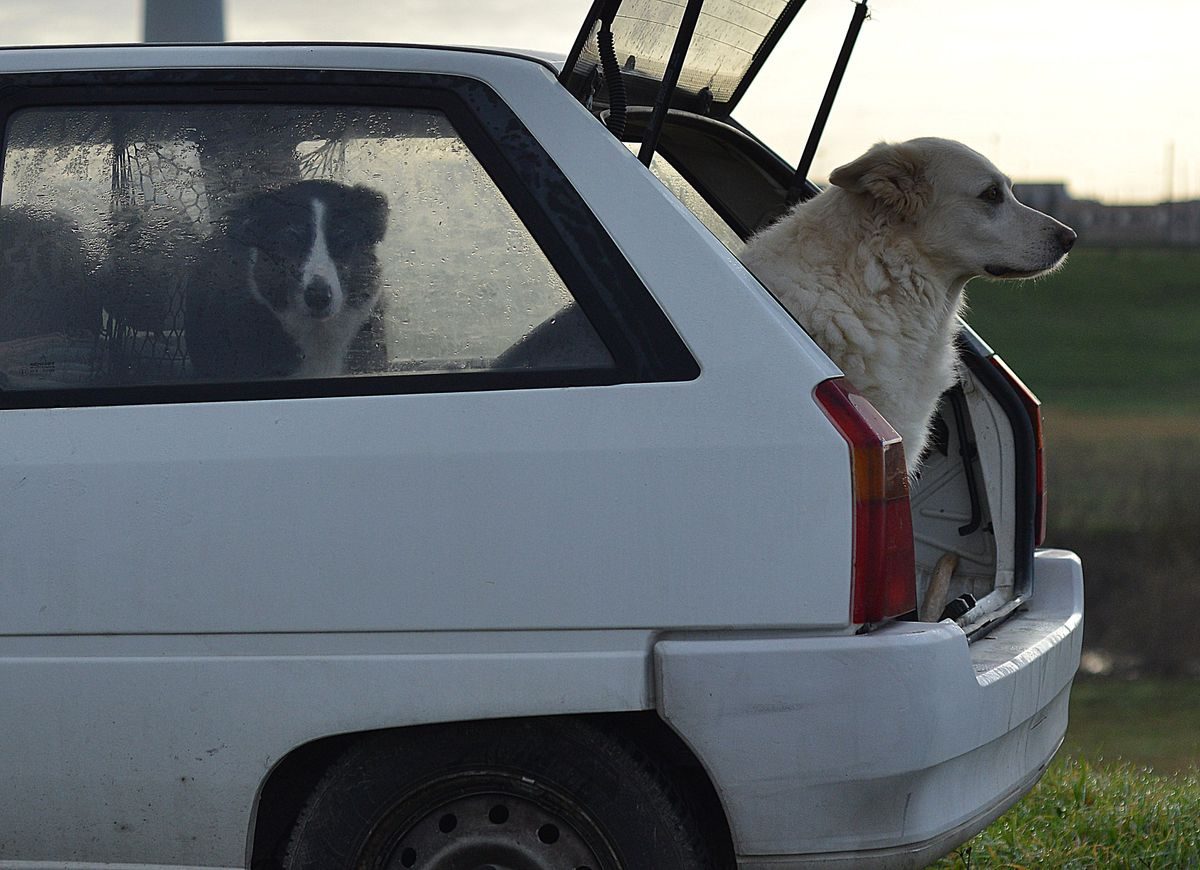
The boot floor wins on space and loses on height. A wagon or large SUV gives you 90 to 110 cm of flat floor, sides for the dog to lean against, and factory mounting points for a cargo barrier or a crate. He can stand, turn and lie down without touching the back of anyone's seat. What you give up is the load lip, which is high on most wagons, and the floor finish, which on many cars is hard plastic that a big dog slides across. The tailgate is not a barrier either: it holds him in only while it is shut.
- Measure nose to tail, shoulder height and the flat floor you actually have.
- A big dog needs his own length plus about 15 cm to lie down flat.
- The load lip decides more than the boot size for a large dog.
- Grip comes from the surface under the cover, not the cover itself.
- Check the setup on a short drive before you trust it on a long one.
Grip is the whole job
Every sliding problem comes down to what is under the dog. A cover with a rubberised backing on a carpeted floor usually holds. The same cover on a plastic boot floor or a leather bench will creep, because the backing has nothing to grip. The cheap fix is a rubber mat or a piece of closed cell foam under the cover, cut to the shape of the floor, with the cover over the top. Test it properly: put the cover down, push it hard with your foot, then sit on it and push again, because a 40 kg dog leaning into a corner during a turn puts more sideways load into the cover than your foot does. Cover fabric matters too. Woven canvas and heavy denier webbing hold a dog better than slick vinyl, and the seat covers listings show which fabrics each range uses.
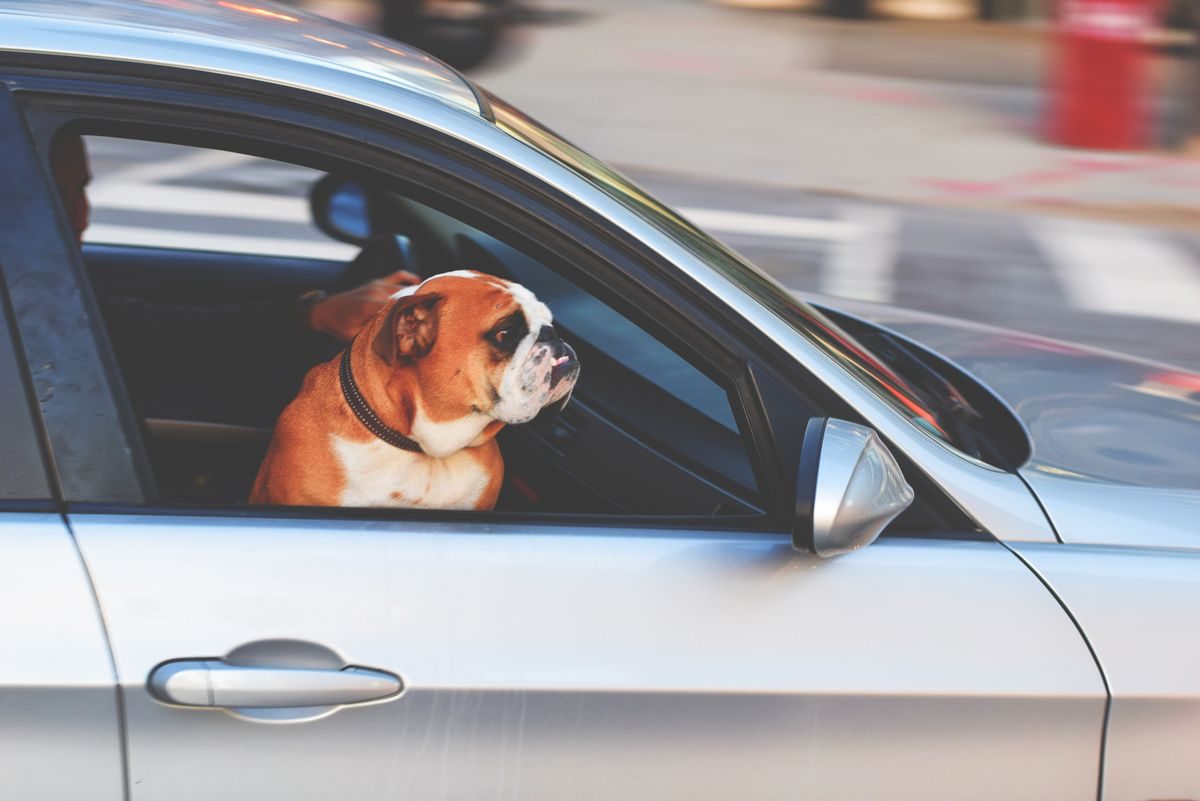
Fitting a cover so it stays put
Most covers come with headrest loops, elastic corners and a velcro tab or two. Do it in this order. Headrest loops on first and pulled snug, then the elastic corners, then the anchors pushed into the seat gap or clipped to the boot floor. Leave a hand width of slack where the cover folds down the back of the seat, because a cover pulled drum tight will tear at the seam the first time a big dog launches onto it. If your car has a split fold rear seat, check the cutouts line up before you tighten anything. Then recheck the whole thing after twenty minutes of driving, once the velcro has settled and the elastic has relaxed.
| Setup | Cars it suits | Load height | Main watch out |
|---|---|---|---|
| Back seat with a hammock | Sedans and lower SUVs | Low, about 55 to 65 cm | Bench depth limits a big dog lying flat |
| Back seat with a bucket cover | Cars with a deep bench | Low to medium | Side bolsters squash under 40 kg |
| Wagon boot with a rubber backed cover | Wagons and large SUVs | Medium to high, 70 to 80 cm | Plastic floors stay slick underneath |
| Ute tray with a canopy and a mat | Utes with a canopy | High, often over 80 cm | Shade, airflow and tie down points |
| Boot crate or cargo barrier | Any wagon or SUV | Set by the ramp you use | The crate has to fit his standing height |
The five minute pre-drive check
Doors shut before the dog is loaded, not after. Mat flat, cover straight, nothing loose on the floor that can roll under a paw. Leads and towels stowed where he cannot tangle in them. If you run a harness, clip it and check the strap is not twisted. On a hot day, put the back of your hand on the surface he is about to lie on and check the airflow before he gets in. Then on the road: a break every two hours and a look at the cover at the first stop to see whether it has shifted. That last check takes ten seconds and it is the one that stops a long trip turning into a wrestling match at a rest area.
Frequently Asked Questions
Do I need a cargo barrier if my dog rides in the boot?
A barrier is about keeping him out of the cabin if he stands up or shifts forward mid drive, which the tailgate cannot do for you. It has to be the right one for your car and fitted to the mounting points, not wedged against the trim. If it rattles or moves when you shake it, it is not fitted properly.
Can a 40 kg dog travel on a harness and seat belt?
Only on a harness rated for his weight, and that rating is marked on the label or the packaging. A harness that was fine at 25 kg is not automatically right at 40 kg. Check the strap sits flat across the chest, that nothing cuts into the neck, and that the belt path follows the maker's instructions. If the fit is wrong, get advice before a long trip.
How do I stop the cover bunching on leather seats?
Put something under it. A rubber mat cut to the bench shape gives the cover backing something to hold, which leather on its own will not. Then fit the headrest loops snug, push the anchors well into the seat gap, and retension the cover after the first twenty minutes of driving. A cover that has creased into the seat crease needs refitting, not more velcro.
What is the easiest way to get a big dog into a ute tray?
Use a ramp or a set of steps at the tailgate, and teach it on flat ground first with the ramp resting on the grass rather than the car. Walk him up and back a few times with no hurry, then move it to the tailgate. Lifting a 40 kg dog onto a high tray hurts owners' backs and teaches the dog to dread the car.
Should my dog be crated in the boot or ride loose?
A properly sized crate gives him a defined space and keeps him off the back of the seats. It needs to be big enough to stand at full height, turn and lie flat, usually the largest size sold. Measure the boot and the dog before you buy. A crate that is too small is worse than no crate, and a barrier is the simpler answer if the crate will not fit.
Looking for dog car seat covers?
We stock the gear covered in this guide, with Australia-wide shipping and Afterpay at checkout.
Popular in this range: waterproof seat cover
Shop Car Seat Covers at Paws of Oz