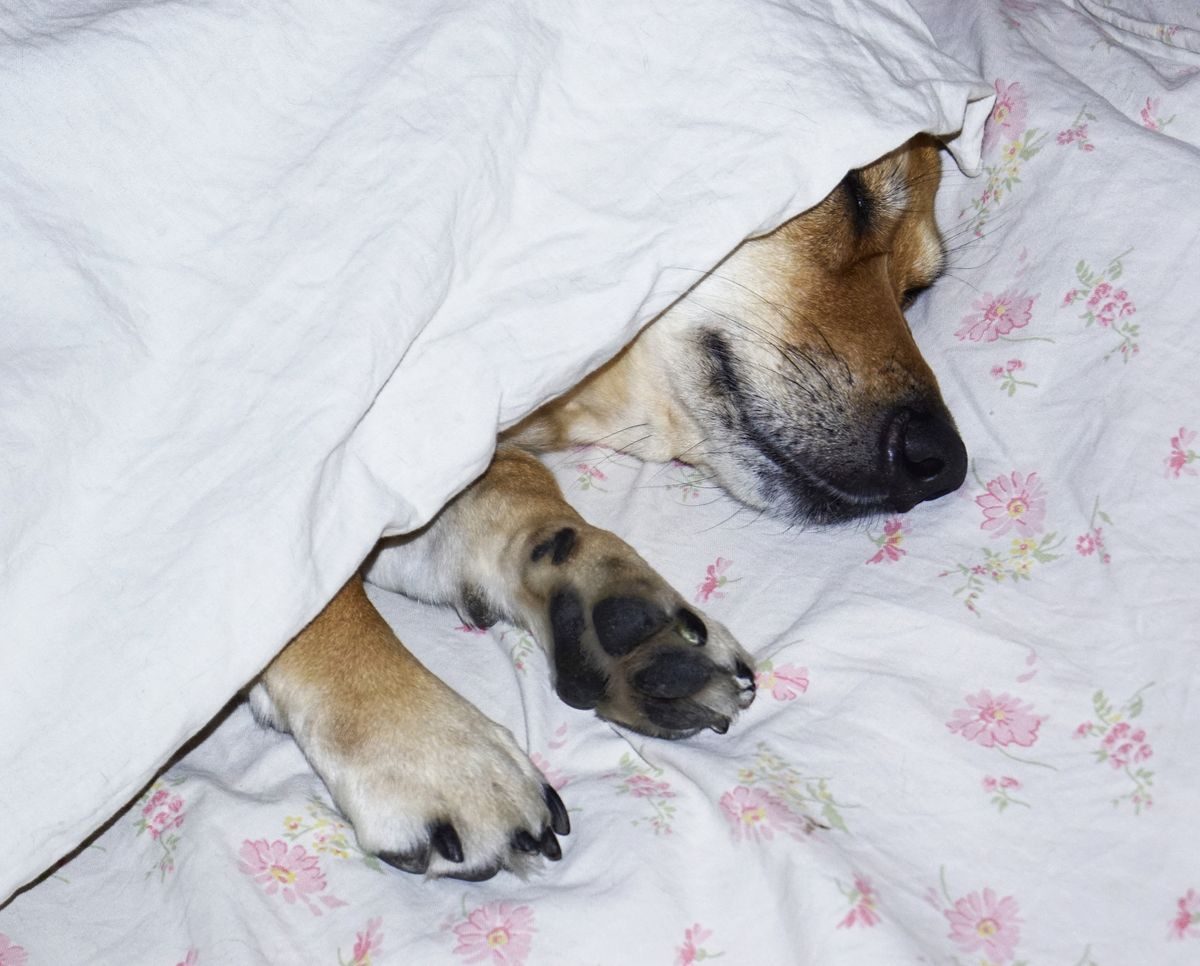
Two Fosters, One Room: Bedding Politics Between Dogs
Short answer: two foster dogs can share a room, but they should not have to share a bed. I plan one bed per dog plus a spare, set apart with clear walkways between them. Most of the friction I have seen came from one bed in one corner and two dogs who had never learned to share anything.
The first time I fostered two dogs at once, I pushed both beds side by side in the spare room and thought the setup looked cosy. By midnight I was crouched on the floor in the dark while a kelpie cross named Rusty stood over the second bed, growling at a cattle dog pup who only wanted somewhere to lie down. I dragged one bed two metres away and both dogs were asleep within ten minutes. Nine years and more than forty animals later, bedding between two fosters is the first thing I plan and the last thing I assume will sort itself out. This is what has worked in my Ballarat foster room.
One bed per dog, plus a spare
My baseline for a shared room is three beds for two dogs. Each dog gets a bed of their own, and a spare sits in the corner for the dog who decides mid-afternoon that their original choice is suddenly unacceptable. That spare has defused more squabbles than anything else I own.
The beds do not need to match. What matters is that each one fits the dog using it, with room to stretch out flat, and that no bed sits in another dog's main traffic path. A bed wedged into a doorway corridor becomes a tollgate, and tollgates get guarded. When I pick up replacements I browse the pet beds range and look first at washable covers and a base that will not slide on floorboards.
Reading bed guarding before it escalates
Guarding rarely starts with a growl. It starts with a stare, a stiffening across the shoulders, or a dog who hovers over a bed without lying down on it. A foster who plonks their chin on a bed while keeping their eyes on the other dog is making a statement, and I have learned to act on it early.
My response is boring and consistent: more distance, not less. I move the beds further apart, feed the dogs on opposite sides of the room, and never ask them to pass close to another dog's bed on the way to the door. Once a dog has practised a proper growl-and-snap sequence over bedding, unwinding that habit takes weeks. Interrupting the early version takes minutes. Two minutes of rearranging a room beats a fortnight of repair work.

Positioning beds in a shared room
Distance does most of the work, but direction matters too. I avoid placing beds so one dog faces another head-on, because a stare across the room is an invitation to a standoff. Corner positions help, since a dog with a wall behind them relaxes faster than one who keeps checking their back. I also keep one bed out of direct sight of the other, using a low divider or the room's natural angles.
The door needs a clear run. Dogs arrive and leave through it, and a bed near the door becomes property that everyone must pass. I put the more confident dog's bed furthest from the door. The nervous foster gets the quieter end, where foot traffic and hallway noise fade out first.
- Plan three beds for two dogs, never one bed for both.
- Watch for staring and stiffening before growling ever starts.
- Set beds apart with clear walkways and no head-on sightlines.
- Keep the confident dog away from the door traffic.
- Rearrange the room at the first sign of hovering.
Signs the arrangement is not working
Some warning signs are loud: growling, snapping, a dog being pinned to the floor. But the quiet ones tell you sooner. If one foster starts sleeping on the floor instead of the bed, something has gone wrong. If a dog stops entering the room while the other is in it, or eats and drinks only when the other dog is outside, the bedding map needs redrawing that day.
I also watch the dog who looks fine. Constant low-level vigilance, head up at every movement, is not rest and will wear a foster down over a fortnight. Twice I have separated two dogs into different rooms after ten days of everything looking calm, and both dogs slept deeper the first night apart. A shared room is a convenience for the carer, not a requirement for the dogs.

Choosing beds that suit two dogs
Sharing a room punishes the wrong bed fast. Covers get washed twice as often, so I look for covers that come off in one motion. Low sides beat tall bolsters while two dogs are learning each other's body language, because a dog can step off a low bed and see the whole room instead of guessing. A slippery base is another quiet problem, since a bed that skids when a dog flops onto it keeps everyone on edge.
Size matters more than style. The larger dog needs a bed big enough to sprawl across without spilling an ear or a paw over the edge, because anything overhanging reads as territory under dispute in a shared room. If both dogs are the same size, I still buy two different covers so each dog's spot is obvious at a glance.
| Situation | Setup I use | What I watch for |
|---|---|---|
| Two settled, confident dogs | Two beds two metres apart, spare in the corner | Loose bodies, both dogs settled by evening |
| One pushy, one timid | Timid dog's bed outside the pushy dog's sightline | Timid dog abandoning the bed when the other stands |
| A resource guarder in the room | Guarder's bed away from the door, spare removed for now | Stiffening, staring, hovering over any bed |
| A pup with a seasoned adult | Beds at opposite ends, pup's bed nearest the door | Adult pinning the pup, pup avoiding the room |
| Two dogs of matching size | Matching beds with different covers | One dog hoarding both beds and the spare |
Settling in over the first fortnight
The first three nights set the tone, so I run the shared room harder than I need to. Both dogs get tired out with a walk and a sniffing session before bed, both beds get a sniff of each dog before they enter, and I stay nearby for the first settling hour rather than closing the door and hoping. If either dog is restless past the first ten minutes, I separate them for that night and try again the next.
By the end of week two, most pairs have worked out their own rules: who takes the corner bed on warm nights, who waits at the door, who plays first thing in the morning. My job is to make sure the room gives them enough options to reach that agreement without a fight.
Frequently Asked Questions
Do two foster dogs have to sleep in the same room?
No. I only share a room when I have to, such as when space is short during a busy intake week. Dogs are not pack-sleeping machines, and two new animals learning a strange house often settle faster with a wall between them. If either dog guards, pins or bullies, use separate rooms from night one and revisit the idea only once both are relaxed.
What do I do when one dog keeps stealing the other's bed?
First I check whether the stolen bed is genuinely more attractive: warmer spot, better view, softer base. If it is, I buy a second one like it rather than fight the preference. If it is theft for its own sake, I move the beds further apart, add the spare, and take the stealer's own bed away for a night so the lesson is concrete.
Should the beds match if the dogs are different sizes?
Match the dog, not the other bed. A big dog needs a bed they can sprawl across without limbs hanging off the edge, while a small dog often feels safer in something snug with lower sides. I would rather have two correctly sized beds in different styles than two matching beds where one dog spills over and the other rattles around.
How long does it take two fosters to settle together?
In my foster room, most pairs find their footing within a fortnight, though the first three nights are usually the roughest. Older dogs and dogs with a guarding history can take a month or more, and some never fully relax. I judge progress by how quickly each dog lies down at night and whether either one is still choosing the floor.
Can I use one large bed for both dogs?
I would not, and I have watched the experiment fail more than once. A single bed becomes a resource with one owner, and the second dog is either locked out or negotiating access every time they climb on. Two separate beds cost a little more and give each dog a guaranteed place, which is the whole point of a bed in a shared room.
Looking for beds & mats?
We stock the gear covered in this guide, with Australia-wide shipping and Afterpay at checkout.
Popular in this range: self-cooling pet mat
Shop Beds & Mats at Paws of Oz