Puppy's First Car Rides: A Seat Cover and Tether Setup That Works
Short answer: put the cover down first, then the tether, and keep the first drives short. Six weeks old in a cardboard box, Banjo squeaked the whole way home and spewed on the seat, which is how I learned a cover is the difference between a car you can still sell and one that smells of sour milk. You should stop about every hour on a long run, and ring the vet for anything health related.
Before Banjo was Banjo, he was a six-week-old ball of fluff the boss's wife dropped at the house in a cardboard box. First drive home, he squeaked the whole way and spewed on the seat. I learned then that a puppy car seat cover is not a luxury, it is the difference between a car you can still sell and a car that smells of sour milk forever.
This is field experience from the property, not a lecture from a vet. If your pup is sick, hurts itself, or you are worried about its health, ring the vet. What I can tell you is how to set the car up so the little one travels safe and you are not cleaning the back seat with a hose at the servo.
Start with the cover, not the tether
The cover goes down first. A back-seat cover built from 600D Oxford with a PP cotton fill and an EVA backing is what you want — it grips the seat so it does not slide, and it takes a spew or a puddle without soaking through. Puppies are chaos on wheels. The cover is your defence.
Get the pup used to the cover before the engine even starts. I put Banjo on it in the driveway, engine off, and fed him a few bits of biscuit. No drive, just "this is a nice spot". Ten minutes a day for three days. By the time we moved, he associated the cover with food and a pat, not fear.
- Lay the cover down before you fit any tether or crate.
- Choose a 600D Oxford cover with PP cotton and EVA backing.
- Get the pup on the cover with the engine off and a few treats.
- Build the habit with ten minutes a day across three days.
- Let the cover grip the seat so it will not slide around.
The tether is the safety bit
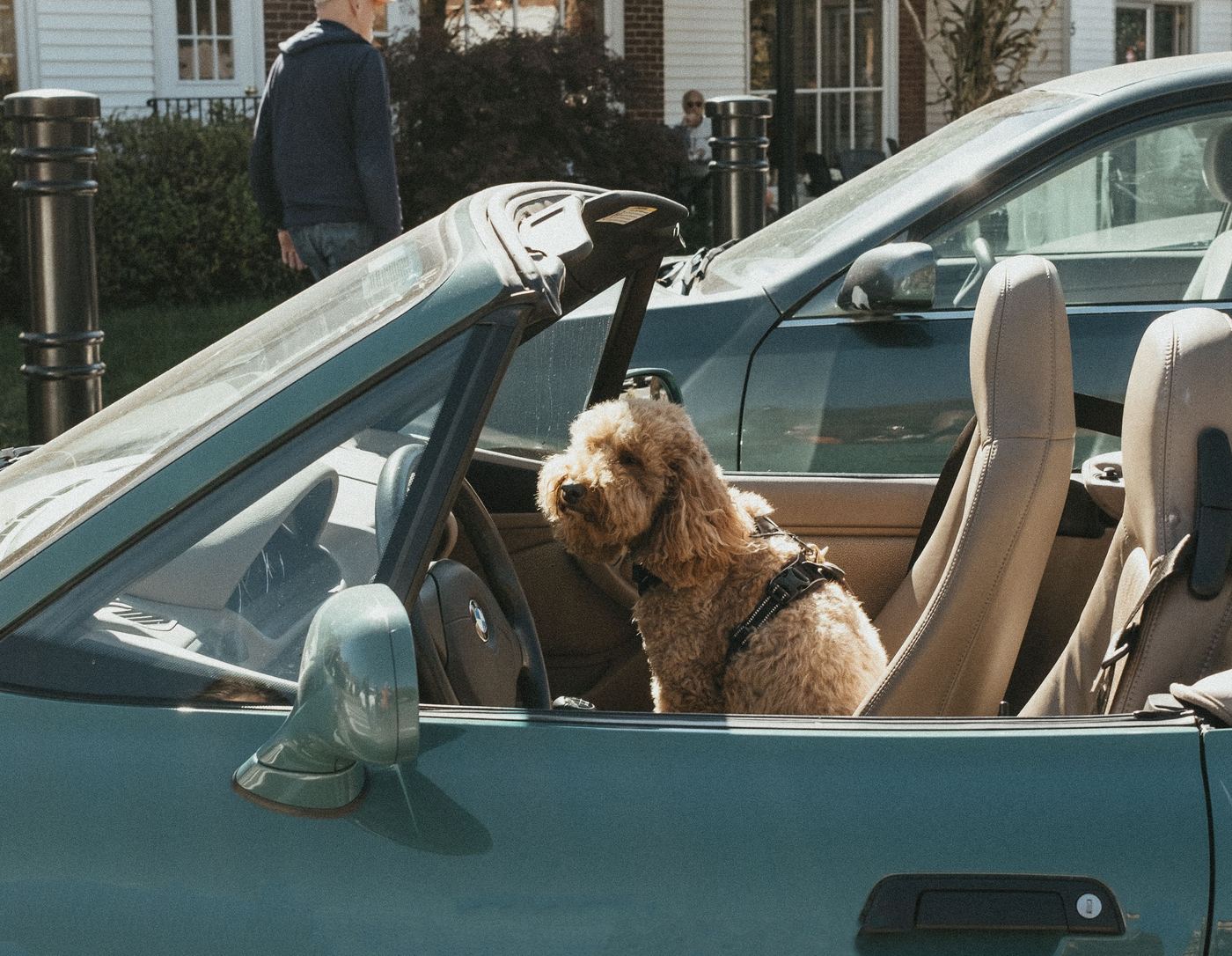
A dog seat cover with seat belt attachment is the part that keeps the pup from becoming a projectile. You clip a short tether to the pup's harness — not its collar, never the collar — and the other end to the seat-belt buckle or the anchored strap. The tether should be short enough that the pup cannot reach the front seats or fall into the footwell, but long enough that it can sit, lie down and turn around.
Banjo's first real drive was five minutes to the mailbox and back. Then ten. Then the run to town. Build it up. A pup that freaks out on a two-hour haul to the coast was a pup that should have started with the mailbox.
Crate as the other option
Some people prefer a crate. A crate is brilliant if your dog travels that way from the start — it is a den, dogs like dens, and a crash-rated crate is about as safe as it gets. The downside is space; a big crate in a small hatch is a wrestle. For the ute, a secured crate in the tray with a cover is how we move working pups. For the SUV, the cover-and-tether setup is simpler and the missus prefers it.
Rest stops are not optional
A pup's bladder is tiny and its brain is smaller. Stop every hour or so, let it out on a lead, water, a sniff, back in. Banjo still expects a stop at the same stretch of road where we always break for a pie. Dogs are creatures of habit; use that.
| Setup item | What to use | Why it matters |
|---|---|---|
| Seat cover | 600D Oxford + PP cotton + EVA backing | Protects the seat, grips so it will not slide, wipes clean |
| Tether / seat belt | Short strap to a harness, clipped to belt buckle | Stops the pup becoming a projectile; never clip to a collar |
| Crate option | Crash-rated crate, secured, ventilated | A safe den for dogs raised to it; needs space and anchoring |
| Rest stops | Every 1 hour, lead, water, sniff | Bladder relief and calms a restless pup on a long drive |
One more thing on the harness: get a proper one that spreads the load across the chest, not a slip lead or a flat collar. If you have to brake hard, a collar can do damage. The harness is the gentle option and it is the safe one. We have a favourite webbing harness Banjo has worn since he was a pup, and it has outlasted three cars.
Little habits that pay off
Keep the first rides short and happy. Never shout at a pup in the car — the car should mean good things, not a telling-off. If the pup spews, pull over, clean the cover, settle it, carry on. Banjo threw up on his third trip and I nearly binned the idea; instead I stopped, wiped the cover, gave him water at the servo, and he was right as rain. He is fifteen now and still loves a drive.
The beach is the reward. Once the pup is settled in the car, the coast is an easy thirty-minute run and suddenly the whole summer opens up. But you earn that with the short trips first.
Frequently Asked Questions
Frequently asked questions
What is the best puppy car seat cover to start with?
A back-seat cover in 600D Oxford with a PP cotton fill and EVA backing. It grips the seat, protects against accidents, and wipes clean. Avoid anything thin that soaks through.
Should I tether my puppy with a collar or harness?
Always a harness. Clip the tether to the harness, never the collar, so a hard brake does not injure the neck. Keep the tether short but allow sitting and lying down.
Is a crate safer than a cover and tether?
A crash-rated, well-secured crate is very safe and many dogs find it calming. It needs space and proper anchoring. The cover-and-tether setup is simpler for most SUVs and easier for short trips.
How often should I stop with a puppy in the car?
About every hour. Let the pup out on a lead, offer water, and let it sniff around. Rest stops keep a young dog calm and comfortable on a long drive.
My puppy cries the whole drive. What do I do?
Start shorter and build up. Pair the car with something pleasant like a treat or a pat, and never shout. If crying is paired with sickness or distress, check with your vet.
Is this advice a substitute for veterinary care?
No. This is practical, field-tested gear and habit advice from a working dog owner. For health, injury or behaviour concerns, see your vet. When in doubt, ring them.
Looking for dog car seat covers?
We stock the gear covered in this guide, with Australia-wide shipping and Afterpay at checkout.
Popular in this range: boot liner / cargo liner · waterproof seat cover
Shop Car Seat Covers at Paws of Oz