A Playpen as a Grooming Station: A Perth Groomer's Setup
Short answer: a playpen beats a table and a loose dog for home grooming, because containment removes half the risk before you pick up a brush. The dog has non-slip footing, nowhere to launch from and no door to bolt for, and your tools stay inside the pen instead of sliding across the laundry floor.
I fit clothing on dogs all over Perth, and I do the small trims and tidy-ups myself, usually on the client's own floor. The best sessions happen in homes that already own a playpen. Last month I groomed a spaniel in the family room with four panels of her old puppy pen clipped into an arc behind the couch, towels down, my tool bag in the corner, and the whole thing took half the time of the same dog on a table two months earlier. A loose dog on an elevated surface is a negotiation. A dog standing on a mat inside a pen is a job.
Why a loose dog on a table fails
Grooming fails at the containment stage, not the technical stage. A dog loose in the room can walk off mid-clip, bolt when the clippers hit a tangle, or take the towels for a lap of the house. On a table the stakes go up: slick floors under the table, a jump that ends badly, and a dog that learns grooming means being balanced somewhere high and wobbly.
Even calm dogs get restless through the boring parts, the drying and the comb-out, and that is exactly when handlers let go of the collar to reach for something. A pen turns all of that into a non-event. The dog stays on the ground, on grip, inside a boundary it already knows, and you never have to hold and reach at the same time.
What goes inside the pen
The kit is plain. A layer of thick towels covers the floor first, because towels soak up the post-bath drips and give the dog something to grip. On top of that, a rubber non-slip mat where the dog actually stands, since wet tiles are the slip hazard everyone forgets. Then the caddy: slicker, metal comb, nail gear, clippers if you use them, treats, and a lick mat stuck to the floor or a panel for the wiggly ones.
Everything lives inside the pen wall, which matters more than it sounds. Reaching outside a pen for scissors means turning your back on a dog with opinions about clippers, so if it is not inside the arc, it does not belong to this session. A towel draped over one panel shades the corner and gives nervous dogs a visual break without shutting them in.
Running the wash to dry flow
Set the pen up in stages and the whole groom runs in one spot. Bath the dog beside the pen, then towel blot thoroughly and let the dog step back in to shake, roll and air dry on the towels. Ambient airflow from a fan parked a couple of metres away speeds it up; I would never box a dog in an enclosed space with heated airflow, and a groomer or vet is the right person to ask about drying equipment beyond a fan and towels.
While the coat dries, you brush in stages: slicker first, comb to the skin along the back and the strap points, and the dog can move around the whole time instead of standing on a table getting stiff. The pen floor collects the dead coat instead of your couch. By the time the towels are dry, the groom is finished.
- Clip the pen into an arc against a wall so you can reach everything.
- Layer towels first, then a non-slip mat where the dog stands.
- Keep every tool inside the pen wall for the whole session.
- Blot with towels and use moving room air, never heated enclosed airflow.
- Run short sessions and finish while the dog is still settled.
Where the pen goes in Perth houses
Where you put it matters in this climate. Tiled floors are the obvious choice because they clean easily and stay cool, and in a Perth summer a cool tile surface is part of the appeal for the dog. Keep the pen out of afternoon sun through west-facing glass; a spot that feels fine at nine in the morning is an oven by three.
Courtyards work early in the day for messy stages like trimming nails after beach walks, but shade moves, paving holds heat, and a pen on hot pavers is not somewhere you want a dog standing through a groom. Indoors, pick a corner with two walls, because the pen needs fewer panels, the walls catch flying fur, and the dog has one less direction to worry about. If you are still choosing a pen, the layouts in our pet playpens guides cover panel counts and shapes for small spaces.
| The dog | Pen arrangement | What goes inside |
|---|---|---|
| Puppy, first grooms | Small circle, low panels, against a wall | Non-slip mat, towels everywhere, lick mat |
| Wiggly young adult | Full circle, clear of furniture | Rubber matting, double towel layer, treat pot |
| Large or anxious dog | Wide arc you can both stand in | Thick matting, towel draped over one panel |
| Two-dog household | Two separate zones, never one shared session | A mat and towel set per dog |
| Senior dog, stiff after long stands | Low entry arc on cool tile | Padded towel, all tools within reach |
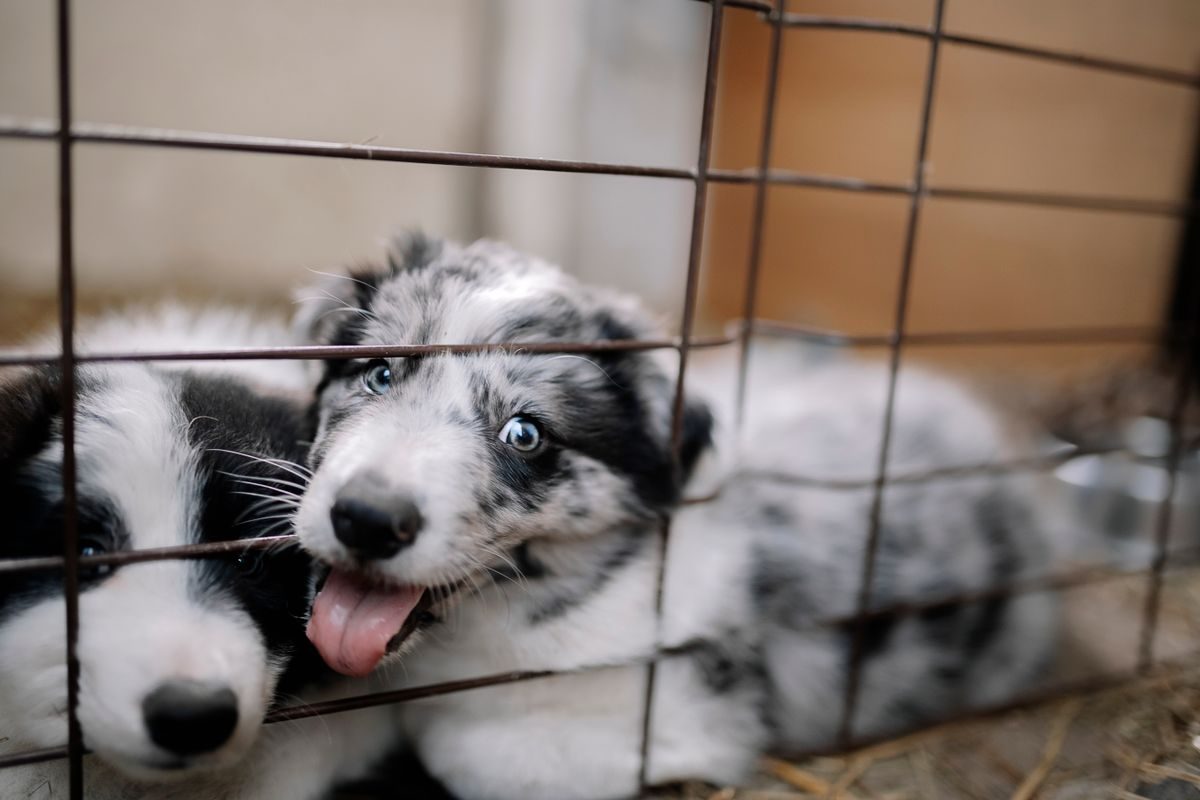
Keeping the sessions short and calm
The pen does not make a dog tolerate grooming; short sessions do. I would rather do three ten-minute brush-outs across a week than one half-hour wrestle, and the pen makes that easy because setup takes two minutes once the kit lives in it. Finish while the dog is still happy, not after the job is technically perfect, and the next session starts from a better place.
Puppies in particular learn the pen routine fast: mat, lick mat, brief brush, treat, out. Older dogs get the same deal with more breaks. If your dog panics at clippers or nail gear, stop and get a groomer or vet nurse to show you the handling before you push on. A contained dog in a pen is safe to take a break with, and that safety is most of what makes the whole thing work.
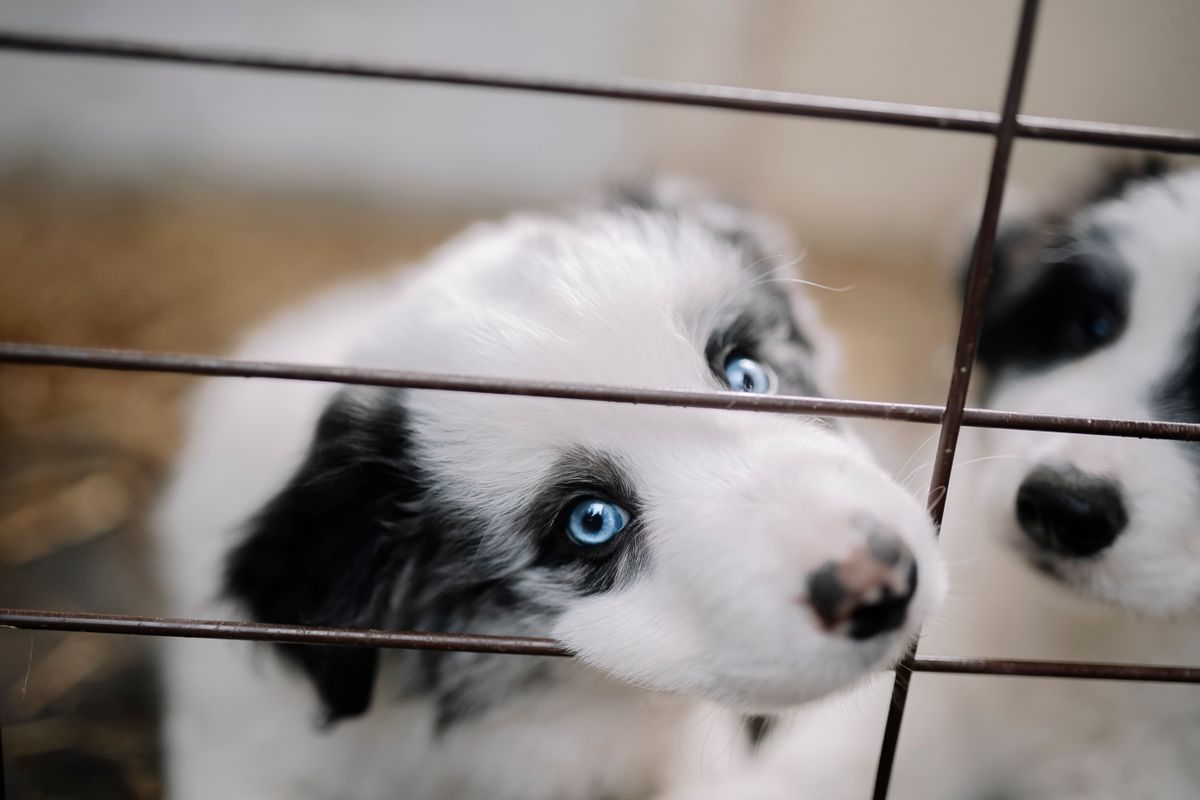
Frequently Asked Questions
Can I clip my dog's coat inside a playpen without a table?
You can, for tidy-ups, sanitary trims and comb-outs, and the pen is actually safer than a table for a wriggly dog because everything happens at ground level. For a full breed-standard clip you may want a table for your own back, but do the before and after stages in the pen. Ask a groomer to show you clipper handling before your first full clip.
How many panels does a grooming pen need?
Enough that the dog can turn around, lie down and shake without hitting a wall, but small enough that you can reach the middle without stepping inside. For small breeds that is usually four to six standard panels; bigger dogs need a wide arc rather than a tight circle. If you have to lean over panels to reach the dog, the layout is wrong.
How do I stop my puppy chewing the pen during grooming?
Give the mouth a job before you give the panels a test. A frozen lick mat or a long-lasting chew keeps most puppies busy through a short brush-out, and short is the key word: end the session before the chew loses its appeal. Check panels after every session, and if chewing continues, separate grooming from pen time and ask a trainer for a plan.
Is a fan safe for drying a dog in the pen?
Moving room air from a metre or two away is fine and speeds drying nicely after towel blotting. What I avoid is any heated airflow in an enclosed or semi-enclosed space, and I would not leave a dog alone with any drying setup running. If you are considering proper drying equipment for thick double coats, ask a professional groomer or your vet what suits your dog.
Can one pen be both the everyday playpen and the grooming station?
Yes, and there is a bonus: a dog that already thinks of the pen as a normal, settled place brings none of the drama to grooming. Clean the floor layer between uses, keep grooming tools out of sight when it is not a grooming session, and expect a puppy to test the routine the first few times. Consistency settles it within a fortnight.
Looking for pet playpens?
We stock the gear covered in this guide, with Australia-wide shipping and Afterpay at checkout.
Popular picks from this guide: foldable octagonal playpen · mesh pet playpen
Shop Playpens at Paws of Oz