Harness Straps, Slack and Sore Spots: The Questions That Come After the Sale
Short answer: A harness should sit with enough slack that you can slide two flat fingers under every strap, but not so much that the buckles drift or the dog can step out. Most fit problems we see after sale are one strap done up too tight, not the wrong size. If a rub mark shows up, stop and recheck the fit before the next walk.
Last Tuesday a customer in Maitland rang about her Kelpie cross. She had the harness for three weeks and loved it, then noticed a red line across the shoulder where the front strap sat. Her first words were, 'Did I buy the wrong one?' I walked her through the straps one by one. The chest strap was perfect. The front strap, the one people tighten last, was pulled almost to the end of its webbing. That single over-tightened strap was doing all the rubbing. This is the pattern I see most on the support desk: the size is right, the adjustment is not. The questions that arrive after the sale are about slack, order of adjustment, and reading what a sore spot is telling you.
How much slack is right
The rule I give every caller is the two-finger rule, and it applies to every strap. Slide two flat fingers, stacked, under the webbing. If they go in with a slight drag and the strap does not shift when the dog moves, that is the range you want. Too loose and the harness rotates and creates a fresh rub. Too tight and the strap bites on the first step. Check the fit with the dog standing calm, not after a play session when the coat is fluffed up. A harness done up on a hot, panting dog feels right in the shop and tight at home, and that mismatch is the start of most sore-spot calls we get.
Which strap to adjust first
The order of adjustment matters more than people expect. Start with the back strap, the one that runs along the spine, and set it so the harness sits centred. Then move to the chest strap, the wide piece behind the front legs. Last, touch the front strap only if the harness still shifts. The mistake I see is the reverse: someone tightens the front strap first to stop movement, which pulls the whole frame forward onto the shoulder. I ask people to loosen everything, fit the back piece, then bring in the others one at a time. When the back strap is right, the front piece rarely needs more than a small nip, which is why one strap ends up at its limit while the others stay loose.
What a rub mark is telling you
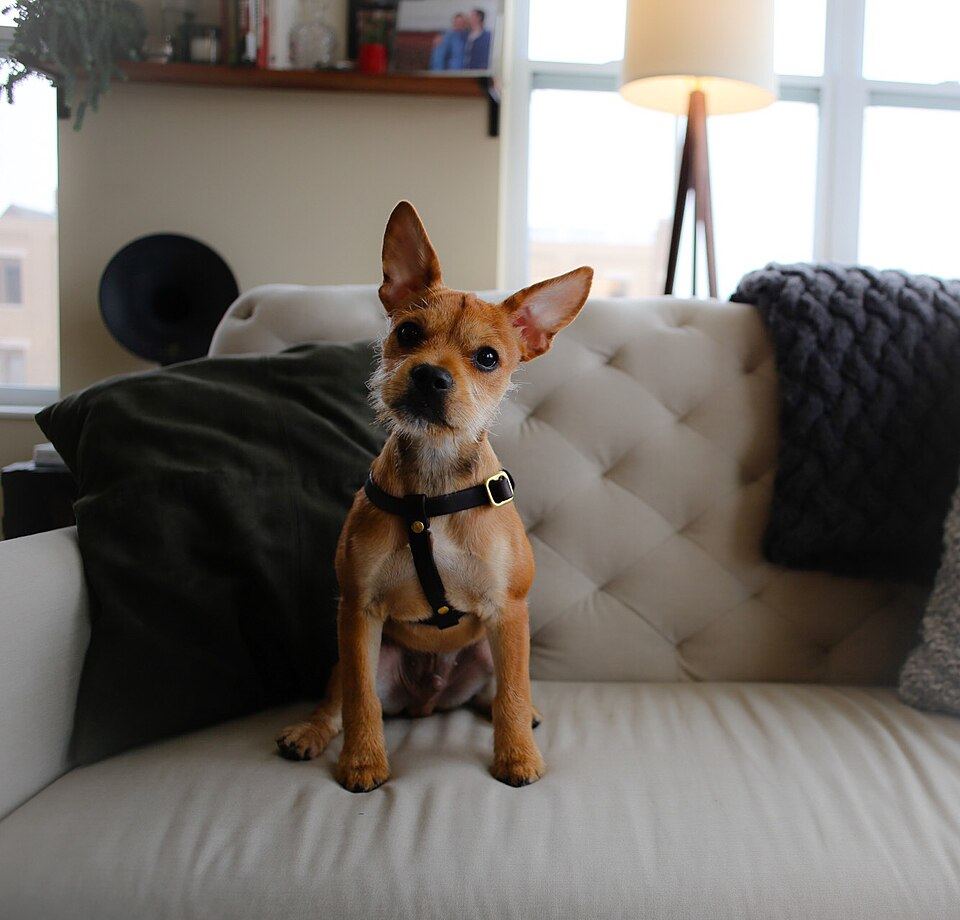
A red line or a patch of missing coat is a message, not a verdict. The first thing to ask is where it sits. A mark directly under a strap means that strap is too tight or the harness is shifting and grinding. A mark in a gap, where no webbing touches, usually means the frame is rotating and dragging an edge across the skin. Coat wear without redness often shows up after a few weeks of small movement. I ask customers to photograph the dog from above and from the side so we can see where the frame sits, then make a small adjustment and the mark fades in a few days. If it does not, that is the point to ask your vet, because the skin itself may need a look.
- Set the back strap first, then the chest, and the front strap last.
- Two flat fingers under every strap is the slack you are aiming for.
- A rub mark under webbing means tighten adjustment, not necessarily the size.
- Photograph the fit from above before assuming the harness is wrong.
- When skin stays sore after refit, ask your vet rather than keep adjusting.
When it is the wrong size after all
Sometimes the honest answer is that the size is wrong, and I would rather say so than keep a dog uncomfortable. The tell is consistent: you have loosened every strap to the end of its range and the harness still sits high on the neck, or you have tightened to the end and it still rotates. Another sign is the buckles landing on the wrong side of the dog, with the belly strap riding forward. In those cases no adjustment helps, and the right move is a return or an exchange. Our returns shelf shows this clearly: the harnesses sent back for fit fall into two groups, the ones clearly the wrong size and the ones that just needed the straps reset, so telling them apart on the phone saves a needless postage trip.
The calls that repeat
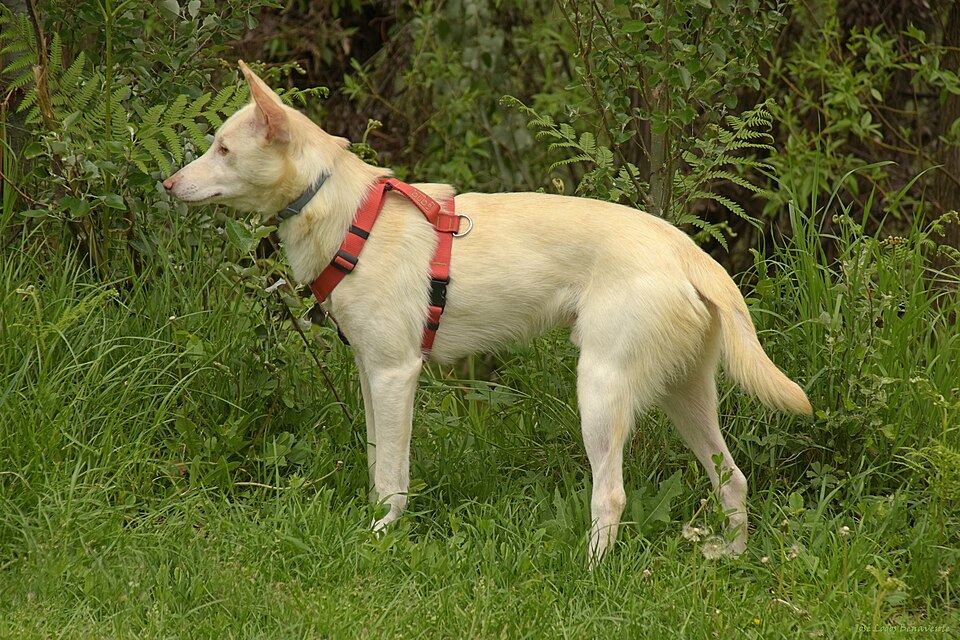
Certain questions arrive so often I could answer them in my sleep. 'Should the harness move when he shakes?' A little, yes, but it should settle. 'My dog steps out backwards, is that the size?' Usually it is a front strap left too loose, the one escape artists exploit first. 'The buckle digs in when he pulls, what do I do?' Check that the buckle is not sitting on the shoulder blade, which means the back strap needs to come forward a touch. These are not faults in the gear. They are the small fit details that only show up once the harness is on a living, moving dog for a week, and the support desk exists for exactly this lag between the shop fitting and the real walks.
| Where the mark sits | What it usually means | First adjustment to try |
|---|---|---|
| Directly under a strap | That strap is too tight or shifting | Loosen that strap two notches |
| In a gap with no webbing | Frame rotating and dragging an edge | Re-centre the back strap |
| On the shoulder blade | Buckle landing on bone | Move back strap forward |
| Across the chest, both sides | Chest strap too short for shape | Next size up, not just looser |
| Coat worn, no redness yet | Small daily movement building up | Refit and watch for a week |
Giving the dog a break while you refit
When a sore spot shows up, the simplest step is to leave the harness off for a day or two while you work out the fit. A collar walk around the block, or a rest day in the yard, takes the pressure off the skin so you can see the mark clearly without new rubbing on top of it. I suggest taking the photos then, with the coat clean and dry, before you touch the straps again. Once the mark has settled, do the full refit in order, back first, and take the dog for a short walk to confirm it holds. If the redness spreads or the skin breaks, ask your vet. Most cases never get there. For the full range of options in this range, see our dog harnesses collection.
Frequently Asked Questions
How tight should a dog harness be when first fitted?
Aim for the two-finger gap under every strap, checked while the dog is calm and cool. The harness should sit centred and not slide when the dog shakes. If you can fit a whole hand under a strap it is too loose, and if the webbing digs in it is too tight. Fit it at home, not straight after a run.
Why does my dog's harness leave a red line after walks?
A red line usually means one strap is too tight or the frame is shifting on the same spot. Note where it sits: under webbing points to a tight strap, in a gap points to rotation. Loosen the strap two notches and re-centre the back piece, then ask your vet if the line stays or the skin breaks.
Can I wash a harness that has rubbed my dog's coat?
Yes, and it is worth doing before you refit, because dried salt and dirt add to the rubbing. Hand wash in warm water with a mild soap, rinse well, and dry flat away from direct heat. Check the straps for stiffness as you wash, since a hardened strap bites more than a soft one. Let it dry fully before the next walk.
Is it normal for a new harness to shift a little?
A small shift when the dog shakes is normal, but it should settle back into place, not creep forward onto the shoulder. If it keeps drifting, the back strap is likely too loose or the chest piece needs a nip. Tighten in the order we use: back first, then chest, then front. Constant movement is the early sign of a fit that will rub.
Should I size up if my dog is between two sizes?
Go by the girth measurement first, since that drives the fit more than weight. If your dog sits at the top of a size range and has a deep chest, the larger size with the straps snugged in is usually the safer pick. If you are at the bottom of a range, the smaller size avoids a frame that rotates. When unsure, measure twice before you buy.
Looking for dog harnesses?
We stock the gear covered in this guide, with Australia-wide shipping and Afterpay at checkout.
Popular in this range: breathable step-in harness
Shop Harnesses at Paws of Oz