Cat Toys That Don't Roll Under the Couch: A Small-Flat Plan
Short answer: Toys that stay in play on a hard floor share one trait, a shape that cannot roll far, a flat base, a felt foot or a tether. In a one-bedroom flat the win is retrieval, not variety, so I keep a shoebox of low-rolling toys and a couple of wand toys I can reel in by hand.
Juno and Pim share my one-bedroom Melbourne flat, and on the polished boards out front the daily game has a rhythm I did not expect. I throw a toy, it slides under the couch, I get the ruler, I fish it out, we start again. Half of every play session in this place is retrieval, not play, and the couch has become a graveyard for anything round. After losing a third jingle ball behind the skirting, I rebuilt the toy drawer around one rule, if it rolls it lives in a closed tub, and only the shapes that stay put come out for the floor. The difference in my evening was immediate, less crawling, more actually playing.
Why round toys disappear on hard floors
A hard floor is unkind to anything spherical. A ping pong ball, a jingle ball or a small felt sphere carries its energy in a straight line and keeps going until it hits a wall or, more often, the four-centimetre gap under the couch. In a lounge room with no rug, that gap is the only place a rolling toy wants to be, and once it is there the cat loses interest and so does the game. I learned to read the floor before the toy. If I can slide a coaster across the boards and watch it travel, the toy I choose has to fight that same slide, which means weight, a flat face or a soft foot that bites the floor and stops.
Shapes that stay where you throw them
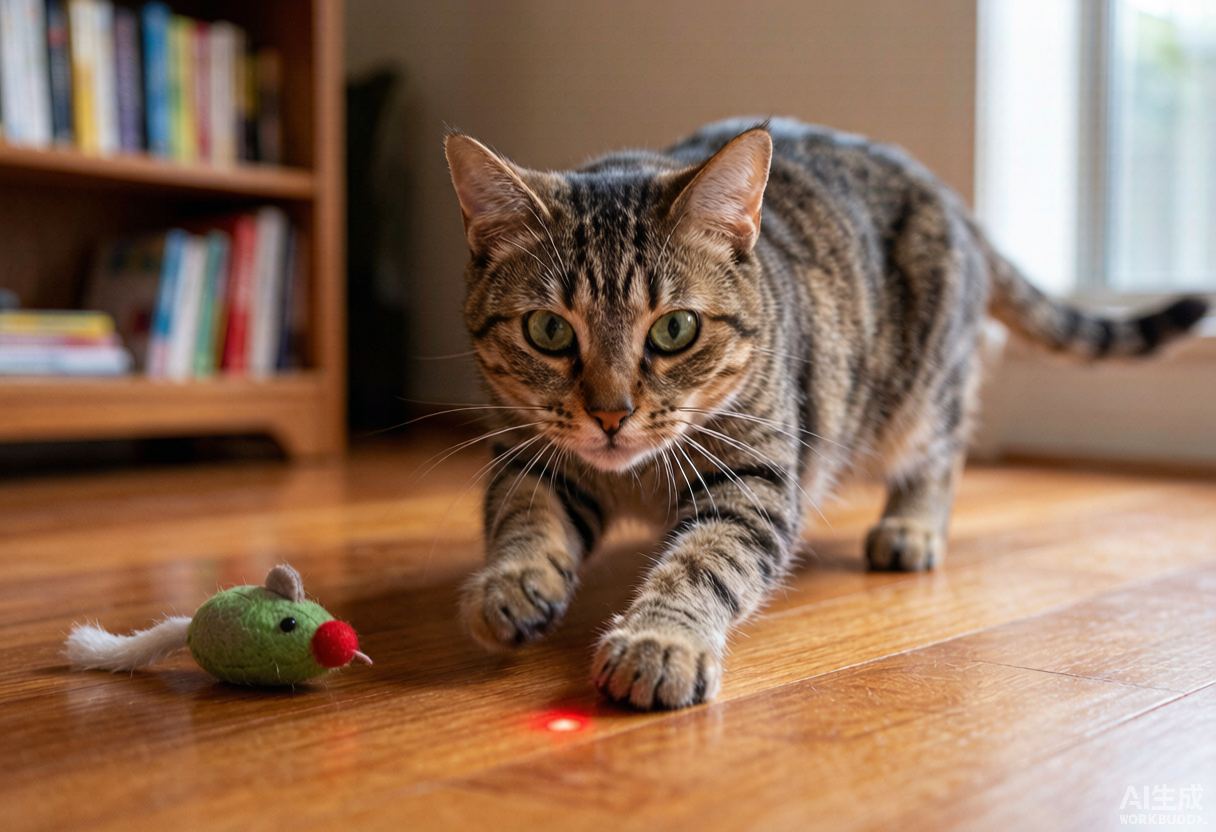
The toys that survive the floor in my flat share a simple build. A flat fabric mouse with a weighted bottom tips onto its side and stops. A soft kicker with a broad base lies where it lands. A felted wool shape with no hard edge rolls a hand span and then settles, which is enough travel to interest the cats without enough to escape. Toys with a short tether, a ribbon I can hook on a finger, stay attached to the game entirely. None of these need batteries or noise, and all of them pass the ruler test, I can reach them without moving the couch, which is the only test that matters in a one-bedroom.
The couch gap and how to close it
The under-couch gap is the real opponent, not the cats' attention. I measured mine at about four centimetres, enough for any ball and most small mice, so the first fix was a length of foam draft stopper pushed along the back edge where the floor meets the skirting. It costs little, leaves no mark, and means a toy that rolls now meets a soft wall instead of a void. A low storage tub turned on its side beside the couch catches the wand toys and the few round ones I keep for the rug. Closing the gap did more for my retrieval problem than any new toy, because the floor stopped being a loss machine.
- Pick toys with a flat base or a felt foot that stops on hard floors.
- Measure the couch gap, then block it with a push-in foam draft stopper.
- Keep round toys in a lidded tub, not loose on the boards.
- Use a wand toy you can reel in by hand for every session.
- Build the set around retrieval, not around having more shapes.
A shoebox set that rotates by hand
The whole floor set fits in a single shoebox, which is the point. I keep three flat-base mice, two felted wool shapes and one soft kicker, plus a lidded tub of the round toys for rug days. Each week I swap one item out and put it back in the cupboard, not on a schedule anyone would notice, just whatever the cats have ignored for a few days. This is hand rotation, me moving a toy from box to floor, not a system. The shoebox lives on the top shelf of the linen press, out of the way, and because it is small the cats never tire of a drawer that stays the same size.
Where the wand toys earn their keep
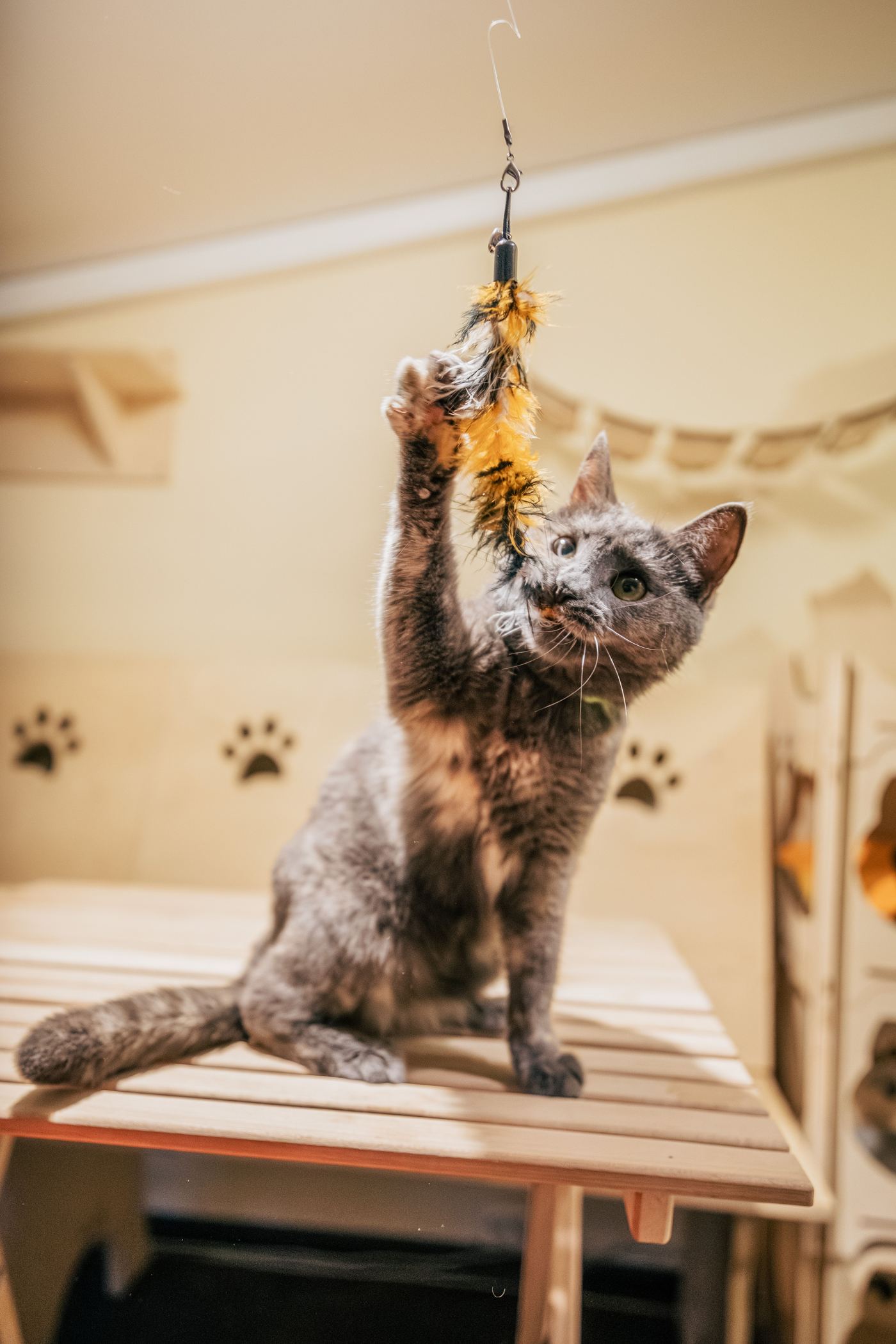
Wand toys solve the retrieval problem completely because they never leave your hand. I keep two, a short feather wand for quick morning chases and a longer ribbon wand for the evening when the cats want to run. The toy stays attached, the cats leap, and when they are done it coils into the storage tub by the couch, never under it. For a renter the wand is also the bond-safe choice, no mounts, no marks, no small parts left on the floor for a landlord to note. The range I use when friends ask what to start with is the pet toy range, which covers the shapes that suit a small place.
| Toy shape | Rolls on hard floor | Recovers easily? | Best use |
|---|---|---|---|
| Jingle ball | Rolls far, escapes fast | No, hides under couch | Rug days only |
| Flat-base mouse | Stops on its side | Yes, stays in reach | Daily floor play |
| Felted wool shape | Rolls a short span | Yes, easy to spot | Everyday toss |
| Soft kicker | Barely moves | Yes, stays put | Solo bunny-kick |
| Ribbon wand | Never leaves hand | Yes, reeled in | Guided chase |
Reading the room before you buy more
Before I add a toy I now ask one question, where will this land when the cat is done with it. If the honest answer is under the couch, it stays at the shop unless I already blocked that gap. This has saved me money and floor time, because the flat did not need more shapes, it needed shapes that behaved. The boards in this place are the same as they were a year ago, so the plan that works is the plan that respects the floor, low-rolling toys out, round toys contained, wand toys in hand. A one-bedroom does not ask for less play, it asks for play you can actually reach.

Frequently Asked Questions
What is the easiest way to stop toys going under the couch?
Measure the gap where the floor meets the skirting, then push a foam draft stopper along the back edge. It leaves no mark, costs little, and turns the void into a soft wall the toys meet instead of falling into. Pair it with a lidded tub for the round toys you keep, and the under-couch graveyard basically closes itself without any drilling.
Are wand toys better than loose toys for a small flat?
For retrieval they are unbeatable, because the toy never leaves your hand, so it can never slide under the couch. They also take up no floor space and store in a single tub by the wall. The trade is that you play with the cat rather than toss and walk away. In a one-bedroom that trade suits me, less crawling, more actual play.
How many toys does a cat in a one-bedroom actually need?
Fewer than the drawer suggests. In my flat a shoebox holds the working set, three flat-base mice, two felted shapes, one kicker and a couple of wand toys, and that is plenty for two cats. The trick is rotation by hand, moving one item out when interest fades, not buying more. A small place rewards a short, reachable set over a deep, forgotten one.
My cat ignores toys after a day, what am I doing wrong?
You are probably leaving the same shape out too long, not doing anything wrong. Cats read novelty through scent and movement, so a toy that sits still loses them. Try swapping one item into the cupboard and bringing back one they have not seen for a week, then add a wand session so the toy moves. If low mood lasts and they skip meals, that is a time to ask your vet.
Is it safe to leave toys out when the landlord inspects?
Loose toys on the floor are fine, they are not damage and they are not fixtures, but a tidy flat reads better in a walk-through. I scoop the floor set into the shoebox and stand the wand tub by the wall an hour before the visit. Nothing is mounted and nothing is marked, so there is nothing in the toy plan for an inspector to note, just a clean room.
Looking for cat & dog toys?
We stock the gear covered in this guide, with Australia-wide shipping and Afterpay at checkout.
Popular in this range: foldable rainbow cat tunnel
Shop Toys at Paws of Oz