
Calming Collars for Cats: What I Check Before Putting One on My Own Cat
Short answer: before any collar goes on my cat I check one thing first, that the blend was formulated for cats, because they lack a liver enzyme that clears plant compounds a dog shrugs off. With Juniper I'd weigh trigger and timing; with Fig that check is the whole conversation. A collar made for a Labrador is not automatically safe on a cat, and some oils are fatal. Here's the non-negotiable: if the label doesn't state it's for cats, it stays in the packet.
I've fitted calming collars on hundreds of dogs and maybe thirty cats, and the two are genuinely not the same conversation. With Juniper I'd think about the trigger, the timing and the fit. With Fig I think about one thing first, and it's the thing most product pages bury or skip entirely: whether the blend was formulated with cats in mind at all.
It's not alarmism, it's biochemistry. Cats are missing a liver enzyme that most mammals use to break down and clear a range of plant compounds. It's the reason some human painkillers are fatal to cats at doses a dog would shrug off, and it's the reason a collar designed for a Labrador is not automatically the right thing to put on a four-kilogram tabby.
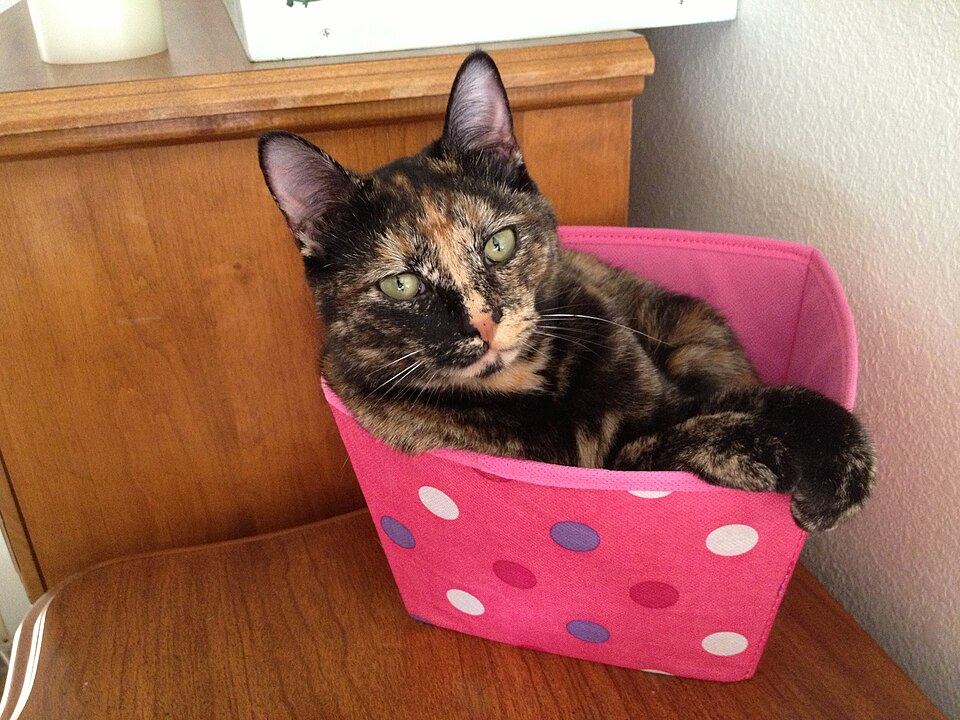
What I look for on the label
First, an explicit statement that the product is formulated for cats, rather than a dog collar with a cat on the packet. If the packaging is vague about species, I put it back. Second, a stated minimum age, which is usually around twelve weeks, and I don't fudge it. Third, the actual plant oils listed, because I want to know what I'm putting around an animal who grooms herself and will inevitably ingest some of it.
Then I look at what's not on the label. Any collar making medical claims — treating a behavioural disorder, replacing medication, guaranteed results — is telling me more about the marketing than the product. In this category that sort of language is also a compliance problem, and it's a fair signal to shop elsewhere.
- Check it's formulated for cats, not relabelled dogs.
- Look for a stated minimum age, usually twelve weeks.
- I want the actual plant oils listed on the pack.
- Avoid collars that make medical or guaranteed claims.
How I actually put one on
The fitting is quick and the order matters more than the technique. Fig gets a collar only when she's already eating, using her tray and moving around the house normally. If she's hiding or off her food, no collar goes on, because handling a frightened cat to fit something new is one stressor too many and I've set cats back a week doing exactly that.
Two fingers of slack, which on a cat is a genuinely small gap. Then I trim the excess so there's nothing dangling for her to catch on a door handle or chew. I check underneath daily for the first week for any redness, and I keep the room ventilated. If she's drooling, wobbling, hiding more than before, or the skin under the collar looks angry, it comes off immediately and I call the vet.
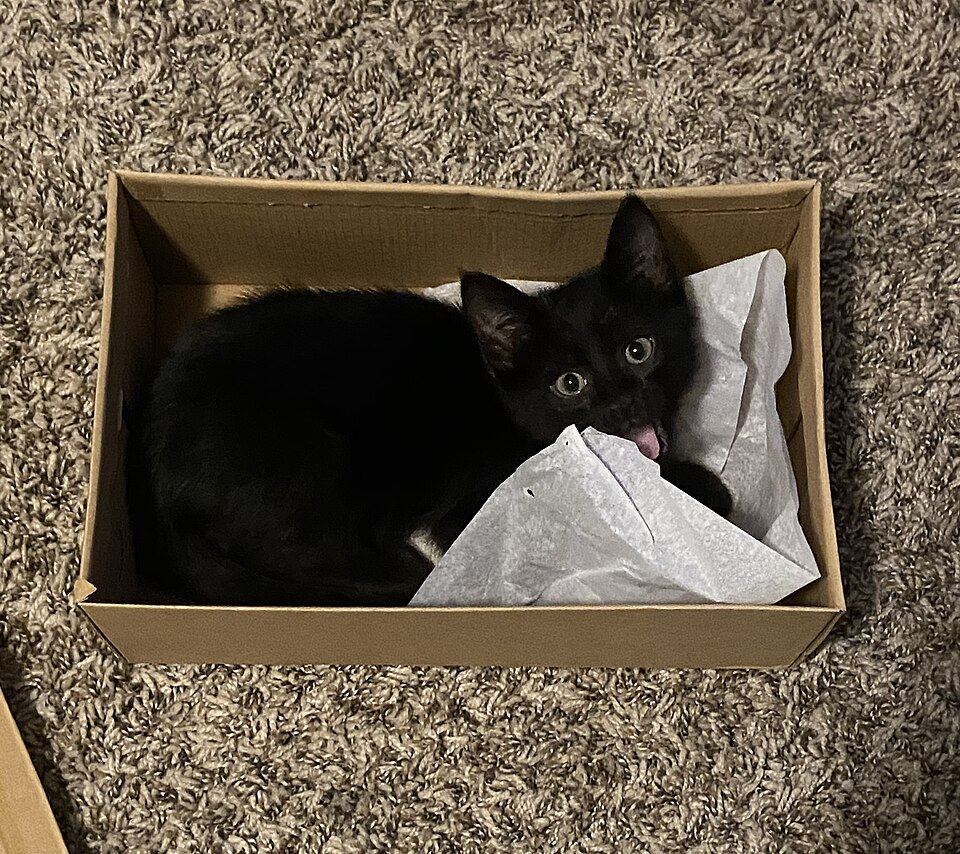
Indoor cats, and the ones I'd leave alone
Indoor cats are the group I get asked about most, because people assume a cat who never goes out has nothing to be stressed about. In my experience it's often the opposite. An indoor cat has no control over who comes through the front door, no escape from building work next door, and a much smaller territory to defend from a new housemate.
But a collar is a poor first move for most of them. Vertical space, a litter tray per cat plus one, predictable feeding times, and somewhere genuinely high to retreat to will do more for an indoor cat than anything you can buy. I add a collar only once those are in place and the problem is still there.
And there are cats I'd skip entirely: kittens under twelve weeks, pregnant or nursing queens, any cat with asthma or a respiratory condition, and any cat on medication, until their vet has said it's fine. That last group matters more than people expect, because interactions are not something you want to discover by trial and error.
What it's reasonable to expect
A collar supports relaxation. It does not sedate a cat, and if your cat seems doped rather than settled, something is wrong. What I look for is modest and specific: shorter hiding after a trigger, a cat who returns to her usual spots a bit sooner, less pacing at three in the morning. Those are small changes and they're the realistic ones.
I also give it a fair trial, which means a couple of weeks at a consistent time rather than three days and a verdict. And if there's no change at all by then, I take it off and look at the environment again. Most of the time, when a collar does nothing, the real problem was resource distribution or an undiagnosed medical issue, and no collar was ever going to fix either.
Fig wears one for about eight weeks over summer, mostly for the fireworks, and takes it off happily afterwards. She's the same opinionated cat with or without it, just slightly less inclined to vanish under the bed at eleven at night. That's the whole pitch, and I think it's an honest one. — Nadia, Adelaide, watched closely by the cat in question.
Frequently Asked Questions
Are calming collars safe for cats?
Choose one explicitly formulated for cats rather than a dog product relabelled. Cats lack a liver enzyme many animals use to clear plant compounds, so dog formulations are not automatically appropriate. Keep the room ventilated, respect the minimum age, and stop use if you see drooling, wobbling or skin irritation.
Can I use a dog calming collar on my cat?
I wouldn't. Concentration and formulation differ, and cats metabolise many plant oils differently from dogs. Look for a collar that states it is formulated for cats, and check the listed ingredients before buying.
At what age can a kitten wear a calming collar?
Most products specify around twelve weeks as a minimum, and it's worth respecting. Very young kittens are small, chew everything, and are still developing, so it's safer to wait and address the environment first.
Should my indoor cat wear one?
Only after the environment has been addressed. Vertical space, enough litter trays, predictable feeding and a high retreat will usually do more. Add a collar if the problem persists once those are in place.
How do I know if it's working?
Look for modest changes over two to three weeks: shorter hiding after a trigger, quicker return to normal routines, less night pacing. If there's no change at all, remove it and review the environment or speak to your vet about a medical cause.
Size & Fit Reference
| Size | Neck circumference | Collar length | Typical pets |
|---|---|---|---|
| Cat | 18–25 cm | 38 cm | Cats, kittens, toy breeds |
| Small | 25–35 cm | 45 cm | Puppies, Cavoodle, small terriers |
| Medium | 35–48 cm | 62 cm (cut to fit) | Kelpie, Cocker Spaniel, most adult dogs |
| Large | 48–62 cm | 65 cm (cut to fit) | Labrador, Greyhound, large breeds |
Most collars release for around 60 days once the sealed pouch is opened. Replace every eight weeks, or sooner if the scent fades.
Looking for calming & anxiety?
We stock the gear covered in this guide, with Australia-wide shipping and Afterpay at checkout.
Shop Calming at Paws of Oz