Zip Strength and Stitching: Carriers Torn Down at Three Prices
Short answer: I cut apart a cheap, a mid-range and a premium carrier and the zip told the story before the stitching did. The cheap one used a light coil zip that opened under load, the mid-range one used a heavier coil on a proper tape, and the premium one used moulded teeth with a metal slider.
I keep a box of dead carriers in the stockroom, which is not a sentence I expected to write when I opened the shop. Every one of them came back with the same story from the customer: the zip went. So when three carriers landed on the bench at genuinely different prices, I cut them open along the seams. What I found was not a simple case of cheap equals bad. One of the cheaper builds beat the middle one on two of the four things I tested, and the most expensive carrier had one part I would happily swap.
How the tear-down was done
All three were the same nominal size, roughly 45 cm long and 30 cm tall, so it was like for like. I cut each one along a side seam with a craft knife, laid the panels flat and measured four things: the width of the zip teeth, the number of stitch rows per seam, the gauge of the wire in the frame, and whether the base panel was stiff board or foam. Then I loaded each carrier with a bag of dog food weighing about 8 kg and carried it by the handle for a lap of the shop floor, stopping to open and close the zip each time. That load is what separates a zip that runs smoothly from one that starts skipping.
Zip gauge, teeth and sliders
The cheap carrier had a coil zip with a narrow tape and a small plastic slider. Under an 8 kg load the coil opened behind the slider, which is the classic sign of a zip that is too light for the job. The mid-range carrier used a wider coil on a heavier tape and it held, though the slider was still plastic and started to drag after twenty open and close cycles. The premium carrier had moulded plastic teeth on a woven tape with a metal slider, and that one ran clean every time. Tooth width is not the whole story. What matters is the tape the zip is sewn to, because a good zip on a thin tape will pull away from the fabric at the corners.

What the stitching says at each price
Stitch work is the easiest thing to check in a shop, and it separated these three cleanly. The cheap carrier had one row of stitching along its main seam, with a gap between stitches you can see light through if you hold it up. The mid-range carrier had two rows and a bound edge over the top, which is the detail that stops a seam fraying once the fabric is under tension. The premium carrier had two rows plus a bar tack at every corner where the frame meets the fabric, and that is where a carrier either lasts or splits. If you only inspect one thing before buying, inspect the corners first and count the stitch rows beside them.
- Hold the zip up to a light, a wide coil on thick tape is the stronger build.
- Two rows of stitching and a bound edge beat a single row every time.
- Look for bar tacks where the frame meets the fabric at each corner.
- A plastic slider is fine until a heavy load pushes it out of line.
- Check the base panel, stiff board holds shape while foam collapses.
Frame wire, board and crush resistance
The frame is the part you cannot see, and it decides whether the carrier stays open when your pet leans on it. The cheap carrier used a thin wire that bent the first time I pressed down on the roof with one hand, and once that wire kinks the carrier never sits square again. The mid-range carrier used a heavier wire in the top rim but left the base unsupported, so the floor sagged under the 8 kg bag by the end of the lap. The premium carrier had a heavier rim and a stiffened base panel and kept its shape under the same load. Give any carrier a firm press on the top edge before you buy it. If you are weighing up shapes as well, our carrier buying guide steps through how each style behaves in a car.
Mesh, straps and the parts nobody inspects
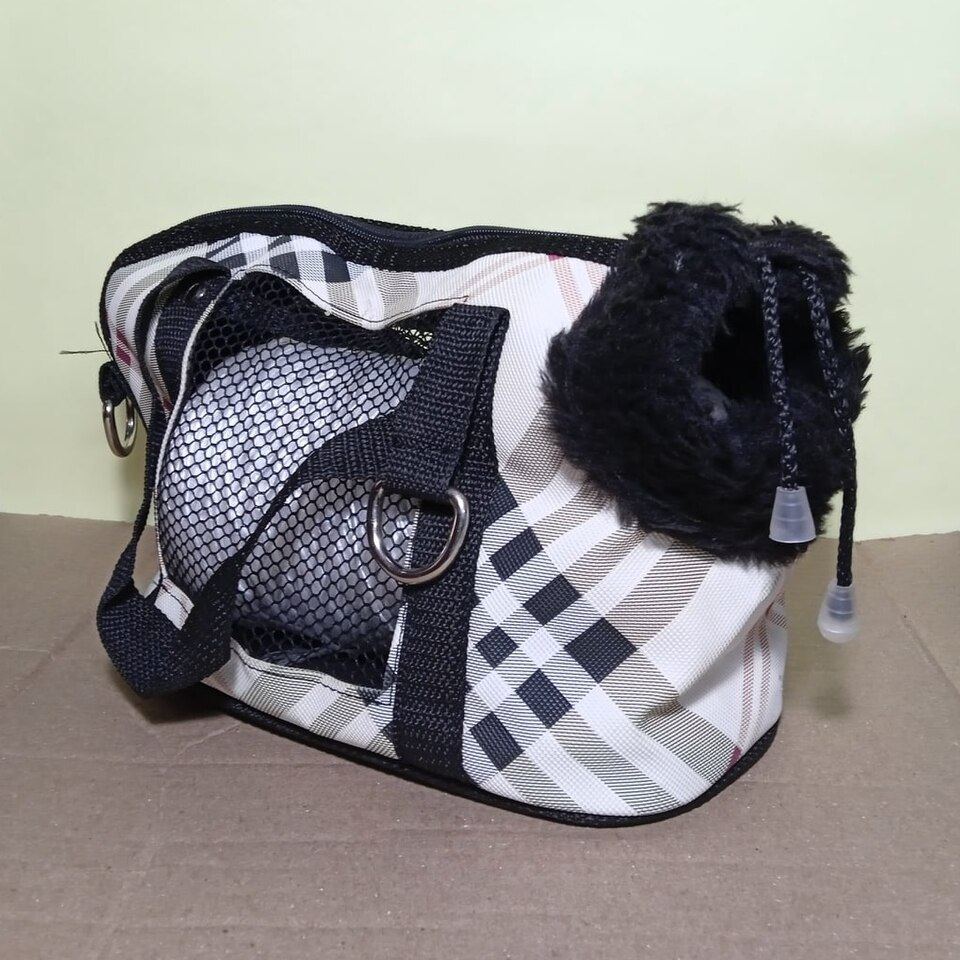
Mesh is where a soft carrier dies quietly. The cheap carrier used a fine mesh with a loose weave that caught on the zip every time the panel folded, and by the end of my testing there were pulls along one whole side. The mid-range and premium carriers both used a coarser mesh with a heavier thread, and the premium one had the mesh double stitched around its border. The shoulder strap attachment is the other place to look, because a strap sewn into a single seam will rotate under load and start working the fabric. A strap that runs into a reinforced patch with a bar tack behind it will stay where you set it, which matters once a pet starts shifting its weight around.
| Price tier | Zip and seam build | What fails first | Best suited to |
|---|---|---|---|
| Cheap, typically under $40 | Narrow coil zip, one stitch row | Coil opens under a heavy load | Light pets, short trips |
| Mid-range, typically $50 to $90 | Wider coil, two rows, bound edge | Plastic slider drags with use | Most cats and small dogs |
| Premium, typically $100 and over | Moulded teeth, metal slider, bar tacks | Little, it is the strongest build | Frequent travel, heavier pets |
| Cheap backpack style | Zip on thin tape, foam base | Base panel collapses | Very small pets only |
| Mid-range backpack style | Two stitch rows, board base | Mesh pulls at the fold | Train and vet trips |
What each price actually buys
Across these three, the extra money went into the zip, the seam finish and the frame wire, in that order. That is also the order in which the parts fail, which makes the mid-range carrier the awkward one to argue against: it fixes the zip and the seam, then leaves the frame and the base as the weak points. The premium carrier bought margin on all three, and the one place it did not clearly beat the mid-range was mesh weight, which was close enough that I would call them level. If your pet is under about 6 kg and travels a few times a month, the mid-range build is where my own money would go. Above that, the zip and the base are the two things I would not compromise on.

Frequently Asked Questions
How do I test a carrier zip in a shop without cutting it open?
Zip the carrier shut and pull the two sides apart gently with the zip fully closed. A sound zip will not part. Then run the slider the full length a few times and feel for a tight spot near the corners, which is where a thin tape puckers. If the slider catches or the teeth separate under light pressure, walk away.
Is a metal slider always better than a plastic one?
Not always, but usually at this price point. A well moulded plastic slider on a heavy coil can last years in light use. The problem is that plastic flexes under load, and once it flexes the teeth misalign behind it. A metal slider holds its shape and keeps the teeth lined up, which matters more as your pet gets heavier.
Can a bent carrier frame be straightened?
Sometimes, but it is never the same. Wire that has kinked once has a weak point, and it will bend there again with less force than before. You can push a frame back close to square by hand and it will look fine on a shelf. It will not hold that shape with a pet leaning on it, so treat the kink as a sign it is due for replacement.
Why do carrier zips fail at the corners?
Corners are where the zip has to turn, and turning is the hardest thing a coil or a set of teeth has to do under tension. If the tape at that corner is thin, the zip pulls the fabric out of shape and the seam takes the strain instead of the zip. That is why a bar tack at each corner matters more than the zip brand.
Does a higher price guarantee a better carrier?
No, and the premium carrier in my tear-down proved it one way: it beat the cheaper builds on the zip and the frame but not on mesh weight. What a higher price usually buys is better thread, heavier wire and a stronger base panel. Check those three parts yourself rather than trusting the tag, because the differences are all visible once you know where to look.
Looking for pet carriers & backpacks?
We stock the gear covered in this guide, with Australia-wide shipping and Afterpay at checkout.
Popular in this range: cartoon carrier tote
Shop Carriers at Paws of Oz