Luring a Cautious Cat Onto a New Perch (No Force Needed)
Short answer: a cautious cat will take to a new window perch within a week or two if you let her move in small, voluntary steps, and she'll reject it for months if you pick her up and place her on it even once. The plan below is the one I give clients with nervous cats in Brisbane: shape the approach, reward every choice she makes towards it, and let the window do the final selling. No force, no flooding, no grabbing.
Why force backfires
Being lifted and placed on a strange, slightly wobbly platform above the floor asks a cat to trust two things at once: the object and your hands. A confident cat shrugs it off. A cautious cat logs the whole event as a trap that appeared without warning, and then she starts avoiding not just the perch but the room at certain times. I've seen perches written off as failures that were simply poisoned by one well-meant lift.
The alternative takes patience, but it builds something better: a cat who chooses the perch, which means she owns it. Ownership is what keeps her coming back.
The step-by-step plan
Work through these stages at your cat's pace, which might be days or weeks, and move on only when she's relaxed at the current step:
- Install the perch low, ideally beside furniture she already uses, and then ignore it completely
- Drop a high-value treat on the floor near the perch a few times a day, without commenting on it
- Progress the treat onto the window sill beside the perch, then the platform edge, then the middle
- When she steps on voluntarily, mark the moment with a soft praise word and drop a treat on the perch itself
- Sit nearby while she's on it, so your presence becomes part of the good thing
- Gradually expect longer sits before the reward, building from seconds to minutes
The whole sequence is just luring in stages. What makes it work is that she never has to do more than she's already comfortable doing.
Let the window be the reward
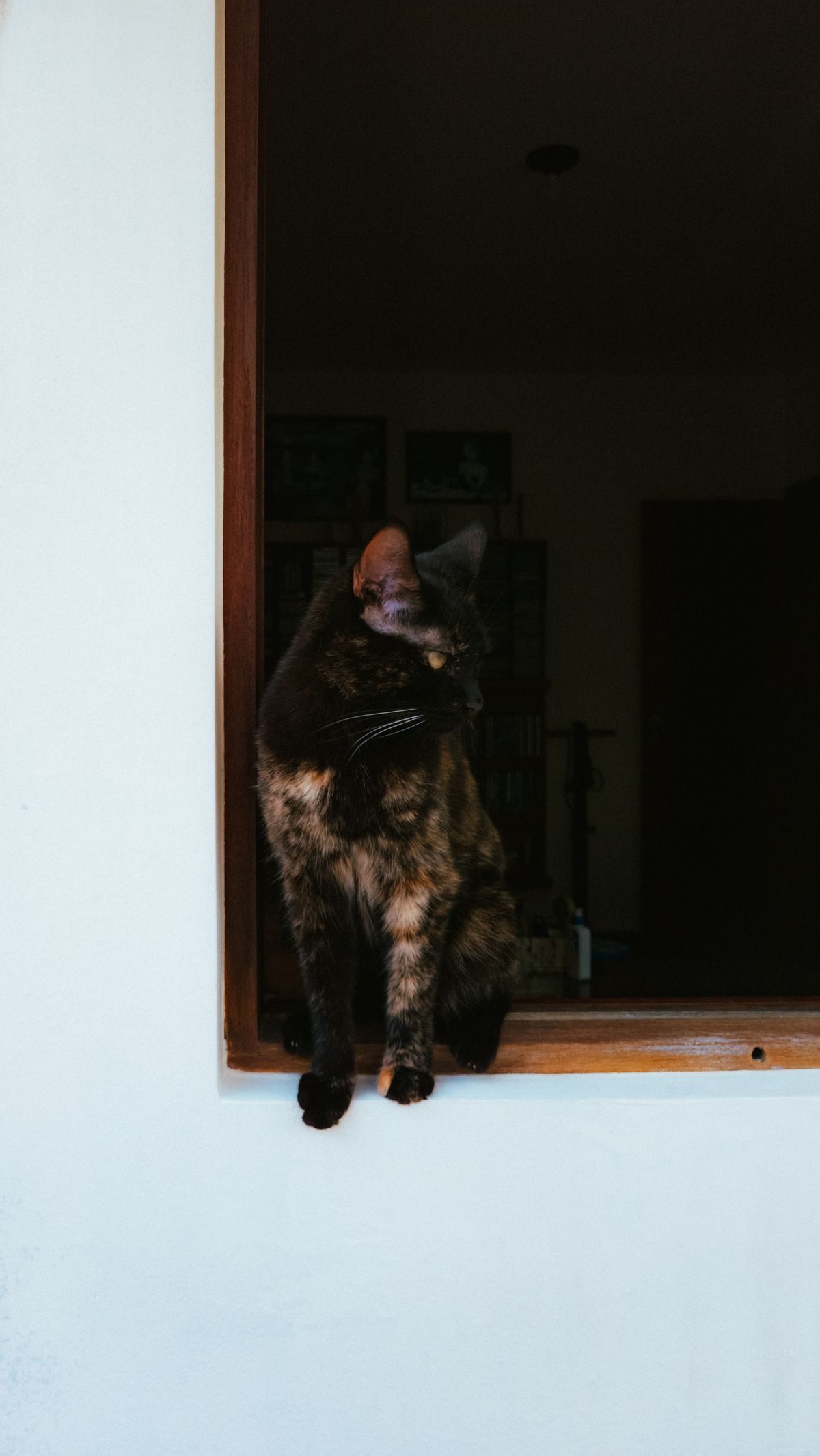
Treats get her onto the perch; the view keeps her there. Bird feeders outside the window are the single most effective accelerator I know, and a simple tray feeder visible from the perch will do more than any amount of coaxing. If a feeder isn't possible, choose the window with the most movement: a street, a courtyard, even a busy driveway beats a blank wall.
Once she's watching wildlife, start dropping treats only occasionally. The window has taken over as the reward, and intermittent treats just keep the association warm.
| Stage | What you're doing | Sign to progress |
|---|---|---|
| Habituation | Perch installed, treats nearby, no pressure | She investigates it unprompted |
| Approach | Treats moved onto the sill and platform edge | Eats comfortably beside it |
| First contact | Treat on the platform, reward on boarding | Steps on and off calmly |
| Settling | Reward duration, sit nearby | Sits several minutes, loose body |
| Independence | Intermittent treats only | Uses it daily without luring |
Reading her body language
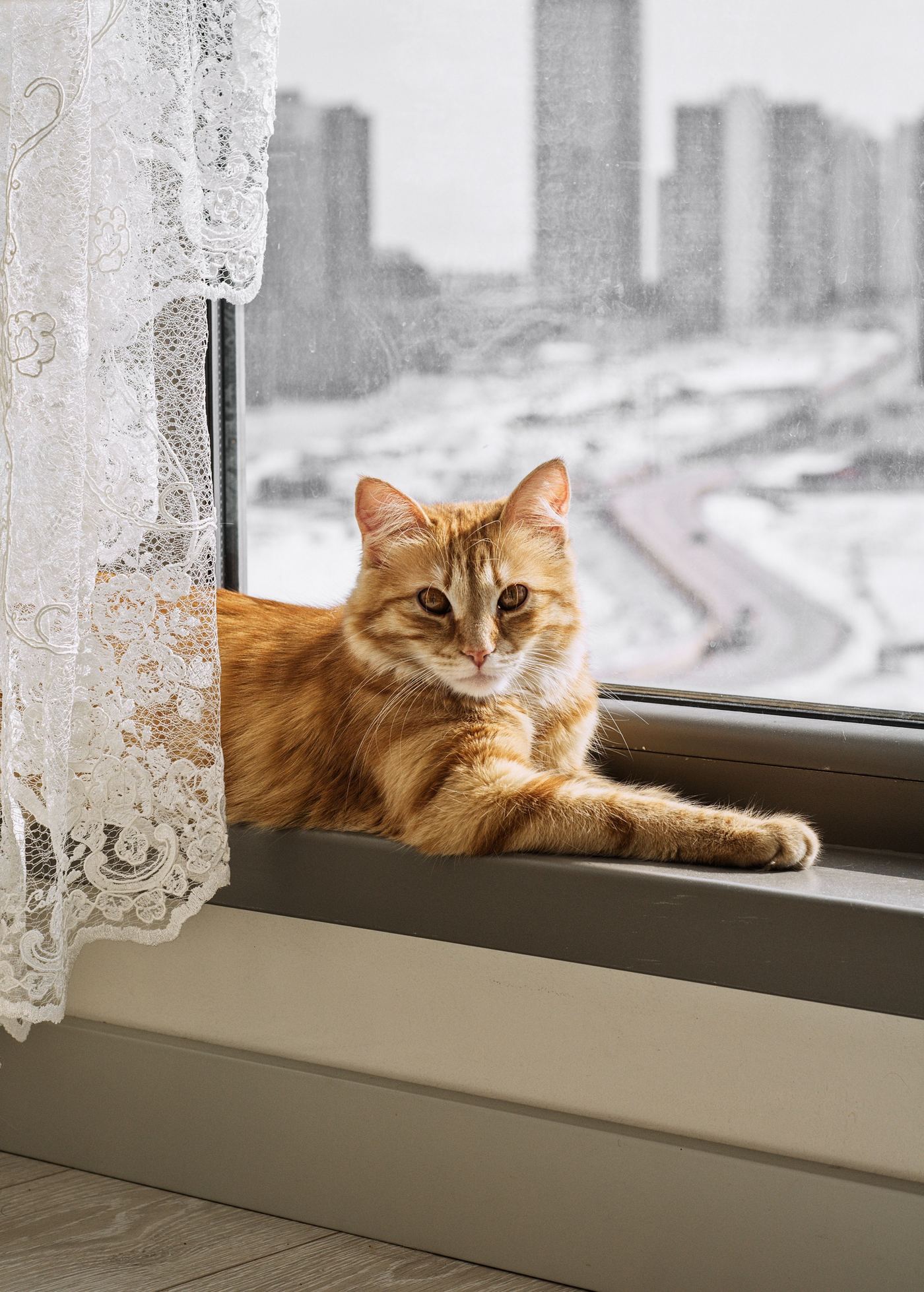
Her body tells you which stage she's really at, regardless of the calendar. Comfortable looks like loose whiskers, a soft tail, slow blinks and a willingness to turn her back on the perch. Uncomfortable looks like a low crouch, flattened ears, dilated pupils, a tail thumping or twitching, and staying close to the escape route. If you're seeing the second list, you've moved too fast. Drop back a stage, shrink the ask, and give it another day or two. The most common mistake I see isn't pushing too hard once; it's pushing slightly too hard every single session, which grinds progress to a halt.
When to slow down or change the setup
If she stalls at the approach stage for over a fortnight, the problem is usually the perch's context, not her attitude. Move it lower, closer to furniture, or to a quieter window. Check for wobble, for reflections in glass doors behind it, and for household traffic like dogs or kids cutting past the spot. If she's a new arrival or the household has recently changed, give her settling time before asking for anything new. And if fear seems general rather than perch-specific, that's worth raising with your vet, since anxiety can have medical contributors. Most cats, though, just need the ladder of small wins this plan provides, and once they've had their first long, unbothered sit on their own perch, the training part is genuinely over. You can browse perch options suited to nervous cats in our cat window perch range.
Frequently Asked Questions
How long does it take a nervous cat to use a new perch?
Typically a few days to two weeks with the staged approach, and longer for cats who are new to the home or who have a history of frights. The calendar matters less than the body language. Progress happens when she's relaxed at each stage, not when a set number of days has passed.
Can I just lift my cat onto the perch once to show her?
I'd strongly advise against it. For a confident cat it's harmless, but a cautious cat remembers being trapped on a strange object, and that memory can set the project back weeks. Letting her choose the first boarding herself takes longer on day one and much less time overall.
What treats work best for luring a cautious cat?
Use something she only gets in training contexts: small pieces of cooked chicken, freeze-dried meat treats, or a favourite lick paste on a spoon. The point is rarity, not quantity. If she gets the treat every day anyway, it won't pull her past her caution when it counts.
Should I put catnip on the perch to attract her?
You can, and some cats respond well, but catnip excites rather than settles, which can make a nervous cat frantic rather than curious. It works better as a top-up once she's already boarding. For the introduction itself, food and view outperform catnip for most cautious cats.
My cat uses the perch but flees if I come near. Is that okay?
It's normal mid-training, and it usually fades as you build positive associations with your presence nearby: sitting close, reading aloud, occasionally dropping a treat. Don't approach her on the perch or reach for her there. The perch needs to stay a place where nothing bad ever happens, including being grabbed.
Looking for cat window perches?
We stock the gear covered in this guide, with Australia-wide shipping and Afterpay at checkout.
Shop Window Perches at Paws of Oz